Puncture Needles Vs. Microneedles
Apr 18, 2026
Puncture Needles vs. Microneedles: The Technological Divide and Market Landscape from "Diagnostic Tools" to "Painless Drug Delivery"
Core Product Terms: Puncture Needle (Biopsy/Aspiration Needle), Microneedle (Transdermal Drug Delivery System)
Representative Manufacturers: Medtronic, BD (Becton Dickinson), 3M, Zosano Pharma, Zhongke Microneedle (ZKMN)
Although both puncture needles and microneedles fall under the category of "needle" medical devices, they exhibit significant differences in technical principles, application scenarios, and market landscapes. The former serves as a "sharp tool" for interventional diagnostics, while the latter acts as an innovative "vector" for drug delivery.
I. Technological Divide: Depth of Invasion and Design Philosophy
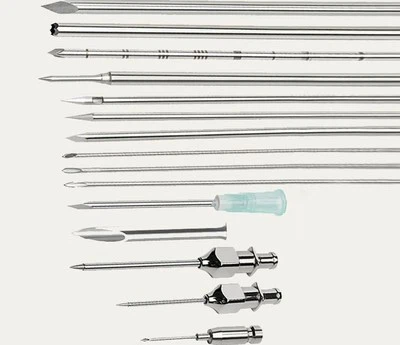
Traditional Puncture Needles (represented by Medtronic and BD) center on "penetration and sampling." They are primarily used for biopsy and aspiration, such as liver puncture and thyroid fine-needle aspiration (FNA). Their technical barriers lie in the rigidity of the needle tube, the design of the needle tip geometry (e.g., Chiba needles, Tru-Cut needles), and negative pressure control technology. The goal is to ensure the acquisition of intact tissue cores or cellular samples while avoiding damage to surrounding tissues.
Microneedle Systems (represented by 3M, Zosano, and Zhongke Microneedle) focus on "minimally invasive transdermal delivery." With lengths typically ranging from 50 to 1,000 micrometers, they only penetrate the stratum corneum to the upper dermis without touching pain nerves. Diverse technical routes exist: solid microneedles (3M) create pores before drug application; coated microneedles (Zosano) carry drugs on the tip; dissolvable microneedles (Zhongke Microneedle) are made of polymers that dissolve and release drugs upon insertion. The challenges lie in the combination of micron-level precision machining and drug stability.
II. Market Landscape: Mature Stalemate vs. Emerging Explosion
The Puncture Needle Market (~$9.8 billion globally, dominated by BD, Medtronic, and Boston Scientific) is a mature market. Growth is driven by the popularization of early cancer screening (e.g., lung, breast cancer) and healthcare infrastructure development in emerging markets. Products are highly standardized, presenting high barriers to entry regarding registration and distribution channels for new players.
The Microneedle Market (projected to reach $4.38 billion by 2031, with a CAGR of 6.2%) is in a growth phase. Beyond medical aesthetics (anti-wrinkle, hair regrowth), vaccines (e.g., Micron Biomedical's flu microneedle patches) and biologics (e.g., insulin, GLP-1) represent the largest future incremental opportunities. Chinese enterprises (e.g., Zhongke Microneedle, Ubiotic) have achieved global competitiveness in the production capacity of dissolvable microneedles.
III. Manufacturer Strategies: Path Dependence vs. Cross-Industry Integration
Puncture Needle Manufacturers (e.g., BD) employ a strategy of "deeply binding clinical pathways." By developing single-use biopsy guns and vacuum-assisted biopsy (VAB) systems to improve single-procedure diagnostic accuracy, they leverage extensive hospital consumables sales networks to build deep moats.
Microneedle Manufacturers pursue "pharmaceutical-device combination" strategies. For instance, Zosano's Qtrypta (zolmitriptan microneedle patch) reformulates an existing drug into a microneedle dosage form to enhance patient compliance. Traditional pharmaceutical companies (e.g., Hybio Pharmaceutical) are also establishing joint ventures with device firms (e.g., MicroPort® Yueshuda) to layout chronic disease home-administration markets for polypeptide-based microneedle patches.
IV. Regulation and Future Trends
Puncture needles, classified as Class III active/non-active devices, face regulatory scrutiny focused on biocompatibility and sterility assurance. Microneedle patches (especially drug-loaded types) are often managed as "drug-device combination products," requiring compliance with both drug GMP and device QSR standards, leading to longer approval cycles.
In the future, puncture needles will evolve towards "imaging guidance + robotic assistance" (e.g., MRI-compatible needles), while the ultimate form of microneedles may be "smart responsive patches" capable of automatically regulating drug release based on blood glucose or hormone levels.