Precision Manufacturing And Ultimate Safety: Quality Codes Of RF Trans‑Septal Puncture Needles Under The ISO 13485 System
May 18, 2026
In the world of interventional cardiology, differences measured in fractions of a millimetre can determine procedural success and patient safety. As energy‑based devices operated directly inside the atria, radiofrequency (RF) trans‑septal puncture needles must meet the highest standards of reliability in the medical device industry. Such reliability is not accidental; it stems from precision manufacturing controlled by the rigorous ISO 13485 medical device quality management system across every stage from material selection to final sterilisation. From the perspectives of engineering and quality management, this article reveals the quality foundations behind premium‑grade RF puncture needles for hospital procurement decision‑makers, infection‑control specialists and surgeons who prioritise device performance.
Target Audience: Decision‑Makers Focused on Fundamental Device Quality and Long‑Term Value
This article is best suited for the following readers:
Members of hospital equipment procurement and consumable management committees: Who need to evaluate long‑term product value and risks beyond market pricing, based on core technology and quality management systems.
Head nurses and infection‑control nurses in catheter laboratories: Responsible for device acceptance, post‑procedure processing and traceability, with a focus on cleanliness, sterility assurance and operational safety.
Cardiac interventional specialists with stringent requirements for device craftsmanship: Who understand that superior tactile feedback and performance rely on state‑of‑the‑art manufacturing techniques.
Personnel involved in medical device regulation and auditing.
Application Scenarios: Comprehensive Evaluation and Risk Control of High‑Value Consumables
Onboarding new suppliers and tender evaluation: When assessing high‑end consumables such as RF puncture needles, review of manufacturers' quality system certifications and manufacturing process details carries equal importance to pricing.
Adverse‑event analysis and traceability: In cases of device‑related complications, a robust quality management system enables full‑chain traceability from individual patients to specific production batches and raw‑material lots, providing critical evidence for root‑cause analysis.
Formulation of in‑house standardised protocols and training: Develop standard operating procedures (SOPs) aligned with device reliability to ensure consistent and safe utilisation of device advantages.
Comparative Advantages: System‑Driven Assurance vs. Product‑Level Promises
The gap between premium RF puncture needles and ordinary products lies not only in visible parameters but more deeply in invisible manufacturing philosophies and quality control practices.
1. Materials Science and Precision Machining: Building a Reliable Core
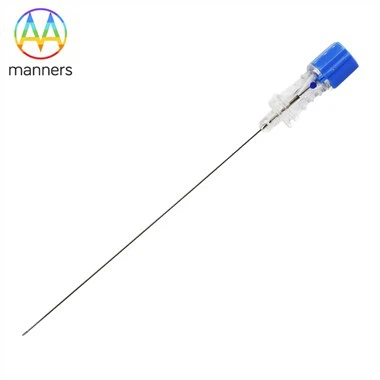
Core needle tube materials: Medical‑grade stainless steel (e.g., 304/316L) or specialty alloys are adopted. These require not only biocompatibility but also exceptional mechanical strength, elastic modulus and fatigue resistance. Needle tubes must be rigid enough to resist deformation during advancement through tortuous blood vessels while retaining sufficient flexibility to navigate sheath bends. Consistency across material batches forms the first lifeline of quality.
Tip forming processes: The blunt, atraumatic tip defines the core of an RF needle. This blunt geometry is not formed by simple grinding but by micron‑level turning on high‑end precision CNC machine tools such as the Swiss‑made Citizen Cincom R04, ensuring perfect roundness and surface smoothness. Even minor asymmetry or burrs may trigger thrombus formation or tissue injury on endocardial surfaces. Optimised via fluid‑dynamics modelling, the blunt tip delivers superior trackability and navigability within cardiac blood flow.
Energy electrode integration: As the radiofrequency electrode, the needle tip must bond absolutely smoothly, firmly and reliably with insulating layers (typically high‑grade polymers such as polyimide). Any micro‑gap may cause energy leakage, abnormal heat generation or thrombosis, requiring ultra‑precision coating and curing processes.
2. Surface Treatment and Cleaning: The Invisible Barrier of Biocompatibility
Electropolishing: A signature process for high‑end metallic interventional devices. Electrochemical polishing in electrolytic solution removes all micro‑burrs, sharp edges and surface stress concentrations generated during mechanical machining, yielding a mirror‑smooth surface. This drastically reduces platelet adhesion and fibrin deposition to lower thrombotic risks while enabling ultra‑smooth advancement within sheaths.
Multi‑stage ultrasonic cleaning: Manufacturing processes expose components to contaminants such as cutting oil and metal debris. Rigorous multi‑step ultrasonic cleaning using alkaline solutions, acidic solutions and deionised water ensures ultra‑clean surfaces prior to final assembly and packaging - a prerequisite for effective subsequent sterilisation and long‑term biosafety.
3. The ISO 13485 System: A Quality Philosophy Embedded Throughout Production
ISO 13485:2015 certification confirms that a manufacturer's quality management is not merely a slogan but an executable, auditable and continuously improving system. This delivers unmatched reliability for RF puncture needles compared with ordinary alternatives:
Traceability: All data is recorded and traceable, from batches of stainless‑steel raw materials and needle‑tip turning parameters to final‑product inspectors. Issues can be precisely pinpointed when they occur.
Process control: Quality is built‑in rather than inspected‑in. The system mandates parameter control and in‑process testing for all critical steps including turning, polishing, cleaning and assembly to guarantee consistency.
Risk management: Comprehensive risk analysis is required to prevent potential hazards at the design stage. For example, to mitigate unintended energy discharge risks, circuit impedance monitoring may be integrated to enable energy delivery only when the tip makes good tissue contact.
Sterility assurance: Final sterilisation via ethylene oxide or irradiation is performed under strictly validated conditions with sterility testing conducted. Packaging integrity is verified to maintain sterility throughout the shelf life.
4. Performance Consistency: The Foundation of Surgeon Trust
For operators, predictability is the most valuable attribute. Whether using the first or one‑hundredth needle of the same model, advancement feel, energy delivery characteristics and puncture performance must remain identical. Such consistency originates from the strict material control, precision machining and rigorous quality systems outlined above. It enables surgeons to develop stable procedural muscle memory, allowing them to focus fully on patient anatomy and surgical strategy rather than adapting to device variability.
In summary, selecting a premium RF trans‑septal puncture needle essentially means adopting a precision manufacturing system and quality‑management culture built around zero‑defect objectives. Micron‑level turning movements on Swiss‑made precision lathes, alongside every documented record compliant with the ISO 13485 system, collectively guarantee absolute reliability during those critical seconds on the operating table. For hospitals and physicians, this translates not only to higher procedural success rates and lower operational risks but also to a profound commitment to patient safety and the relentless pursuit of medical quality. Within the confined space of cardiac intervention, only state‑of‑the‑art craftsmanship can bear the weight of human life.