Precision Light For Tired Eyes
Nov 07, 2026
The Pain Point: The Shadow That Sleep Cannot Fix
Clients often say, "I slept eight hours, but my eyes still look tired." That sentence captures the central frustration of the entire under-eye category. Dark circles are frequently structural rather than purely lifestyle-driven, and that distinction is what makes them so difficult to resolve. Thin dermis, sluggish microcirculation, and pigment stagnation combine to create a persistent shadow that makeup only partially conceals. Conventional brightening serums fail because their molecules never reach the remodel zone; they sit on the surface or are absorbed too shallowly to change dermal architecture. Consumers then cycle through product after product, spending money and losing patience. The pain point is a mismatch between the promise of topical care and the reality of structural darkness, and it is compounded by the fact that most marketing materials never explain this gap. When a client finally arrives at a clinic, they often arrive skeptical, having already been disappointed many times. The practitioner must therefore address not only the tissue but also the accumulated distrust.
The Principle: Engineering the Dermal Response
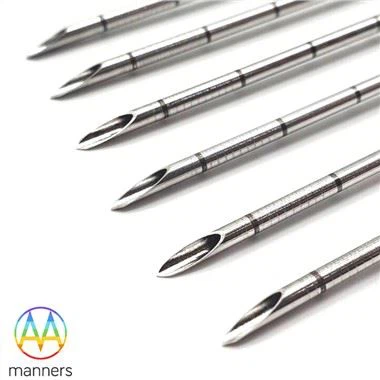
Microneedling is essentially controlled mechanical signaling. The gold-coated tip penetrates the stratum corneum, creating micro-columns roughly 0.2 mm wide. Each column becomes a healing unit: platelet activation leads to a growth-factor cascade, which drives fibroblast proliferation and extracellular matrix reorganization. Over three to six sessions, the periorbital skin gains optical opacity, and the contrast between skin and underlying vessels decreases. This is not a superficial brightening effect; it is a change in how light interacts with the tissue. Gold plating matters here. It lowers surface energy, reduces protein adhesion, and minimizes nickel exposure. For the sensitive eye zone, a nickel-free plating scheme reduces allergic risk and improves patient comfort. The polished surface also allows smoother insertion, which means less dragging and more predictable channel geometry. From an engineering standpoint, the needle is a stress-delivery device, and the quality of that delivery determines whether the biological response is productive or merely inflammatory. A well-made tip produces clean channels; a poorly made tip produces tearing, bruising, and inconsistent results.
Device Categories: From Manual to Intelligent
Manual stamp devices with one to nine pins offer low cost and high control but are operator-dependent. Motorized pens provide consistent frequency and adjustable depth from 0.2 to 0.5 mm, reducing fatigue during multiple treatments. RF gold microneedles add thermal coagulation, which can tighten the orbicularis muscle and improve structural support. Micro-injector systems with 0.13 mm hollow gold channels allow serum infusion directly into the dermal plane, combining mechanical remodeling with targeted delivery. Each category has a role. The key is matching the device to the diagnosis, not defaulting to the most expensive option. A vascular-type circle may respond best to a shallow stamp with a caffeine serum, while a structural hollow may need RF support at the lateral rim. Clinics that stock only one device type inevitably over-treat some patients and under-treat others. Specification reference remains essential: diameter greater than 0.2 mm or customized, stainless steel base, gold plating, polishing finish, ISO 9001 certification, and packaging according to customer requirement.
Operation Guide: Safer Eye Contour Protocol
Disinfect with an eye-safe antiseptic, then mark the orbital bone boundary so the treatment stays within safe limits. Start at 0.25 mm and increase only if tissue tolerance allows. Use one pass with no more than 20 percent overlap. Apply ultrasound-coupled serum for deeper absorption, and finish with a barrier repair film. Instruct the patient to avoid rubbing the eyes and to use sun protection consistently. Timing matters as well: schedule sessions at least three weeks apart so that collagen maturation can occur between treatments. During the consultation, show the patient the depth setting and explain what it means in plain language. This transparency reduces anxiety and improves compliance. After treatment, provide a written aftercare card with clear instructions for the first 72 hours, including cleansing, moisturizing, and sun protection. Small operational details, repeated consistently, are what separate a safe clinic from a risky one.
Field Experience: Why Results Vary
Practitioners report that patients with anemia, chronic allergy, or poor protein intake show slower response. The needle did its job; the cell factory had no raw material. This is why "no effect" must be reframed as "incomplete recovery ecosystem." Clinics that screen for these factors and adjust nutrition before treatment see more consistent outcomes. In practice, this means asking about diet, sleep, menstrual history, and medication during the consultation, not after the first disappointing session. Experienced operators also learn to photograph results under standardized lighting, because patients often cannot perceive gradual change in a mirror. When a patient says nothing happened, the before-and-after images frequently tell a different story. Managing perception is part of clinical skill.
Summary: The Real Value Proposition
Gold micro needles shift treatment from covering darkness to rebuilding skin architecture. The value is not in the metal itself but in the controlled biological response it triggers. Clinics that understand this can position the treatment honestly and build long-term trust.
Outlook: Next-Gen Eye Aesthetics
Expect hybrid tips: gold-plated surfaces, dissolvable collagen cores, and biosensor feedback. The eye area will become the most engineered zone in aesthetic medicine, and protocols will be data-driven rather than experience-only. Brands that invest in eye-specific design will define the next standard.