Precision in The Details: A Comprehensive Exploration Of The Modern Bloodletting Needle Manufacturing Process
May 03, 2026
Precision in the Details: A Comprehensive Exploration of the Modern Bloodletting Needle Manufacturing Process
Key words: Precision manufacturing, Bloodletting needle manufacturer
A seemingly simple modern lancet has a birth journey far from being as simple as "cutting and sharpening". From a standardized stainless steel wire to a finished product with specific fluid characteristics, ultimate sharpness, reliable connectivity and biological safety, there lies a series of interlocking and precisely controlled manufacturing processes. Professional lancet manufacturers, essentially experts in micron-level precision processing, integrate materials science, mechanical engineering and medical standards on a highly automated production line to ensure that each product has perfect consistency and reliability.
Phase One: Forming and Basic Processing
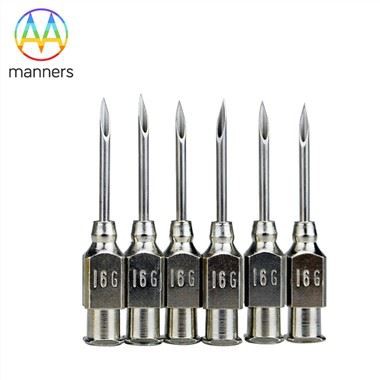
1. Preparation of precision wire: The journey begins with medical-grade stainless steel wire coils that meet ASTM/AISI standards. Manufacturers select wire of the appropriate diameter based on the final diameter of the product (such as 20G, 21G) and length requirements. Through precision straightening and cutting equipment, the wire is formed into equal-length needle tube blanks.
2. Needle hub forming and connection: For lancets with needle hubs, the hubs (typically made of plastic or metal) are independently manufactured through injection molding or mechanical processing. The core process lies in permanently, firmly, and leak-proof connecting the needle tube to the hub. This is usually achieved through precision dispensing of medical-grade adhesives or laser welding technology. Laser welding is preferred for high-end products due to its small heat-affected zone, high strength, and no additives. After welding, tensile tests and air tightness tests are conducted to ensure that the connection can withstand various mechanical stresses during clinical use.
Phase Two: Core Function Surface Shaping - Needle Tip and Inner Cavity
1. Precision grinding of the needle tip: This is the most crucial process that determines the puncture performance (sharpness, pain sensation, and tissue damage). Modern manufacturers generally use fully automatic precision grinding machines with multiple grinding wheels and multi-axis linkage. By rotating the needle tube at a specific angle and speed and grinding it with a series of diamond grinding wheels of different grits and shapes, the main and secondary bevels of the needle tip are formed step by step, ultimately creating a symmetrical, burr-free, and extremely sharp three-bevel or multi-bevel needle tip. Advanced systems can monitor the grinding force online and adjust parameters in real time to ensure consistency. The ground needle tips must be 100% inspected by an optical projector or an automated vision inspection system to ensure that the angles, symmetry, and edge quality meet the strict ASTM F3014-14 and other needle tip sharpness standards.
2. Side hole processing (if required): For needles that require specific flow rates or functions, side holes may need to be machined near the tip of the needle tube. Traditional drilling is prone to burrs and internal flaring. High-end processes use ultra-short pulse laser cutting, which can achieve precise ablation with minimal thermal impact, forming smooth-edged and precisely shaped side holes, optimizing blood flow, and reducing the risk of turbulence and hemolysis.
Phase Three: Surface Finishing and Cleaning - The Sublimation of Safety
1. Electrolytic polishing: This is the core surface treatment process for enhancing the biocompatibility and performance of the needle. The needle is immersed in the electrolyte as the anode. When electricity is applied, the metal ions at the microscopic protrusions on the surface are preferentially dissolved, resulting in a mirror-like smooth surface with significantly reduced roughness (Ra value). Its value lies in: completely removing the microscopic burrs generated by grinding and cutting; significantly improving corrosion resistance (forming a thicker chromium oxide passivation film); reducing the friction coefficient to make puncture smoother.
2. Multi-stage ultrasonic cleaning: Even after electrolytic polishing, the needle (especially the inner cavity) may still have residual particles, processing oils or polishing liquids. In a 10,000-level or higher clean environment, the needle will undergo multiple ultrasonic cleaning stages with different formulas and multiple stages of purified water or water for injection rinsing. The cavitation effect of ultrasonic waves can penetrate into the tiniest crevices to physically remove contaminants. After cleaning, the products need to be tested for particle contamination and non-volatile residues to ensure their cleanliness meets the requirements of the pharmacopoeia or even stricter internal control standards of the enterprise.
Phase Four: Final Inspection, Packaging and Sterilization
1. Comprehensive final inspection: Before packaging, the finished products must pass through the final quality checkpoint. This includes functional tests (such as connector fit, ventilation), destructive physical tests on a sample basis (such as connection strength), and full automated optical inspection to eliminate any appearance defects. Key dimensions are subject to SPC (Statistical Process Control) spot checks using optical measuring instruments.
2. Primary packaging and sterilization: Qualified needles are packed in breathing bags (Tyvek/plastic composite bags) in a clean environment. The packaging system must pass integrity verification to ensure that the sterile barrier remains intact after sterilization and transportation. Subsequently, the products are sterilized based on material and regulatory requirements, using either ethylene oxide or gamma rays. The entire sterilization process (including sterilant concentration, temperature, humidity, and time) must be strictly validated and reconfirmed regularly. After sterilization, the products must be decontaminated (to remove residual sterilant) in a controlled environment and sampled for sterility testing and ethylene oxide residue detection.
3. Labeling and release: Only when all production records, process inspection records, sterilization records, and final inspection reports have been reviewed and approved by the quality department can the batch of products be released to the market. Each sales unit is labeled with complete information including product name, specification, batch number, expiration date, sterilization mark, and manufacturer details, ensuring traceability.
Conclusion: Tools of millimeters, achievements of micrometers.
A modern bloodletting needle, no more than a few centimeters in length and less than a millimeter in diameter, embodies the essence of modern precision engineering and quality management philosophy in its manufacturing process. Professional bloodletting needle manufacturers integrate materials science, precision mechanics, automatic control, chemical treatment, and aseptic techniques to transform a series of complex process steps into a stable, reliable, and repeatable precision manufacturing system. They are well aware that even the slightest deviation in each process step could be magnified into a risk during clinical use. Therefore, with an attitude of "craftsmanship in the microcosm", they pursue the ultimate in the microscopic world to ensure that every product leaving the workshop carries the highest respect for life safety. This is not merely manufacturing; it is a precise shaping carried out with science and responsibility.