Post-Puncture Sequela Mechanisms & Technical Optimization Of Disposable Spinal Needles
Aug 06, 2026
1. Industry & Clinical Pain Points
Lumbar puncture sequelae, including chronic low back pain, post-dural puncture headache, and transient neurological symptoms, have always been common hidden dangers in neurological and anesthesiology clinical work. Most patients who undergo single standardized puncture recover well, while patients requiring multiple treatment cycles are highly prone to irreversible cumulative damage. Long-term repeated puncture destroys lumbar muscle fiber continuity and spinal ligament elasticity, resulting in persistent postoperative soreness and limited lumbar activity. For inexperienced operators, improper needle insertion depth, deflection angle, and excessive thrust force often cause accidental dural tearing and nerve root stimulation, further aggravating sequela severity. Many clinical departments traditionally attribute complications entirely to manual errors, ignoring the critical impact of non-disposable, low-precision spinal needle tools. Unsterile surfaces, unpolished burrs, and unstable structural rigidity of inferior needles are core instrumental factors leading to avoidable postoperative complications.
2. Technical Optimization Principle of Disposable Spinal Needles
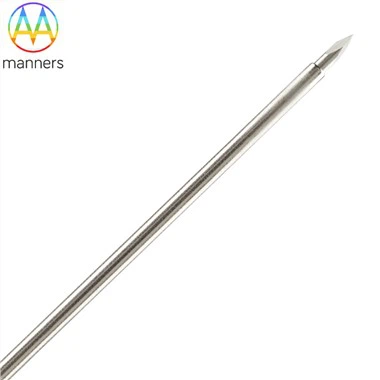
Disposable spinal needles adopt systematic technical optimization targeting sequela formation mechanisms, realizing full-link risk control. The core optimization principle focuses on sterile safety, minimal trauma, and stable structural performance. The entire needle body is made of medical stainless steel with ultra-fine mirror polishing technology, eliminating surface burrs and rough textures that cause tissue scratching and inflammation. The one-time disposable sterile processing completely removes cross-infection risks and avoids secondary inflammatory sequelae caused by repeated tool use. The dual-tip structural design optimizes different trauma mechanisms: Quincke Point improves penetration efficiency for emergency scenarios, while upgraded Pencil Point structure changes cutting puncture into physical separation, avoiding irreversible fiber incision damage. Uniform tube wall thickness and integrated molding prevent needle bending and deformation during deep tissue penetration, reducing operational deviation and blind puncture-induced trauma.
3. Full Specification & Structural Classification
Disposable spinal needles are scientifically classified by structural function, gauge size, and color code to adapt to differentiated anti-sequela demands. Structurally, they are divided into cutting-type Quincke Point needles and atraumatic Pencil Point needles: Quincke models prioritize operational efficiency for emergency one-time puncture, while Pencil Point models focus on trauma reduction for repeated treatment. By gauge size and color code, 16G–19G large specifications apply to severe emergency diagnosis, 20G–23G medium specifications adapt to routine anesthesia and examination, and 24G–27G ultra-fine specifications target minimally invasive repeated treatment. The standard 90mm length meets most adult clinical needs, while customized length options solve operational difficulties for obese patients and special anatomical cases, further reducing puncture failure and secondary trauma risks.
4. Anti-Sequela Practical Operation Guidelines
To maximize the anti-sequela advantages of disposable spinal needles, clinical personnel must follow refined operational standards. First, classify needle types reasonably: select Pencil Point disposable needles for all repeated puncture treatment courses to avoid cumulative fiber cutting damage. Second, match gauge size scientifically: use fine-gauge needles for vulnerable groups and long-term treatment patients to minimize single-point trauma. Third, strictly enforce disposable use protocols and prohibit repeated application to eliminate material aging and bacterial contamination risks. Fourth, optimize puncture techniques, reduce exploratory insertion times, and rely on clear tissue breakthrough sensation to ensure one-time successful puncture. Fifth, strengthen postoperative bed rest and hydration management to assist dural tissue healing and reduce headache and fluid leakage sequelae.
5. Industry Practical Experience
Long-term clinical application practice proves that standardized disposable spinal needles are the most effective low-cost means to reduce lumbar puncture sequelae. Compared with reusable needles, disposable models maintain zero surface abrasion and complete structural precision for each operation, avoiding incremental tissue damage. The atraumatic pencil tip design significantly reduces dural tear rates and postoperative headache incidence, especially suitable for chronic neurological disease patients with multiple treatment cycles. Customized length specifications effectively solve the problem of insufficient puncture depth in obese patients, eliminating repeated insertion trauma caused by mismatched standard needles. The unified color code system standardizes clinical selection, reducing human error-induced complications.
6. Summary & Value Sublimation
Disposable spinal needles achieve targeted suppression of lumbar puncture sequelae through material optimization, structural innovation, and standardized one-time use mechanism. They make up for the inherent defects of traditional reusable puncture tools, reduce iatrogenic trauma from the instrument source, and weaken the correlation between repeated puncture and long-term patient sequelae. As standardized clinical tools, they greatly improve the safety and comfort of neurological interventional treatment and spinal anesthesia procedures.
7. Future Development Suggestions
Future clinical development should fully popularize fine-gauge atraumatic disposable spinal needles and gradually phase out traditional cutting needles for routine repeated treatment. Medical departments should formulate unified needle selection standards based on disease type and puncture cycle, forming a standardized anti-sequela operation system. Continuous technical upgrading of disposable spinal needles will further minimize clinical trauma and achieve safer and more refined lumbar puncture diagnosis and treatment.
https://www.fishersci.com/shop/products/disposable-spinal-needles/22355130