Performance Differences Of Breast Biopsy Needles Made Of Different Materials in Repositioning Operations
Jul 16, 2026
https://www.mayoclinic.org/tests-procedures/breast-biopsy/about/pac-20384812
The material of a breast biopsy needle not only determines its durability and biocompatibility but also profoundly affects the feel, accuracy, and safety of the repositioning operation. Currently, the mainstream materials include stainless steel, titanium alloys, and medical polymers. This article will systematically compare the performance differences of these three types of materials in repositioning operations from the perspective of repositioning kinetics.
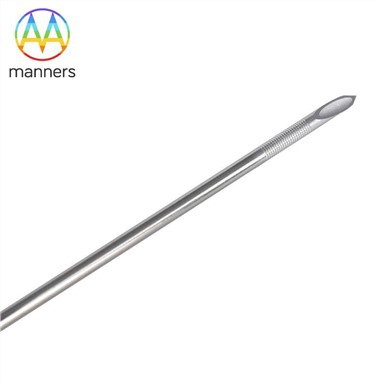
Stainless steel biopsy needles were the earliest type widely used in clinical practice. Their advantages include high strength, low cost, good corrosion resistance, suitability for high-temperature and high-pressure sterilization, and frequent use in reusable instruments. However, stainless steel has a high density (approximately 7.9 g/cm³), resulting in a relatively heavy needle. During repositioning, the heavier needle brings greater inertia, requiring the physician to apply greater pulling force to complete the repositioning, especially during repeated sampling, which can easily lead to hand fatigue. Furthermore, stainless steel has a high coefficient of friction, and insufficient lubrication can cause a "jamming" phenomenon during repositioning, affecting the smoothness of the operation.
In contrast, titanium alloy biopsy needles, with their low density (approximately 4.5 g/cm³) and high specific strength, have become the preferred choice for high-end biopsy instruments. Titanium alloy is about 40% lighter than stainless steel, significantly reducing hand load during repositioning. Clinical feedback shows that when using titanium alloy needles for prolonged, multi-site biopsies, doctors experience significantly less wrist fatigue. Simultaneously, a dense oxide film can form on the surface of titanium alloy, providing excellent self-lubricating properties and a smoother repositioning process. However, titanium alloy is more expensive and more difficult to manufacture, limiting its widespread use in disposable consumables.
Medical polymers (such as polycarbonate and PEEK) are mainly used for disposable biopsy needles. These materials are lightweight, transparent, low-cost, and do not require sterilization. In terms of repositioning, polymer needles have almost no weight burden, making them suitable for short-duration, single-point biopsies. However, due to limitations in material strength, their internal structures (such as repositioning springs and locking clips) are often designed to be relatively simple. Some low-end products may experience plastic deformation or locking mechanism failure after repeated repositioning, preventing further firing. Furthermore, polymer needles lack a metallic feel and offer little tactile feedback during repositioning, requiring doctors to rely more on visual confirmation.
From a repositioning accuracy perspective, metallic materials, due to their high rigidity, exhibit minimal deformation during repositioning, resulting in highly controllable needle tip displacement. Polymer needles, however, may slightly bend under pressure, affecting the accuracy of needle tip positioning after repositioning. This is particularly critical for procedures near the nipple, areola, or deep lesions.
Regarding infection control, stainless steel and titanium alloy needles require rigorous cleaning and sterilization processes. The repositioning mechanism can easily trap tissue debris, potentially becoming a source of cross-infection if cleaning is incomplete. Disposable polymer needles avoid this problem, but their environmental impact is increasingly concerning.
In summary, material selection should consider the intended use: titanium alloy needles are preferable for teaching hospitals and high-frequency users to improve the user experience; stainless steel needles can be considered for primary healthcare institutions to reduce costs; and disposable polymer needles are suitable for emergency or screening scenarios to improve efficiency. Regardless of the material, standardized repositioning procedure training is a prerequisite for ensuring biopsy quality. In the future, with the development of composite material technology, new materials such as carbon fiber reinforced polymers are expected to achieve a better balance between weight reduction and strength, further optimizing the repositioning performance of breast biopsy needles.