Orthopedic Shaver Blades + Manufacturers: Clinical Applications And Operating Specifications in Minimally Invasive Surgery
Apr 22, 2026
Orthopedic Shaver Blades + Manufacturers: Clinical Applications and Operating Specifications in Minimally Invasive Surgery
As a key instrument in minimally invasive orthopedic surgery, the orthopedic shaver blade plays an irreplaceable role in arthroscopic surgery and various orthopedic debridement and repair procedures. These precision instruments enter the body through small incisions to achieve precise excision, trimming, and remodeling of bone and soft tissue, significantly reducing surgical trauma and accelerating patient recovery.
In knee arthroscopy, the application of orthopedic shaver blades is the most extensive. Shaver handpieces and accessories (such as those from Stryker) are suitable for meniscus tear trimming, notchplasty during cruciate ligament reconstruction, synovectomy, cartilage injury repair, loose body removal, and debridement for osteoarthritis. The shaver system can effectively excise degenerated cartilage, trim cartilage defect areas, and polish osteophytes to restore the smoothness of the articular surface. Disposable shaver blades are primarily used in knee arthroscopy to excise torn meniscus parts and clean loose bodies, reducing trauma through minimally invasive incisions (usually less than 1 cm) .
Shoulder arthroscopy is another important application area for orthopedic shaver blades. In these surgeries, the shaving system is used for acromioplasty for shoulder impingement syndrome, rotator cuff debridement, synovectomy, loose body removal, and shoulder joint adhesion release. Small joint-specific shaver handpieces (Small Hub design) are particularly suitable for delicate operations in confined spaces such as wrist and ankle joints. Specialty blades designed for specific surgical procedures can be used to shape bone or remove tough tissue; some have dual cutting edges or built-in suction, features that help surgeons work faster and keep the area clean .
In hip surgery, orthopedic shaver blades play an important role in the treatment of femoral head necrosis and femoroacetabular impingement (FAI), used for polishing osteophytes on the acetabulum or femoral head and labral trimming. Specialized long-handled blades (working lengths up to 180 mm) meet the needs of deep hip operations. Ankle, elbow, and wrist surgeries are equally applicable to orthopedic shaver blades, including ankle osteophyte cleaning, elbow loose body removal and adhesion release, wrist cartilage injury repair, and arthroscopic ligament release for carpal tunnel syndrome .
In spinal surgery, orthopedic shaver blades, in conjunction with spinal endoscopic systems, are used for precise bone tissue grinding and canal decompression in foraminal endoscopic surgery; burr specifications can reach up to 48 types to meet the needs of different surgical sites. This application demonstrates the precise operational capability of orthopedic shaver blades around delicate neural structures .
The clinical application advantages of orthopedic shaver blades are significant. Arthroscopic surgery is a minimally invasive procedure operated via microscopes and arthroscopic instruments, which can reduce surgical trauma and bleeding and shorten patient recovery time. The arthroscopic shaver is one of the important instruments in arthroscopic surgery, mainly used for cartilage repair, ligament repair, synovectomy, and bone cutting. Precise cutting is the core feature of orthopedic shaver blades; adopting advanced manufacturing processes, they have high-precision cutting capabilities and can perform precise cutting and tissue removal .
Regarding operating specifications, preoperative preparation includes checking the integrity of the blade, ensuring the drive shaft is free of bends or breaks, connecting to the host (such as Arthrex or Smith & Nephew shaver systems) and calibrating the speed (usually 500-1000 rpm). Surgical techniques require locating the lesion area under arthroscopic monitoring, gently advancing the blade, and avoiding excessive force to prevent accidental injury to normal tissue. The blade should be discarded immediately after surgery and handled as medical waste .
Efficient debridement is another important function of orthopedic shaver blades. For example, the Smith & Nephew 7205306 is an efficient 4.5mm burr; the 4.5mm diameter cutting head is suitable for most joint surgical spaces. While cutting tissue, it can connect to negative pressure suction to immediately aspirate excised tissue debris from the surgical area, keeping the surgical field clear and avoiding residues that affect operation or postoperative recovery. Some models are equipped with bipolar suction devices that can directly stop bleeding and selectively remove secretions, significantly improving surgical efficiency .
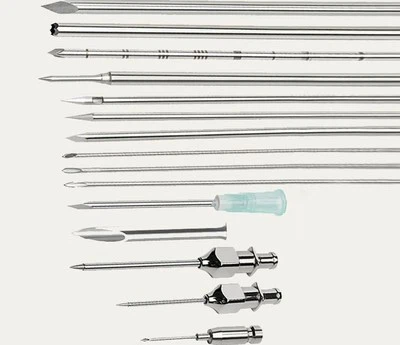
The design features of orthopedic shaver blades directly affect their clinical application effectiveness. Blade length can range from a few millimeters to several centimeters, which is an important factor in determining cutting depth and reach. Blade width also varies, affecting the area covered by the blade during surgery. The angle of the cutting edge can be straight or curved; curved blades are usually used for hard-to-reach areas. The tip of the shaver blade can have various designs, such as straight, angled, or serrated, to adapt to different surgical tasks .
In the field of sports medicine, the application of orthopedic shaver blades is particularly critical. ZorayPT's sports medicine orthopedic shaver blades are designed for sports medicine arthroscopic surgery, suitable for sports-related injuries such as meniscus repair, ligament reconstruction, and joint debridement. These blades adopt teardrop, double-tooth flat bite, angled double-tooth bite, burr type, or custom shapes to meet different surgical needs .
In summary, orthopedic shaver blades play a crucial role in minimally invasive orthopedic surgery. Their precise cutting ability, efficient debridement function, and diverse design specifications enable physicians to perform precise treatments for different joints and lesions. With the continuous development and popularization of minimally invasive surgical techniques, the clinical application scope of orthopedic shaver blades will further expand, providing safe and effective treatment options for more patients.