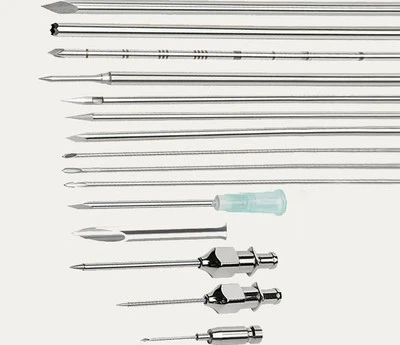
OPU Ovum Pick-Up Needles: Key Instruments For Precision Egg Retrieval in Assisted Reproduction And The Value Of Manufacturers Introduction: The Pinnacle Of Precision in Reproductive Medicine
Apr 20, 2026
Title: OPU Ovum Pick-Up Needles: Key Instruments for Precision Egg Retrieval in Assisted Reproduction and the Value of Manufacturers
Introduction: The Pinnacle of Precision in Reproductive Medicine
In an era where Assisted Reproductive Technology (ART) is increasingly prevalent, techniques such as In Vitro Fertilization (IVF) and In Vitro Maturation (IVM) have become vital pathways for countless infertile couples seeking to realize their dreams of parenthood. Within the intricate workflow of assisted reproduction, the OPU (Ovum Pick-Up) needle stands as an indispensable core instrument. Its performance directly dictates the success rate of egg retrieval, the integrity of the oocytes, and the overall surgical experience for the patient. OPU, signifying transvaginal ultrasound-guided oocyte retrieval, utilizes what is also known as an oocyte retrieval needle-a precision medical puncture needle specifically engineered for the aspiration of follicular fluid and cumulus-oocyte complexes.
Section 1: The Foundation of Quality and Safety
A qualified OPU retrieval needle must satisfy fundamental requirements: biological safety, structural stability, and smooth, atraumatic puncture performance. These characteristics are not incidental; they are the direct result of rigorous design and stringent production controls implemented by professional manufacturers. During the product development phase, manufacturers must synthesize a comprehensive understanding of material science, human anatomy, clinical operational habits, and hospital-acquired infection (HAI) prevention protocols. From the initial screening of raw materials to precision machining, dimensional design, and sterile packaging, every facet of the manufacturing process reflects the technical prowess and quality consciousness of the producer.
Section 2: Structural Characteristics and Design Philosophy
The structural features of the OPU needle are distinctively designed for its purpose. Characterized by an overall slender profile, the needle typically ranges in length from 12 cm to 20 cm. This length is critical for navigating the vaginal fornix to accurately reach the ovaries situated deep within the pelvic cavity. The diameter of the needle shaft is denoted by its Gauge (G), commonly ranging from 16G to 19G; notably, a smaller gauge number corresponds to a thicker needle shaft. Manufacturers must strike a delicate balance between puncture smoothness and the degree of tissue injury. Thicker needles facilitate higher aspiration efficiency but may cause relatively greater tissue trauma, whereas finer needles offer a more minimally invasive option suitable for trauma-sensitive patients, albeit with a slower aspiration rate. Professional manufacturers typically provide a complete series of specifications to meet the diverse clinical needs of patients with varying body types and follicular conditions.
Section 3: Material Science as the Core of Quality
The selection of materials is paramount to the quality of OPU needles. The current mainstream materials include medical-grade stainless steel, titanium alloys, and medical polymers. Medical stainless steel, prized for its high strength, corrosion resistance, and excellent biocompatibility, is frequently used for reusable needles. Titanium alloys offer a lighter weight and superior strength, catering to scenarios demanding higher maneuverability. Conversely, medical polymers are predominantly utilized in disposable needles; they effectively prevent cross-contamination and align perfectly with modern reproductive medicine's stringent HAI standards. Manufacturers select appropriate materials based on specific clinical scenarios and apply refined surface treatments to ensure the needle body is smooth and burr-free, the tip is sharply honed, and the lumen resists clogging.
Section 4: Wide-Ranging Applications and Clinical Support
In terms of application, OPU needles cover a vast spectrum of reproductive medicine, including routine IVF retrieval, fertility preservation, donor egg cycles, and the treatment of conditions such as Polycystic Ovary Syndrome (PCOS) and endometriosis. Manufacturers bear the responsibility not only for providing stable and reliable products but also for continuously tracking clinical demands. Through the ongoing optimization of the needle tip structure, shaft flexibility (resilience), and radiopacity (imaging visibility), they assist physicians in increasing the oocyte yield rate while minimizing complications such as bleeding, infection, and organ injury. In essence, OPU needle manufacturers serve as a critical supporting force in the field of assisted reproduction, safeguarding the safety of the reproductive journey with professional instrumentation.
支撑力量,用专业器械守护生育安全.