Analyzing The Dimensional Design Of OPU Retrieval Needles: How Manufacturers Balance Precision And Minimally Invasive Practice
Apr 20, 2026
Analyzing the Dimensional Design of OPU Retrieval Needles: How Manufacturers Balance Precision and Minimally Invasive Practice
Introduction: The Criticality of Dimensional Engineering
The clinical efficacy of the Ovum Pick-Up (OPU) needle is overwhelmingly determined by the scientific rigor of its dimensional design. As a core instrument in assisted reproductive technology, the needle's length and gauge (diameter) are not arbitrary figures; they represent a delicate compromise between accessibility and tissue preservation. These two parameters constitute the primary focus of technical research and development for OPU needle manufacturers. A rational dimensional configuration ensures smoother puncture procedures, minimizes iatrogenic trauma to the greatest extent, and maximizes the oocyte yield rate. Professional manufacturers invest heavily in systematic dimensional layouts to meet diverse clinical scenarios, ultimately achieving the optimal balance between precise egg retrieval and minimally invasive safety.
Section 1: Length Optimization Based on Anatomical Science
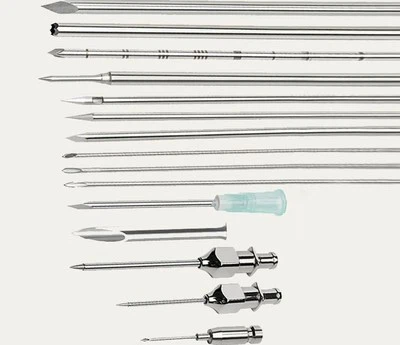
In terms of length, OPU needles are universally designed with an elongated, slender profile, typically ranging from 12 cm to 20 cm. This range is not arbitrarily chosen; it is meticulously determined by manufacturers based on a synthesis of factors including the anatomical structure of the female pelvis, the variable depth of ovarian positioning, and established ultrasound guidance practices.
The clinical rationale for offering varied lengths is significant. For patients with a lean physique and superficially positioned ovaries, a shorter needle offers superior maneuverability and control. Conversely, for obese patients or those with deeply seated ovaries, extended lengths are necessary to ensure the needle tip accurately reaches the target follicles without exerting excessive force that could displace organs. Manufacturers typically provide multiple length options to prevent the clinical pitfalls of using a needle that is too short (resulting in incomplete retrieval) or unnecessarily long (causing redundant tissue trauma).
Section 2: Balancing Efficiency and Trauma through Gauge Selection
The diameter of the needle, denoted by the Gauge (G) system, typically ranges from 16G to 19G within the industry. It is crucial to understand that in this system, a smaller numerical value signifies a larger diameter. Manufacturers must carefully weigh the trade-off between aspiration efficiency and tissue trauma during the design phase.
Larger Gauges (16G, 17G): These needles feature larger lumens, allowing for rapid follicular fluid aspiration. They are ideal for cases with a high follicle count or when surgical time is constrained. However, the larger puncture diameter results in relatively more noticeable trauma to the vaginal wall and ovarian tissue.
Smaller Gauges (18G, 19G): These finer needles prioritize gentleness. They cause minimal trauma and bleeding, leading to faster patient recovery. However, their narrower lumen results in lower aspiration flow rates and requires a higher level of skill from the operator to prevent oocyte damage due to excessive suction pressure.
Section 3: Advanced Structural Engineering and Standardization
To transcend the simple limitations of diameter, professional OPU needle manufacturers implement advanced structural optimizations. A prime example is the adoption of thin-walled, high-tensile-strength structures. This engineering marvel allows the internallumen to be maximized without increasing the externaldiameter of the needle. This innovation directly addresses the conflict between needing a large bore for efficiency and a small puncture wound for minimal invasion.
Furthermore, the precise balance of shaft stiffness and flexibility is paramount. An overly flexible shaft may deflect during deep puncture, reducing accuracy, while an excessively rigid shaft could pose a risk of piercing adjacent organs. Through precision machining that controls wall thickness uniformity, manufacturers ensure the needle maintains its linearity over long distances, enhancing positional accuracy under ultrasound guidance.
Standardization is another cornerstone of the manufacturing process. Uniform specifications for connection interfaces, hub dimensions, and needle coaxiality are critical. This standardization allows the OPU needle to be universally compatible with different brands of needle guides, negative pressure control devices, and ultrasound probes. High-quality manufacturers complement this with detailed dimensional selection guides, assisting fertility centers in making rational inventory choices based on patient BMI, ovarian position, and follicle counts, thereby reducing operational waste.
Conclusion
In conclusion, while the dimensional design of OPU needles may appear straightforward, it encapsulates a vast repository of clinical data and engineering experience. OPU needle manufacturers continuously refine parameters such as length, gauge, wall thickness, and stiffness. This relentless pursuit of optimization ensures that the instruments provided offer unparalleled adaptability and safety, delivering stable and reliable support for the intricate art of assisted reproductive surgery.