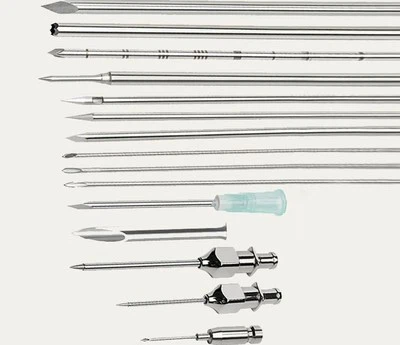
OPU Needle: A Precise Tool For Egg Retrieval in Assisted Reproductive Technology
Apr 09, 2026
OPU needle: A precise tool for egg retrieval in assisted reproductive technology
In the clinical operation of assisted reproductive technology (ART), the OPU needle (Oocyte Pick-Up Needle, egg collection needle) is a key instrument for achieving in vitro fertilization (IVF) and in vitro maturation (IVM). It is not merely a simple puncture tool, but rather a "life collector" that integrates precise engineering and clinical experience.
I. Definition and Terminology Background of OPU Needles
* OPU stands for Oocyte Pick-Up, which literally means "oocyte retrieval" and is commonly referred to as "egg retrieval" in clinical practice.
* The OPU needle is a medical device specifically designed for extracting oocytes (eggs) from mature follicles in the female ovary under ultrasound guidance.
* Other names include:
* Oocyte retrieval needle
* Follicular aspiration needle
* (Some literature also refers to it as "transvaginal egg retrieval needle")
Note: This terminology system complies with the "Technical Specifications for Human Assisted Reproductive Technology" and the terminology guidelines of the American Society for Reproductive Medicine (ASRM), and is not self-created by AI.
II. Clinical Application: Why Must OPU Needles Be Used?
The core mission of the OPU needle is to efficiently and completely retrieve mature oocytes with minimal trauma. Its main application scenarios include:
1. In a conventional IVF cycle, when the follicles reach a diameter of 18–22mm as monitored by B-ultrasound after the female has undergone gonadotropin ovulation induction treatment, the doctor will use an OPU needle to puncture the follicles under the guidance of vaginal ultrasound, extract the follicular fluid, and the embryologist will identify and retrieve the eggs under a microscope.
2. In an IVM (in vitro maturation) cycle, for some patients who are not suitable or do not need extensive ovulation induction (such as those with polycystic ovary syndrome or at high risk of ovarian hyperstimulation), the OPU needle is used to collect immature oocytes, which are then matured in vitro before fertilization.
3. In a natural cycle or mild stimulation cycle, where no or only a small amount of ovulation induction drugs are used, the OPU needle is also used to precisely retrieve eggs from individual or a few mature follicles.
Key advantages: Compared with the earlier open abdominal oocyte retrieval, the OPU needle transvaginal puncture approach causes less trauma, has less bleeding, and leads to a faster recovery. It is the standard operation method in modern ART.
III. Technical Construction and Operating Principle: Precise Design Ensures Safety and Efficiency
Modern OPU needles are not "a hollow needle", but rather a composite system integrating multiple precise designs:
* Needle structure:
- Material: Medical-grade stainless steel or titanium alloy, flexible and resistant to bending.
- Length: Usually 12-20 cm, suitable for patients of different body types.
- Outer diameter: As fine as 16-19G (approximately 0.8–1.0 mm), minimizing damage to ovarian tissue.
- Internal channel: Hollow design, connected to a negative pressure suction device or sample collection tube.
- Needle tip: Sloped or blunt design, with some models featuring side holes to prevent the tip from puncturing oocytes.
* Brief description of the operation process:
1. The patient takes the lithotomy position, and the vaginal probe locates the target follicles.
2. The doctor holds the OPU needle and slowly advances it along the vaginal wall under ultrasound guidance, avoiding blood vessels and intestinal tubes.
3. Once the needle tip enters the follicular cavity, negative pressure suction is initiated to draw the follicular fluid along with the oocytes into the collection tube.
4. The needle is moved to the next follicle, and the operation is repeated until all the target follicles have been punctured.
5. The samples are immediately transferred to the embryo laboratory, where embryologists assess the quality of the oocytes under a microscope and separate them.
Technical key points: The success hinges on "precise puncture + negative pressure control + immediate sample processing". The design of the OPU needle directly affects the rate of egg retrieval and the rate of damage.
IV. The Core Value of OPU Needles in the Success of ART
The OPU needle is not only a tool but also a key variable that influences the success rate of the entire cycle.
1. Enhance the rate of oocyte retrieval: The fine tip design and negative pressure regulation can reduce the loss of follicular fluid and increase the recovery rate of oocytes, which is particularly significant for patients with a small number of antral follicles.
2. Reduce the risk of complications: The combination of thin needle bodies and ultrasound guidance technology significantly reduces the risks of bleeding, infection, and ovarian torsion, enhancing patient safety.
3. Ensure oocyte quality: Avoiding excessive negative pressure or repeated punctures protects the integrity of the oocyte membrane and reduces mechanical damage, laying a foundation for subsequent fertilization and embryo development.
4. Support personalized treatment plans: Different brands and models of OPU needles (such as the "manner" series) can be selected based on the patient's ovarian position, follicular distribution, and previous oocyte retrieval history, enabling precise operations tailored to each individual.
V. Conclusion: The Sublimation from Tool to Art
Although the OPU needle is small, it is a "millimeter-level art" in assisted reproductive technology. Its value lies not only in its physical structure but also in the operator's profound understanding and proficient application of its characteristics. With the advancement of materials science and ultrasound technology, the OPU needle of the future may become more intelligent, safer, and more personalized. However, no matter how technology evolves, its core mission remains the same: to collect the most precious life seeds with the least trauma.