Occupational Injury Prevention: Blunt Tip Filter Needles For Healthcare Worker Safety
Nov 01, 2026
1. Pain Points of Needlestick Injury in Medication Preparation
Needlestick injury is one of the most common occupational hazards for nurses and pharmacy technicians. In the process of preparing parenteral drugs, staff need to repeatedly handle ampoules, vials and syringes. Sharp needle tips are easy to stab fingers during recapping, transfer and accidental slipping. After being stabbed by contaminated needles, workers face infection risks of hepatitis B, hepatitis C and HIV. Many medical institutions have issued sharp operation specifications such as no recapping, but the inherent sharp structure of traditional needles cannot eliminate the risk fundamentally. In high-intensity scenarios such as emergency rescue and peak infusion preparation, the probability of accidental puncture rises significantly. Although safety shield needles appear on the market, many safety shield structures are complex, affect operation sensitivity and are not compatible with filter function. Separate filter devices require more hand movements, which indirectly increases the exposure time of sharp needles. The contradiction between particle filtering demand and occupational safety protection has long existed in clinical consumable selection.
2. Safety Design Principle of Blunt Tip Filter Needles
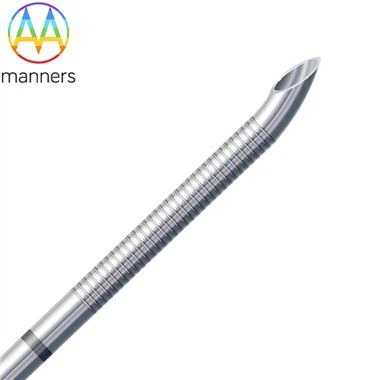
The blunt tip design is the core safety feature of this product. Compared with conventional sharp bevel needles, the blunt tip requires far more force to pierce human skin. Under normal accidental touch and slip conditions, it cannot easily penetrate gloves and skin, thus greatly reducing the risk of needlestick injury. The built-in filter membrane retains the particle filtering function of filter needles, realizing dual functions of occupational protection and drug purification in one single consumable. The stainless steel needle shaft maintains smooth liquid transfer performance, and the hub structure integrates filter without increasing the overall size and operation difficulty. It is designed for drug withdrawal only, not for skin puncture injection. The design logic is to separate the "preparation link" and "administration link": use blunt filter needle for extraction and filtration, and switch to sharp injection needle when formal injection is needed. This functional separation concentrates sharp exposure only on the final patient administration stage, and reduces the exposure frequency of sharp needles in the preparation stage with the largest workload.
3. Product Classification and Gauge Matching for Occupational Safety
The gauge range of 14G–27G covers different preparation scenarios. Low-gauge large lumen models (14G–17G) are used for high-viscosity and large-volume extraction, suitable for pharmacy batch compounding; medium gauge 18G–22G is the mainstream ward model, used for daily ampoule and vial preparation; 23G–27G fine lumen models are for small-volume precision dispensing. Customized length is an important option for occupational safety. When the needle length matches the depth of ampoules and vials, operators can keep stable hand posture, reduce wrist twisting and accidental slipping. Luer lock connection is more recommended in high-risk scenarios, because it can prevent the needle from falling off the syringe and causing accidental stabbing. In classification, it can be divided into standard safety blunt filter needles and customized special models. The standard version is for general wards, and customized versions are developed according to special bottle shapes and customer operation habits. Packaging can be standard carton or customized independent packaging to meet the inventory management of different medical institutions.
4. Operation Specification for Reducing Occupational Injury
First, establish fixed operation logic: blunt tip filter needle is only for withdrawal and filtration, sharp needle is only for patient injection. Do not use blunt filter needle to puncture skin. Before operation, arrange the preparation bench neatly, reduce sundries, and avoid needle collision. After opening the sterile packaging, take the needle by the hub instead of the needle shaft. When inserting into ampoules and vials, control the force gently, avoid excessive force leading to hand sliding. After extraction, separate the filter needle immediately, do not hold the filter needle and sharp needle at the same time. Discard used filter needles directly into the puncture-proof sharps container without recapping. Regularly check the sharps container filling height and replace it in time. Select proper gauge and length according to the drug to avoid excessive aspiration resistance caused by mismatched models, which will lead to unstable holding and accidental injury. For new staff, simulation training is required to distinguish the appearance difference between blunt filter needles and sharp needles, to avoid misuse.
5. Practical Experience from Frontline Nursing and Pharmacy Teams
After many hospitals promote blunt tip filter needles, the statistics of occupational injury reports show obvious improvement, especially in pharmacy intravenous admixture rooms and infusion wards. Frontline experience summarizes several key points. First, unified model configuration: 18G is the preferred universal model for most wards, which balances flow rate and safety. Second, error prevention: past cases show that individual staff mistakenly use blunt filter needles for injection, leading to failed puncture and repeated operation, so the training must emphasize functional division. Third, ergonomic matching: customized length can reduce the bending angle of the wrist, especially for deep long-neck ampoules. Fourth, batch management: standard carton packaging is convenient for centralized distribution, and single independent packaging is convenient for ward portable use. It is also found that the operation psychological pressure of staff is reduced. When using blunt filter needles for preparation, they do not need to be highly nervous about accidental stabbing, which helps improve the standardization of aseptic operation. However, it is also necessary to remind that blunt tip cannot achieve zero injury risk; improper violent extrusion may still cause skin damage.
6. Summary of Occupational Safety Value
Blunt tip filter needles provide a practical consumable solution for the hierarchical safety management of parenteral medication. It moves the safety protection forward to the drug preparation link with the highest operation frequency. It combines particulate filtering and anti-stab design, avoiding the defect that single-function safety consumables cannot solve two risks at the same time. It does not require complex operation training, and can be quickly integrated into the existing SOP of medical institutions. Its value is not only to reduce the injury quantity, but also to reduce the anxiety of medical staff in daily work and improve the implementation compliance of aseptic specifications. It is an important component of the hospital occupational health protection system.
7. Suggestions and Future Trend
In the future, safety-oriented medical consumables will develop towards integration and multi-protection. Manufacturers can add color identification hubs to distinguish blunt filter needles from other needles at a glance. Medical institutions can incorporate blunt filter needle configuration into occupational safety assessment indicators. Regulatory organizations will pay more attention to the safety performance of needle consumables in the preparation stage. Customized demand for special length and special connector will continue to grow. For medical consumable suppliers, it is necessary to provide complete safety data and training support while supplying products. With the improvement of hospital occupational health management requirements, blunt tip filter needles will become a standard safety consumable for intravenous preparation.
< img alt="news-1-1" src="/uploads/24240/news/202604241539186d0ff.png " />