Nasal Sculpting Without Surgery
Oct 08, 2026
The Pain Point
Nasal aesthetics represent one of the most requested yet most technically challenging areas in non-surgical cosmetic medicine. Clients frequently present with concerns about a low nasal bridge, a poorly defined tip, or asymmetry that they wish to correct without undergoing rhinoplasty. Traditional dermal fillers have long been used for nose augmentation, but they carry well-documented risks, including vascular occlusion, filler migration, and the potential for tissue necrosis. Surgical rhinoplasty, while effective, involves significant downtime, expense, and patient apprehension. Thread lifting for the nose emerged as an alternative, but early techniques often relied on aggressive barbed or cog threads that could cause inflammation, irregular contours, or even thread extrusion. Many clients who tried these early methods reported disappointment, describing results that looked unnatural or faded too quickly. The core problem is that the nose requires a delicate balance of support, precision, and subtlety. Too much tension or volume can distort the nasal shape, while too little produces no visible change. Practitioners need a tool that offers enough structural integrity to create a refined contour without the risks associated with fillers or surgery. The 20G MONO PDO Thread Needle has emerged as a compelling solution for this exact challenge, providing a minimally invasive method for nasal sculpting that prioritizes safety, gradual improvement, and natural-looking outcomes.
How It Works
Nasal thread contouring with 20G mono PDO threads relies on a combination of immediate mechanical support and delayed collagen biostimulation. The procedure begins with the insertion of one or more threads along the dorsum of the nose, from the radix to the tip, using a fine 20G needle. Because mono threads are smooth and barb-free, they do not aggressively anchor or pull tissue. Instead, they act as an internal scaffold that helps reshape the nasal envelope. Immediately after insertion, the nose may appear slightly more defined due to the physical presence of the thread and mild tissue compression. Over the following weeks and months, the PDO material stimulates fibroblast activity, leading to the formation of new collagen along the thread path. This collagen deposition gradually thickens the soft tissue envelope around the nasal framework, enhancing the perceived height of the bridge and improving tip definition. The process is subtle and cumulative, making it ideal for clients who want refinement rather than dramatic alteration. Unlike fillers, which add extrinsic volume, thread-based nasal sculpting works by reorganizing and reinforcing the existing tissue. This approach significantly reduces the risk of vascular complications and avoids the puffiness or overfilled appearance that can occur with injectable products. The 20G gauge is particularly well-suited for nasal work because it provides enough rigidity to support the dorsal line without causing excessive trauma to the delicate nasal skin.
Device Classification
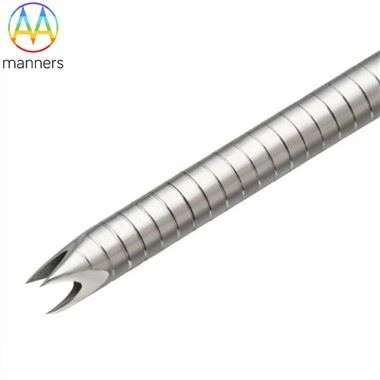
In the context of nasal aesthetics, thread products can be broadly categorized by design and material. Mono threads, including the 20G variant, are smooth and used primarily for collagen stimulation and subtle support. Screw or tornado threads feature a coiled configuration that can add a modest amount of volume, making them useful for clients who desire a slightly fuller bridge. Barbed or cog threads are generally discouraged for routine nasal work due to their tendency to cause tissue tethering, inflammation, and irregular contours. From a material perspective, PDO remains the most common choice for nasal threads because of its predictable absorption and low incidence of adverse reactions. PLLA and PCL threads are less frequently used in the nose due to their longer duration and potential for prolonged inflammation in such a confined space. Within the mono category, gauge selection is important. Threads finer than 23G may lack sufficient rigidity for meaningful nasal support, while threads coarser than 18G can be unnecessarily traumatic. The 20G MONO PDO Thread Needle strikes an optimal balance, offering enough stiffness for dorsal definition while remaining thin enough to minimize visible entry points and post-procedure swelling.
Practical Guide
Before performing nasal thread contouring, a thorough assessment of nasal anatomy is essential. Practitioners should evaluate skin thickness, septal alignment, and the presence of any asymmetries or previous surgical modifications. Clients with very thin nasal skin may not be ideal candidates, as the thread may become visible or palpable beneath the surface. Those with significant dorsal humps or severe deviations are better served by surgical consultation. For suitable candidates, the procedure begins with topical and local anesthesia to ensure comfort. The 20G needle is inserted at the radix or tip, depending on the desired vector, and advanced along the subdermal plane parallel to the nasal bones. Multiple threads may be placed in a parallel or slightly converging pattern to enhance support and symmetry. Great care must be taken to avoid the superficial vascular plexus and to stay within the midline to prevent deviation. After insertion, the threads are trimmed flush with the skin, and gentle digital molding is used to ensure even distribution. Post-procedure instructions include avoiding pressure on the nose, refraining from wearing glasses for several days, and sleeping on the back to prevent accidental displacement. Mild swelling and tenderness are common for the first 48 hours but typically resolve quickly. Clients should be counseled that the final result will develop gradually over several weeks as collagen remodeling takes place.
Real-World Experience
Clinicians who specialize in non-surgical rhinoplasty report that nasal threading with 20G mono threads has become a staple in their practice, particularly for clients who are filler-averse or have experienced dissatisfaction with previous injectable treatments. One common observation is that thread-based nasal sculpting produces a more natural, less "done" appearance compared to fillers. Because the improvement comes from tissue reorganization rather than volume addition, the nose retains its inherent character while gaining refinement. Practitioners also note that combining nasal threads with minimal amounts of filler in select areas-such as the radix or tip-can yield exceptional results, provided the practitioner has a deep understanding of nasal anatomy. However, the most successful outcomes are consistently achieved when the practitioner resists the temptation to over-treat. Placing too many threads or using excessive tension can lead to edema, irregular contours, or a pinched appearance. Experienced injectors recommend starting conservatively, with no more than two to four threads per session, and scheduling a follow-up to assess the need for additional refinement. Client education is paramount: managing expectations around the subtle nature of the results helps prevent disappointment and fosters long-term satisfaction.
Summary
Nasal sculpting with 20G MONO PDO Thread Needles offers a safe, effective alternative to fillers and surgery for clients seeking subtle nasal refinement. By combining immediate mechanical support with long-term collagen stimulation, this technique delivers natural-looking improvements in bridge height and tip definition. Success depends on careful patient selection, precise technique, and conservative treatment planning.
Outlook
As non-surgical nasal aesthetics continue to gain popularity, we anticipate growing demand for thread-based approaches that minimize risk and preserve natural anatomy. Regulatory bodies may introduce specific guidelines for nasal thread procedures, emphasizing the need for specialized training. The 20G mono thread will likely become a standard tool in this niche, supported by ongoing clinical research and practitioner education.