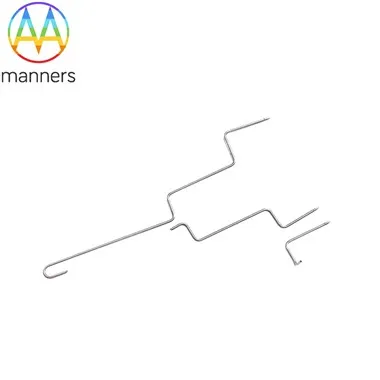
Minimally Invasive Surgical Advantages Of Meniscus Repair Needles
Oct 10, 2026
1. Pain Points of Traditional Open Repair Surgery
In the early stage of meniscus injury treatment, open surgery was the mainstream repair method, but it has many inherent defects and clinical pain points, which have been gradually replaced by minimally invasive arthroscopic surgery. Traditional open surgery requires large-scale incision of knee joint skin, subcutaneous tissue and joint capsule, with large intraoperative trauma, obvious intraoperative bleeding and long postoperative wound healing cycle. The large-area tissue damage will cause severe postoperative pain, swelling and joint adhesion, resulting in limited knee joint mobility for a long time, and patients need a long period of bed rest and rehabilitation training, which seriously affects daily life and work.
In addition, the open surgical field of vision is limited, and it is difficult to observe the subtle tear of the meniscus and the damage of surrounding cartilage tissues accurately, which is easy to cause incomplete debridement and inaccurate repair, leading to high postoperative recurrence rate. Long-term large-traumatic surgery will also damage the local blood circulation and nerve distribution of the knee joint, resulting in persistent chronic joint pain and numbness symptoms in some patients after recovery. Moreover, open surgery has a long operation time, large intraoperative risk, high postoperative infection rate, and long hospitalization cycle, which brings huge economic and physical burden to patients, and cannot meet the modern clinical medical needs of minimal trauma, rapid recovery and low complication rate.
2. Minimally Invasive Working Principle of Professional Repair Needles
Meniscus repair system needles are core instruments specially designed for arthroscopic minimally invasive meniscus repair surgery. Its minimally invasive working principle is based on precise structural design, high-quality material performance and personalized dimensional matching, realizing ultra-fine tissue penetration and suture fixation under tiny surgical incisions. Different from open surgical instruments that need to strip a large amount of tissue, professional repair needles rely on tiny needle body diameter and fine needle tip structure, which can enter the joint cavity through 2-3mm ultra-small arthroscopic incisions, avoiding large-scale damage to skin, joint capsule and normal soft tissues.
The polished smooth needle body and non-invasive needle tip design can pierce the torn meniscus fibrous tissue accurately without scratching the intact articular cartilage, synovium and neurovascular tissues around the lesion, realizing targeted repair of damaged tissues and zero damage to normal tissues. The adaptive bending angle and customized length design enable the needle body to reach all lesion positions in the narrow joint space without expanding the surgical incision and stripping soft tissues, realizing full coverage minimally invasive repair of meniscus tears. At the same time, the stable mechanical performance of the needle body ensures accurate suture threading and tension adjustment in a narrow space, completing high-quality anatomical repair with minimal surgical trauma.
3. Classification of Minimally Invasive Repair Needles and Their Advantages
According to the degree of minimally invasive adaptation, meniscus repair system needles are divided into conventional minimally invasive needles and high-precision ultra-minimally invasive needles, with hierarchical minimally invasive advantages covering different surgical needs. Conventional minimally invasive repair needles are mainly made of medical stainless steel, with moderate diameter and stable performance. They are suitable for routine arthroscopic meniscus repair surgery, realizing minimally invasive treatment of most common meniscus tears. Compared with traditional open surgical instruments, they reduce surgical trauma by more than 70%, with small postoperative wounds, less bleeding and low infection risk, and can basically meet the minimally invasive needs of routine clinical surgery.
High-precision ultra-minimally invasive needles are mainly titanium alloy customized thin-diameter products, with ultra-fine needle body, lighter weight and higher operational flexibility. This type of needle is specially designed for high-precision minimally invasive surgery of delicate tissues and complex small-space lesions. It can realize ultra-fine penetration without damaging microvascular and nerve tissues in the joint, with minimal intraoperative trauma, almost no postoperative bleeding and mild inflammatory reaction. It has outstanding advantages in pediatric meniscus repair, adolescent sports injury repair and elderly delicate tissue repair, and can maximize the protection of knee joint physiological function and realize rapid postoperative recovery.
4. Standard Minimally Invasive Operational Guidelines
To give full play to the minimally invasive advantages of meniscus repair system needles, clinical operations must follow standardized minimally invasive surgical specifications. First, preoperative incision planning is carried out, and 2-3mm ultra-small conventional arthroscopic incisions are selected at the standard knee joint approach to avoid excessive incision expansion. Select the matching minimally invasive needle model according to the lesion position and tear type, and prefer thin-diameter customized needles on the premise of ensuring fixation strength.
Intraoperatively, under full arthroscopic visualization, the needle body is slowly and accurately inserted along the tissue gap, and the operation is stable and gentle to avoid violent shaking and forced penetration, so as to prevent unnecessary tissue extrusion and damage. For deep and corner lesions, adjust the bending angle of the needle body in real time to ensure vertical penetration of the tear edge, reduce repeated needle insertion and adjustment times, and minimize intraoperative tissue stimulation. After completing suture fixation, withdraw the needle body stably and slowly to avoid pulling normal tissues. After operation, the tiny incision is simply bandaged, without suture and large-area dressing coverage, which reduces wound stimulation and is conducive to rapid healing.
5. Clinical Practical Effect of Minimally Invasive Repair
A large number of clinical practices have proved that the application of meniscus repair system needles can significantly improve the minimally invasive effect of meniscus surgery and optimize postoperative recovery. Compared with traditional open surgery, the minimally invasive surgery assisted by professional repair needles has shorter operation time, less intraoperative bleeding and lower intraoperative complication rate. Postoperatively, patients have mild pain and swelling symptoms, short inflammation duration, and can start early functional rehabilitation exercise within 3-7 days after operation, which greatly shortens the hospitalization cycle and rehabilitation cycle.
In terms of long-term curative effect, minimally invasive repair with professional needles causes almost no damage to the normal physiological structure of the knee joint, effectively avoiding postoperative joint adhesion, stiffness and motor function limitation. The accurate minimally invasive repair realizes anatomical reduction of torn meniscus, restores the cushioning and stabilizing function of the meniscus, and significantly reduces the incidence of postoperative osteoarthritis. Clinical follow-up data shows that the postoperative excellent and good rate of knee joint function in patients treated with minimally invasive repair needles is more than 95%, which is far higher than that of traditional open surgery and ordinary needle repair surgery.
6. Summary of Minimally Invasive Technical Value
The popularization of meniscus repair system needles is a key technological upgrade in the field of meniscus minimally invasive repair surgery, completely changing the large-trauma treatment mode of traditional open surgery. Through precise instrument design and standardized operation, it realizes the perfect unity of minimal surgical trauma, accurate repair effect and safe clinical treatment, effectively solves the clinical pain points of large trauma, slow recovery and many complications of traditional surgery.
The minimally invasive technical advantages of professional repair needles not only improve the safety and curative effect of meniscus repair surgery, but also reduce the physical pain and economic burden of patients, improve patient satisfaction with treatment, and promote the popularization and standardization of arthroscopic minimally invasive meniscus repair technology. It has important clinical popularization value and social medical value.
7. Minimally Invasive Technology Development Prospects
With the continuous progress of minimally invasive medical technology, the meniscus repair needle industry will further develop towards ultra-minimally invasive, intelligent and precise direction. In the future, enterprises can further optimize the needle tip ultra-fine polishing technology and needle body flexible design, develop ultra-thin flexible repair needles to adapt to more subtle joint lesions and delicate tissue repair. At the same time, combine intelligent medical technology to develop minimally invasive repair needles with positioning guidance function, further improve the accuracy of intraoperative operation and reduce human operation errors.
The industry should strengthen the promotion and training of standardized minimally invasive operation technology, improve the professional operation level of clinical surgeons, and give full play to the minimally invasive advantages of high-precision repair needles. Continuously optimize the product minimally invasive performance and clinical matching degree, expand the application scope of minimally invasive repair, reduce the indication limitations of minimally invasive surgery, and enable more meniscus injury patients to obtain high-quality minimally invasive precise treatment, promoting the overall progress of orthopedic minimally invasive medical technology.