Micron-Level Precision Quality Control Of Dimensions, Gradient Specifications Of Brachytherapy Needles By Professional Manufacturers Adapting To All Lesion Depth Scenarios
Apr 20, 2026
Micron-Level Precision Quality Control of Dimensions, Gradient Specifications of Brachytherapy Needles by Professional Manufacturers Adapting to All Lesion Depth Scenarios
Tumor lesions vary in depth, and the anatomical layers of human subcutaneous fat and muscle are significantly differentiated. Targeted needle implantation radiotherapy has strict requirements on the adaptability of instrument length and tube diameter. Even slight process deviations in the dimensions of brachytherapy needles or mismatched specification selection can easily lead to high-risk intraoperative operational hidden dangers such as puncture and needle implantation deviation, particle source delivery jamming, unbalanced radiation dose distribution, and accidental stab wounds to deep organs. Professional brachytherapy needle manufacturers deeply engaged in the field of minimally invasive radiotherapy instruments adhere to the bottom line of micron-level dimensional quality control for medical interventional instruments, standardize and calibrate the core parameters of the entire series of needle lengths and Gauge tube diameters in a full gradient manner, and produce standardized batches of compliant finished products of all categories, accurately matching the differentiated targeted radiotherapy clinical needs of tumor patients with different lesion depths, different body parts, and different body types.
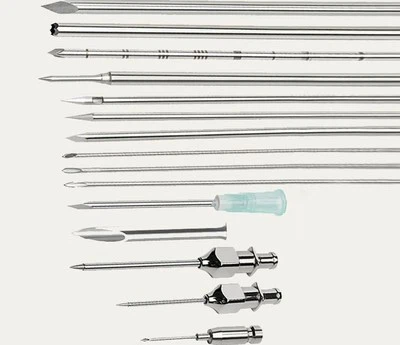
The refined graded mass production of gradient needle lengths fully covers the needle implantation scenarios of all tumors from superficial to deep lesions. Leading compliant manufacturers strictly follow the general dimensional standards for clinical radiotherapy operations, scientifically divide three major gradient length intervals: short, medium, and long, and the effective working length of finished products completely covers all category specifications from a few centimeters (short type) to 20 centimeters (extended type). The short needle body of a few centimeters is lightweight and easy to operate, specially adapted for brachytherapy needle implantation of superficial skin cancer and small superficial solid tumors in the head and neck. It has a short puncture path, fast positioning, and extremely small wounds, with no burden on postoperative recovery. The standard length needle body of the conventional medium section has full versatility, suitable for routine targeted needle implantation of local breast tumor beds, superficial cervical lesions, and prostate tumors in conventional positions, and is the high-frequency standing main basic specification in the oncology department of the whole hospital. The 20-centimeter extended special needle body has strong rigidity and excellent bending resistance, accurately adapting to hidden solid tumors in the deep abdominal cavity and the bottom of the pelvic cavity, as well as cross-layer puncture and needle implantation for deep lesions in obese patients with thick fat layers. There is no need to adjust the puncture angle for the second time, avoiding repeated needle implantation and superimposed tissue trauma.
The standardized Gauge tube diameter precision graded control balances the dual core needs of targeted puncture smoothness and low damage to human tissues. The industry uniformly uses Gauge to mark the outer diameter of brachytherapy needles. Professional manufacturers strictly and compliantly control the finished tube diameter interval to be stable in the full gradient range of 14G to 21G, strictly abiding by the core industry standards, and clarifying that the larger the value, the thinner the tube diameter, and the smaller the value, the thicker the tube diameter. The 14G to 16G large-diameter thickened needle body has high structural pressure-bearing strength and a wide and unobstructed internal particle delivery channel, suitable for simultaneous multi-particle implantation in hard and dense solid tumors and large-scale contiguous lesions, with high delivery efficiency and adaptation to high-intensity concentrated radiotherapy schemes. The 17G to 18G medium conventional gold-adapted tube diameter balances the advantages of puncture stability and minimally invasive low trauma, suitable for basic radiotherapy of most conventional tumors in gynecology and urology, with high cost-effectiveness and no shortcomings in clinical adaptation. The 19G to 21G ultra-fine minimally invasive needle body is slender and soft with extremely low puncture resistance, specially adapted for elderly and frail tumor patients with weak immunity and sensitive skin, greatly reducing the pain of needle implantation and postoperative wound stress response, and lowering the risk of complications throughout the radiotherapy process.
The closed-loop control of unified precision verification of all dimensions across batches seamlessly connects with the existing radiotherapy supporting equipment in the hospital. Manufacturers rely on integrated forming and mass production of fully automatic high-precision CNC equipment. The needle bodies of the same specification have precise coaxiality, are straight without bending, and have unified standard interfaces, which can perfectly adapt to the full-series general matching of various radiotherapy particle implantation equipment, image positioning and navigation instruments, and intraoperative auxiliary fixing brackets in the whole hospital, without the need for additional modification and adaptation. At the same time, a full-size traceability test ledger and a professional comparison table for specification selection are provided, one-on-one assisting medical institutions to match and stock in batches on demand, eliminating the problems of idle and wasted specifications and mismatched work delays, and adapting to all procurement scenarios such as annual centralized bidding and batch warehousing, and scattered emergency replenishment.