Dual Medical-Grade Material Selection And Traceability: Source Manufacturers Strictly Control Material Safety To Mitigate Radiotherapy Risks
Apr 20, 2026
Dual Medical-Grade Material Selection and Traceability: Source Manufacturers Strictly Control Material Safety to Mitigate Radiotherapy Risks
Introduction: The Imperative of Material Integrity in High-Risk Oncology
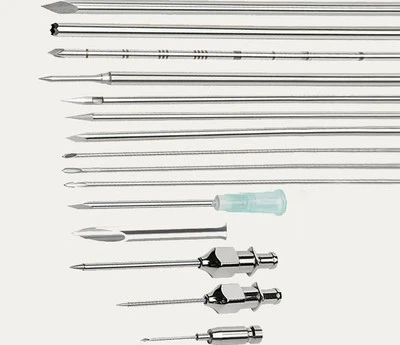
Brachytherapy needles are classified as high-risk radiological interventional devices, designed to reside within or adjacent to tumor lesions for extended periods while in direct contact with living human tissues. Consequently, the structural integrity, corrosion resistance, and biocompatibility of the raw materials directly dictate the safety of implantation, the compatibility with human tissues, and the overall security of the radiotherapy process. Reliable and compliant source manufacturers resolutely reject low-cost, non-compliant materials such as industrially recycled scrap steel or substandard alloys. Instead, they meticulously select two categories of certified medical-grade core materials, establishing a full-process traceability control system. By providing a complete Bill of Materials (BOM), dual authoritative material test certificates, and batch-specific documentation, these manufacturers eliminate multiple high-risk medical hazards at the source, including material-induced allergies, corrosion-induced debris shedding, leaching of harmful heavy metals, and needle breakage during implantation.
Section 1: Medical-Grade Reinforced Stainless Steel – The Mainstay of General Oncology
Medical-grade reinforced stainless steel serves as the foundation for large-scale production of general-purpose brachytherapy needles used across the hospital. Manufacturers employ specialized high-strength stainless steel raw materials that undergo a series of deep-processing techniques, including vacuum melting for purification, deep impurity removal, and metallographic grain refinement. This ensures a dense internal structure free of pores, slag inclusions, or latent cracking defects. The resultant mechanical strength is maximized, offering superior resistance to bending during puncture and deformation under intraoperative compression, making it ideal for high-strength implantation in hard tumor tissues.
Furthermore, the material inherently possesses strong corrosion-resistant properties. Even when in prolonged contact with human tissues, bodily fluids, or medical disinfectants, the needle resists oxidation, rust, and surface flaking. This eliminates the risk of secondary inflammation triggered by rust particles accumulating near the lesion site. Fully compliant with medical biocompatibility standards, the material prevents the leaching of excessive heavy metals, ensuring it does not provoke redness, swelling, stinging, or allergic rejection at the tumor site. This makes it suitable for safe radiotherapy use in cancer patients of all ages and constitutions. Moreover, its durability allows it to withstand multiple cycles of compliant sterilization and reuse, significantly reducing the monthly procurement costs for hospital departments.
Section 2: Premium Medical Titanium Alloys – Tailored for Complex and Sensitive Cases
For customized, high-end brachytherapy needles designed for complex lesions and highly sensitive patients, premium medical titanium alloys are the material of choice. While offering a strength comparable to stainless steel, titanium alloys are significantly lighter, reducing the overall weight burden. This allows physicians to manipulate the needle with greater flexibility, applying force more evenly to precisely control the angle and depth of implantation in deep-seated lesions. This precision minimizes the risk of inadvertently damaging healthy organs and blood vessels due to excessive force, greatly improving accuracy in challenging anatomical positions.
The biocompatibility of titanium alloys surpasses that of stainless steel; it is hypoallergenic and non-irritating, making it specifically suitable for elderly cancer patients with weakened immune systems, sensitive skin wounds, or impaired postoperative healing abilities. This drastically reduces the probability of wound infection and non-healing during radiotherapy. Additionally, the dual enhancement of corrosion resistance and fatigue resistance ensures that the material's performance does not degrade or age, even in long-term radiation environments, ensuring stable operation throughout extended segmented targeted radiotherapy cycles.
Section 3: Full-Chain Traceability and Compliance
Strength lies in transparency. Reputable manufacturers document the entire lifecycle of the product, recording everything from incoming raw material inspection and mechanical property testing to third-party biocompatibility testing and final assembly verification. A precise BOM is compiled, clearly labeling the material grade, production batch number, traceability code, and compliance test numbers.
Every batch of brachytherapy needles is delivered with official material certificates, biosafety reports, and traceability filing credentials. A simple scan of the unique QR code allows instant access to the entire production ledger, effortlessly passing the rigorous inspections of the Health Commission, hospital infection control spot checks, and public hospital warehouse entry audits. This ensures a worry-free, fully compliant procurement process from source to patient.