Micron-level Life Passage: Unveiling The Ultra-Precise Manufacturing Philosophy Behind The Radio Frequency Ventricular Septal Puncture Needle
May 03, 2026
Key words: Precision manufacturing; Manufacturer of RF atrial septal puncture needles
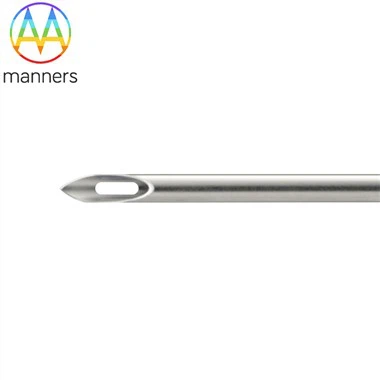
In cardiac interventional surgeries, a radiofrequency atrial septal puncture needle with a length of only 6.5 millimeters and a diameter of less than 1 millimeter is a crucial component that determines the success of the surgery and the safety of the patient. Its manufacturing is a meticulous engineering process that strives for ultimate precision, reliability, and biocompatibility at the micrometer scale. For a professional manufacturer like Manners Technology, its core competitiveness lies not only in having advanced equipment, but also in establishing a complete manufacturing system that integrates ultra-precision machining, special surface treatment, and strict process control. This system transforms the stringent clinical requirements for safety and efficacy into repeatable and traceable industrial products.
Foundation Stone: Ultra-precise CNC centering machine - Citizen Cincom R04
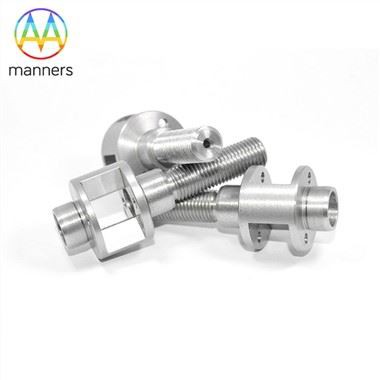
The needle barrel of the radiofrequency atrial septal puncture needle is usually made of medical-grade 304 or 305 stainless steel through cold working hardening, with the hardness controlled at HRC 22-25 to ensure both sufficient puncture support and appropriate toughness. Turning a thin stainless steel tube as thin as a hair into a precise part that meets complex dimensional tolerances (such as ±0.01mm) and surface finish requirements is the primary challenge. This relies on equipment such as the Seiko Cincom R04 series sliding headframe CNC automatic lathe, which is specifically designed for the processing of micro-sized parts.
The R04 machine tool is hailed as the "expert in micro-part processing". Its core advantages perfectly meet the manufacturing requirements for medical needles:
* Ultra-high spindle speed and rigidity: The spindle speed can reach up to 20,000 revolutions per minute. Combined with a highly rigid tool layout, it enables stable and high-speed cutting on materials with small diameters, ensuring timely chip removal and high-quality processing surfaces, and avoiding dimensional deviations caused by vibration.
* Nanometer-level interpolation and thermal compensation: The machine tool control system has nanometer-level motion control capabilities and thermal deformation compensation functions. Even during long-term continuous processing, it can ensure a repeat positioning accuracy of ±1 micrometer, which is the fundamental for achieving a tolerance of ±0.01mm.
* Composite processing capability: R04 integrates the main spindle, auxiliary spindle, multi-axis linkage, and rotating tools, enabling multiple processes such as turning, milling, drilling, and tapping to be completed in one setup. For RF puncture needles, this means that the outer diameter, inner cavity, specific angled surfaces, and even the special rounded shape of the head end can all be continuously completed on one machine, minimizing secondary setup errors and ensuring the coaxiality and overall geometric accuracy of the parts.
Soul: Electrolytic Polishing and Surface Integrity
The surface of the needle body after mechanical processing still has microscopic cutting lines, burrs and micro-cracks. These defects are not only potential stress concentration points that affect fatigue life, but also may become a breeding ground for thrombosis during surgery or affect the uniform conduction of radiofrequency energy. Therefore, electrolytic polishing becomes the key process that determines the final performance of the product.
Electrolytic polishing is an electrochemical process in which the workpiece acts as the anode and current is passed through a specific electrolyte solution, selectively dissolving the microscopic protrusions on the metal surface. For radiofrequency puncture needles, the goal of this process is extremely precise:
* Achieving ultra-smooth surface: By precisely controlling current, voltage and time, a thin layer of material can be uniformly removed (with a control accuracy of ±0.0001 inches), ultimately reducing the surface roughness Ra value to 0.25 micrometers or even lower. This mirror-like smoothness significantly reduces the adhesion and activation of blood components.
* Eliminating microscopic defects: Electrolytic polishing can effectively remove burrs and micro-cracks generated during mechanical processing, smooth out sharp edges, and significantly improve the fatigue resistance and corrosion resistance of the parts.
* Enhancing biocompatibility: This process can also form a more stable and denser passivation oxide layer on the stainless steel surface, further enhancing its biocompatibility and long-term stability in body fluid environments.
Guarantee: Ultrasonic cleaning and full-process quality control
After electrolytic polishing, the needle body must be thoroughly cleaned to remove any process residues. Ultrasonic cleaning utilizes high-frequency sound waves to generate countless tiny cavitation bubbles in the cleaning solution. When these bubbles rupture, the resulting impact force can penetrate the micro-pores and complex structures inside the needle body, effectively removing adhered contaminants. Its cleaning effect is much better than that of conventional cleaning methods.
Every step of the manufacturing process is accompanied by strict quality control. From the inspection of raw materials upon entry, to the online size monitoring during turning processing, to the surface morphology analysis after electrolytic polishing (such as roughness detection using white light interferometer), as well as the final full-size inspection of the product, destructive mechanical tests (such as bending resistance and torsion resistance) and aseptic inspection, it forms a complete quality loop. The manufacturer must follow the ISO 13485 medical device quality management system to ensure that from a single piece of stainless steel raw material to an implantable radiofrequency puncture needle, the entire process is traceable and the performance is verifiable.
Conclusion: Precision equals safety, and craftsmanship equals efficacy.
The birth of a radiofrequency atrial septal puncture needle is the result of the integration of precision mechanical engineering, electrochemistry and quality management science. The manufacturer achieves this by mastering top-level processing equipment like the Citizen R04 and being proficient in special processes such as electrolytic polishing. They transform the clinical doctors' demands for "precision, controllability and safety" into an industrial product with certainty. In this field, manufacturing accuracy directly equates to surgical safety, and surface quality directly correlates with long-term efficacy. Therefore, top manufacturers are not only the processors of parts, but also the key controllers of clinical risks and the silent founders of surgical success. They safeguard the absolute reliability of the millimeter-level life passage with their micrometer-level craftsmanship.