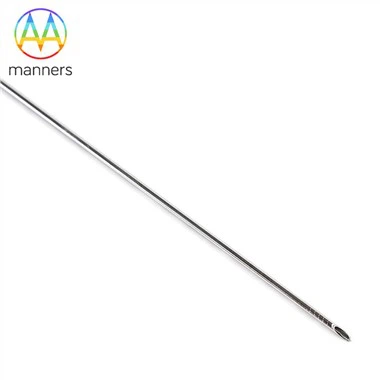
Medical-Grade Material Analysis Of Slotted Rigid Hypotube – High-Tensile Stainless Steel Performance Advantages
Aug 23, 2026
The exceptional mechanical performance of Slotted Rigid Hypotube is fundamentally derived from its exclusive high-tensile medical-grade stainless steel material system. Different from superelastic Nitinol materials used for flexible steerable hypotubes, Slotted Rigid Hypotube strictly selects 304, 304V and 316L stainless steel series optimized for maximum stiffness, structural integrity and load-bearing capacity. Each material variant has unique mechanical characteristics and application positioning, providing customized material solutions for different heavy-duty medical device scenarios and forming the core material foundation of rigid shaft stability.
304 medical-grade stainless steel is the basic universal material for standard Slotted Rigid Hypotubes, featuring excellent overall rigidity, uniform structural density and outstanding corrosion resistance. With stable tensile strength and elastic modulus, 304 stainless steel can maintain long-term structural stability under conventional axial compression and torsional load. It is suitable for routine rigid endoscope shafts, common biopsy needles and ordinary stiff delivery catheters, balancing product performance and manufacturing cost, and is the most cost-effective choice for mass-produced rigid medical components.
304V vacuum-melted stainless steel is an upgraded high-strength material customized for high-load Slotted Rigid Hypotubes. Through vacuum refining and grain refinement technology, 304V stainless steel eliminates internal material impurities and structural defects, significantly improving tensile strength, yield strength and fatigue resistance compared with ordinary 304 stainless steel. The material features higher structural compactness and stronger axial pushability, able to withstand greater tissue resistance and compressive load during instrument advancement. It is widely used in heavy-duty surgical delivery systems and high-pressure trocar cannula components that require extreme structural rigidity.
316L low-carbon stainless steel is the high-end medical material for premium Slotted Rigid Hypotubes, with outstanding biocompatibility, corrosion resistance and oxidation resistance. The low-carbon formula effectively avoids intergranular corrosion, enabling long-term stable contact with human tissues, body fluids and medical disinfection solutions without rusting or structural deterioration. While maintaining high rigidity, 316L stainless steel improves surface finish and wear resistance, perfectly matching the strict hygiene and safety requirements of reusable rigid surgical instruments. It is the preferred material for high-end laparoscopes, arthroscopes and precision orthopedic guide shafts.
All three stainless steel materials have excellent laser processing adaptability, perfectly matching the staggered interrupted slot cutting process of Slotted Rigid Hypotube. High-tensile properties ensure that the uncut metal bridges retain sufficient structural strength after slotting, avoiding local strength attenuation caused by micro-cutting. The uniform material stress distribution ensures consistent torsional rigidity and axial stability of the whole tube segment, realizing absolute 1:1 torque transmission without local deformation or torque deviation.
In terms of surface performance, stainless steel Slotted Rigid Hypotubes achieve superior surface quality after electropolishing and passivation treatment. The burr-free smooth inner and outer walls reduce internal friction of the instrument, protect internal stylets and functional components from wear, and provide excellent mechanical interlocking interfaces for outer polymer overmolding. Compared with Nitinol materials, stainless steel has higher rigidity and lower elastic deformation rate, which is more in line with the design requirements of unyielding rigid surgical shafts.
Material selection for Slotted Rigid Hypotube follows strict scenario matching logic: 304 for standard disposable rigid devices, 304V for high-load heavy-duty surgical instruments, and 316L for premium reusable precision rigid equipment. All materials comply with international medical certification standards, ensuring structural reliability, clinical safety and long-term service stability of rigid shafts in complex surgical environments.