Material Science Selection: Core Material Principles Of Bloodletting Needles As Medical Needles
May 10, 2026
Material is the core carrier determining the performance of medical needles. As puncture-type medical needles that make direct contact with human skin and blood vessels, bloodletting needles have undergone multiple generations of material iteration. A modern material system dominated by medical-grade stainless steel and nitinol alloy has ultimately taken shape, balancing excellent biocompatibility, mechanical properties and clinical safety.
Constrained by primitive material technology in early times, bloodletting needles were mainly made of common metals such as iron and bronze. Though low-cost and easy to grind and shape, these materials had fatal drawbacks. They featured extremely poor corrosion resistance and were highly prone to oxidation and rust after contact with blood and human tissues, producing harmful substances that would trigger wound infection. Meanwhile, their insufficient mechanical strength caused the needle shaft to bend or break easily, posing major potential safety hazards during puncture. The needle tip also dulled quickly; repeated use greatly increased puncture resistance and aggravated trauma to patients. With the advancement of modern material science, such traditional metals have been completely replaced by high-performance medical materials, marking a critical turning point in the material upgrading of bloodletting needles.
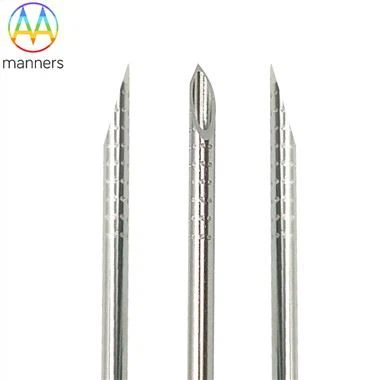
304 medical-grade stainless steel is the preferred material for modern medical bloodletting needles and the most widely used base material in the medical needle industry. It delivers outstanding corrosion resistance to effectively withstand erosion by blood and tissue fluid, avoiding rust and oxidation during long-term use or storage and preventing wound contamination by impurities. It also possesses favorable mechanical strength and toughness, keeping the needle shaft rigid and bend-resistant while maintaining stable penetration capacity during puncture. Its moderate hardness allows precision grinding to form sharp yet sturdy needle tips for fast, minimally invasive puncture. Most importantly, 304 medical-grade stainless steel has passed strict biocompatibility tests, causing no irritation or allergic reactions upon contact with human tissues and fully complying with safety standards for implantable medical devices, making it the fundamental material choice for bloodletting needles.
For clinical scenarios with higher requirements, 316 medical-grade stainless steel is adopted. Compared with 304 stainless steel, it offers further improved corrosion resistance and fatigue resistance, making it especially suitable for the humid and complex internal physiological environment of the human body with longer service life and higher structural stability. It is widely used in high-end disposable bloodletting needles and reusable medical bloodletting instruments, capable of withstanding multiple low-temperature plasma sterilization cycles without any degradation in material performance.
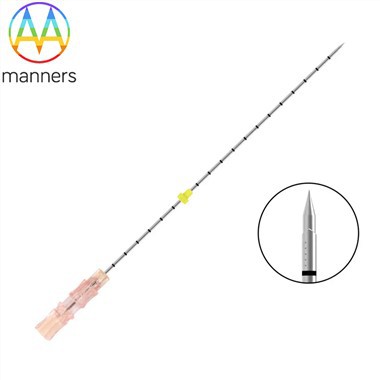
As an innovative medical shape memory alloy, Nitinol (NiT) serves as the core material for high-end bloodletting needles and represents the cutting-edge development direction of material science for medical needles. Nitinol features superelasticity and shape memory properties, endowing the needle shaft with excellent flexibility. During puncture, it can adjust its angle naturally along the texture of skin and blood vessels, reducing tearing damage to vascular walls. Its fracture resistance far surpasses that of stainless steel, completely eliminating the risk of needle fragments remaining inside the human body. It also boasts superior biocompatibility with no sensitization or toxicity, ideal for sensitive populations and long-term physical therapy scenarios. Bloodletting needles made of Nitinol maintain needle tip sharpness longer with lower puncture resistance, significantly alleviating patient pain and delivering a more comfortable minimally invasive puncture experience.
In terms of material quality control for bloodletting needles, formal medical product manufacturers provide complete material qualification documentation, with all raw materials complying with medical device standards to eliminate inferior materials at the source. The differentiated selection of various materials enables bloodletting needles to adapt to diverse clinical scenarios and application requirements. It also embodies the core design philosophy of modern medical needles - matching materials to application scenarios and prioritizing safety performance, driving the material development of medical puncture needles toward high performance, high safety and superior biocompatibility.