Cauda Equina Nerve Injury Avoidance By Spinal Needles
Aug 09, 2026
Clinical Pain Points of Nerve Root Mechanical Injury
Cauda equina nerve root injury is a common mechanical complication of lumbar puncture anesthesia, mostly caused by low-precision structural defects of traditional puncture needles. Inferior products have unpolished rough needle tips, unstraight needle bodies and inaccurate dimensional calibration, which are prone to lateral deviation from the human midline during puncture. The deflected needle tip will directly squeeze, scratch or pierce cauda equina nerve roots, resulting in postoperative lower limb numbness, persistent pain and transient urinary disorders. In severe cases, patients may have long-term neurological dysfunction. The industry's widespread use of low-precision single-specification products lacks anti-deviation and atraumatic structural design, unable to adapt to the precise puncture needs of nerve-rich lumbar areas, leading to frequent iatrogenic nerve injury accidents and affecting postoperative patient recovery quality.
Precision Atraumatic Puncture Principle
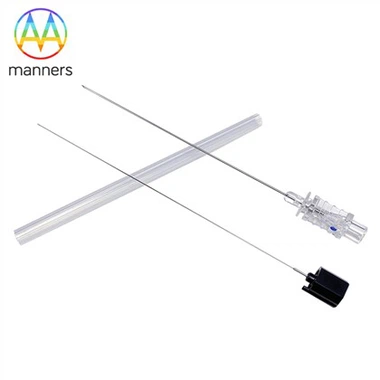
16G-27G disposable sterile spinal needles realize active avoidance of cauda equina nerve injury based on high-precision mechanical processing and midline positioning principles. Full-series products adopt five-axis precision grinding technology to ensure ultra-high needle body straightness and smooth burr-free needle tip surface, eliminating mechanical scratching and cutting damage to nerve roots. The optimized central positioning structure guides the needle body to advance stably along the lumbar midline, effectively preventing lateral deviation and nerve extrusion. Pencil-point atraumatic tips replace traditional cutting structures with gentle tissue separation, avoiding direct piercing of nerve roots even in slight contact. High-toughness medical stainless steel prevents needle body bending and deformation during puncture, maintaining stable puncture trajectory and ensuring precise and safe operation in nerve-intensive areas.
Hierarchical Product Classification for Nerve Protection
The full-gauge product series forms a precise nerve protection classification system covering all clinical scenarios. High-precision protective specifications of 24G-27G with purple, orange, brown and grey color codes are core atraumatic models, suitable for precise puncture in sensitive nerve-rich lumbar areas, pediatric and obstetric anesthesia scenarios with high nerve injury risk. Balanced safety specifications of 21G-23G in green, black and dark blue balance puncture efficiency and nerve protection performance, suitable for most routine adult anesthesia. High-strength puncture specifications of 16G-20G strengthen needle body toughness and positioning accuracy, avoiding deformation and deviation in high-resistance tissue puncture. Dual tip types are selectively matched: pencil-point for high-precision nerve protection and Quincke for high-efficiency conventional surgery, realizing scenario-based precise protection.
Standard Precise Puncture Operation Guidelines
Standardized precise operational procedures are formulated to avoid cauda equina nerve injury in the whole process. Preoperatively, select targeted needle specifications according to patient age, body shape and lumbar nerve sensitivity, prioritize ultra-fine pencil-point protective needles for high-risk groups. During puncture, strictly follow lumbar midline positioning standards, slowly advance the needle body, and accurately perceive tissue resistance changes to avoid blind rapid piercing. Give full play to the product's high straightness and anti-deviation advantages to maintain stable puncture trajectory and prevent lateral tip deviation from squeezing nerve roots. Avoid repeated probing and angle adjustment in the spinal canal to reduce nerve irritation. Postoperatively, observe lower limb sensation and urination function closely, and conduct early rehabilitation intervention for mild numbness symptoms to promote spontaneous nerve repair.
Clinical Nerve Protection Experience
A large number of clinical practices prove that high-precision graded spinal needles can effectively reduce the incidence of cauda equina nerve root injury to nearly zero in standardized operations. The ultra-smooth precision structure eliminates mechanical friction damage to nerve roots, and the midline anti-deviation design fundamentally avoids lateral extrusion injury. Atraumatic pencil-point products ensure gentle tissue penetration without nerve stimulation, greatly reducing postoperative numbness and pain symptoms. Precise graded specification matching avoids excessive trauma of thick needles and operational instability of ultra-fine needles, realizing individualized precise protection. Most mild postoperative nerve discomfort symptoms can heal spontaneously within a short time without sequelae, significantly improving patient postoperative comfort and recovery efficiency.
Summary and Technical Sublimation
In summary, the 16G-27G full-series disposable sterile spinal needles solve the industry pain point of high iatrogenic nerve injury rate caused by low-precision puncture equipment through ultra-precision processing and atraumatic structural optimization. The hierarchical nerve protection product system realizes full-scenario coverage of high-risk and conventional anesthesia scenarios, forming a complete set of precise puncture and nerve safety protection technology. The product's stable mechanical performance and precise positioning capacity greatly improve the minimally invasive and safe level of lumbar puncture surgery, protecting the neurological health of patients.
Industry Development Prospect and Suggestions
In the future, the industry should further upgrade ultra-precision grinding technology, improve needle tip positioning accuracy and needle body straightness, and develop intelligent anti-deviation puncture structures. Establish standardized product matching guidelines for nerve injury high-risk scenarios, unify clinical precise puncture operation specifications. Fully popularize pencil-point atraumatic protective products, eliminate low-precision rough processing products. Continuously improve the industry's minimally invasive puncture and nerve safety protection capacity, and promote the standardized and precise development of spinal anesthesia clinical technology.