Material Science Behind Echogenic Nerve Block Needle Performance
Aug 28, 2026
Pain Points Many purchasing teams and clinical users underestimate material‑driven failure modes for echogenic nerve‑block needles. Poor base‑material selection or substandard post‑processing creates multiple hidden risks. Inferior stainless steel may suffer bending during deep tissue advancement. Improper surface finishing leaves micro‑burrs that increase nerve trauma risk. Poorly‑executed echo‑enhanced textures can peel under mechanical friction, generating particulate contamination inside patient tissue. Rural clinics purchasing lower‑cost alternatives frequently encounter inconsistent echogenic performance across needle batches. Some needles display strong echo on bench testing yet lose visibility under real‑patient conditions due to material‑related acoustic attenuation. In addition, corrosion from body‑fluid exposure may degrade both mechanical strength and echo‑enhancing geometry, raising safety liabilities for disposable puncture devices.
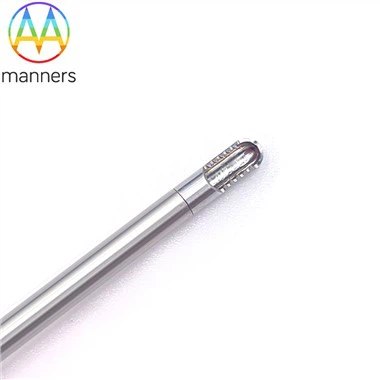
Core Principle Mechanical performance, biocompatibility and acoustic echogenic function all originate from substrate material and precision surface treatment. Medical‑grade stainless‑steel tubing forms the core substrate. The base tube undergoes necking and swaging to form tapered needle geometry. Laser cutting creates precise micro‑groove echo‑enhancing structures. Subsequent electropolishing removes surface micro‑asperities, improves corrosion resistance and smooths non‑functional surfaces while preserving the deliberately‑etched echo‑textured zones. The textured micro‑features control ultrasound scattering; base‑tube metallurgy guarantees stiffness, fracture resistance and biosafety. Every machining step must be tightly controlled so that echo‑enhancing geometry does not introduce stress‑concentration points that cause needle shaft breakage during clinical use.
Device Classification by Material & Manufacturing Route Two primary substrate material families dominate production. Standard stainless‑steel variants serve most routine nerve‑block procedures; premium‑grade stainless‑steel offers enhanced corrosion resistance for challenging patient environments. Custom special‑alloy variants are available for special‑purpose clinical requirements. Manufacturing routes separate into laser‑etched echogenic needles and surface‑coated echogenic needles. Laser‑machined types integrate echo‑features directly into base metal, eliminating delamination risk. Coated types apply external echo‑reflective layers and demand strict quality oversight for coating adhesion. Multiple gauge options ranging from 8G through 18G plus fully custom dimensions are achievable per customer drawings or physical samples. Final packaging can follow standard carton specification or customized client requirements.
Operational Guidelines Clinicians should visually inspect every echogenic needle prior to clinical use. Check shaft for visible bending and inspect tip and echogenic segments for damage. Discard units showing chipped or deformed textured zones. Match material‑strength properties to procedural depth: deep‑target blocks require higher‑tensile‑strength needle variants. Avoid applying excessive lateral torque during needle advancement, which may create hidden micro‑fractures even if external appearance remains normal. Recognize that storage environment can affect device performance; follow manufacturer‑specified storage conditions. Never reuse disposable echogenic nerve‑block needles, as puncture deformation and texture wear degrade both mechanical safety and acoustic visibility.
Real‑World Clinical Experience Multi‑clinic retrospective feedback demonstrates that low‑cost unvalidated alternatives frequently suffer inconsistent echogenic texture depth. In actual practice, some needles show good echo in superficial subcutaneous tissue but lose signal once advanced deep into muscle planes. Electropolished premium‑grade stainless‑steel needles show far fewer issues with tissue‑friction‑driven texture damage. Clinicians report that many avoidable adverse events relate to damaged needles used without adequate pre‑use inspection. Purchasing teams should not evaluate devices purely on unit price; batch‑to‑batch consistency of material and machining is critical for clinical reliability. Many rural facilities new to nerve‑block services lack formal incoming‑product verification protocols for disposable puncture instruments.
Conclusion Material selection and precision manufacturing define the real‑world reliability of echogenic nerve‑block needles. Echo‑enhancing geometry cannot compensate for poor substrate metallurgy or defective post‑processing. Laser‑etched stainless‑steel constructions deliver high stability in clinical workflows. Pre‑use visual inspection by end‑users represents a simple yet effective safety barrier against material‑related device failure.
Outlook & Suggestions Procurement departments should require suppliers to provide documentation covering raw‑material certification, laser‑processing parameters and electropolishing quality records. Clinical teams should build short device‑evaluation workflows before rolling‑out large‑scale purchases. Training should emphasize visual pre‑use inspection for every needle. For custom‑project orders, provide precise 2D or 3D drawings to manufacturers to guarantee both mechanical dimension and acoustic‑texture specification. Establish feedback loops between clinical end‑users and suppliers to report batch‑variability concerns promptly.