Material Performance Control Of 316 Stainless Steel Hypotube For Minimally Invasive Delivery Systems
Sep 08, 2026
Pain Points
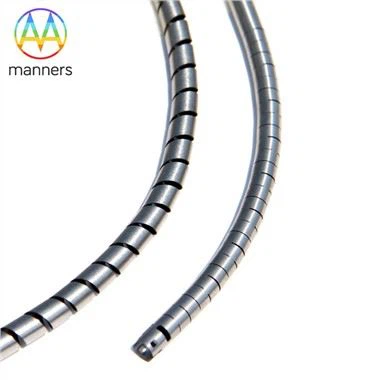
316 stainless steel hypotube is widely adopted as core delivery component for cardiovascular, peripheral vascular and abdominal aortic aneurysm interventional devices. Our production scope covers outer diameter Ø0.20 mm‑20 mm with minimum laser kerf width 0.012 mm. Various laser cutting patterns including continuous spiral cut, interrupted spiral cut, radial cut and bespoke custom cuts endow 316 hypotube with graded flexibility, torque transmission and anti‑kink property for complex vascular access scenarios.
Many component suppliers face prominent material‑related pain points in mass production of 316 stainless steel hypotube. First, incoming raw material inconsistency creates unstable final performance: different batches of 316 stainless steel tubing vary in grain size, inclusion content and hardness. Even with identical laser cutting parameters, finished hypotubes show large deviation in push‑ability, trackability and cyclic bending life. Second, laser thermal effect changes local metallurgical state of 316 material near cutting slots. Heat‑affected zones introduce residual stress which may trigger micro‑crack initiation under repeated bending during clinical delivery. Third, custom hypotubes manufactured according to customer 2D/3D drawings or physical samples often lack material‑specific acceptance thresholds. Manufacturers apply unified criteria for 304, Nitinol, L605 and 316 stainless steel, ignoring 316's unique corrosion resistance and ductility characteristics.
Under ISO13485 audit requirements, insufficient incoming material verification and missing material‑performance correlation records will result in non‑conformity observations. Hidden material risks cannot be fully exposed by routine dimensional inspection. Defective 316 hypotubes may fracture inside human vessels during PTCA or neurological intervention procedures, bringing severe clinical adverse event risks. Many factories focus only on laser cutting dimension accuracy while neglecting full‑chain material performance control from raw tube incoming inspection to post‑laser‑cut stress relief.
Principle
316 stainless steel is molybdenum‑added austenitic stainless steel, featuring superior pitting corrosion resistance and moderate ductility compared with 304 stainless steel. For laser‑cut hypotube, material performance determines upper limits of torque transfer, kink resistance and fatigue life. Laser cutting locally melts and vaporizes 316 steel to form precise slots with kerf down to 0.012 mm. Meanwhile rapid heating and quenching generate heat‑affected zone and locked‑in residual stress along slot edges.
The core control principle is establishing clear correlation between raw tube metallurgical state, laser processing parameters and final hypotube functional performance. Material control shall cover chemical composition, grain structure, hardness, surface condition of incoming 316 tubing. Processing principle requires matching laser power, pulse frequency, cutting speed to 316 material properties to minimize heat‑affected zone size. Post‑processing such as stress‑relief annealing shall be properly configured to release residual stress without damaging dimensional accuracy of laser cut patterns.
Material control is not one‑time incoming check. When wall thickness, OD, cutting pattern of 316 hypotube change, material‑process matching shall be re‑evaluated. Under ISO13485 risk‑based thinking, higher‑risk clinical applications such as neuro‑intervention demand stricter material acceptance limits for 316 hypotube.
Classification of Equipment & Tooling
Three groups of equipment support material performance control for 316 stainless steel hypotube under ISO13485.
First: Incoming & production processing equipment. Include precision laser cutting system for micro‑tube, tube straightening machines, vacuum stress‑relief annealing furnaces, custom micro‑tube fixtures for Ø0.20 mm‑20 mm hypotube. All production‑related equipment shall run under formal production configuration rather than lab setup, to reflect real‑mass‑production influence over 316 material status.
Second: Material analytical testing equipment. Optical emission spectrometer for chemical composition verification, metallographic microscope for grain‑size and heat‑affected‑zone observation, Vickers hardness tester, bending fatigue test bench, salt‑spray corrosion test chamber. All measuring instruments must hold valid calibration certificates complying with ISO13485, providing objective material‑performance data.
Third: Quality system documentation. Incoming material specification for 316 stainless steel hypotube, raw tube batch release record, material‑process matching matrix, fatigue and corrosion test protocol, change‑control record for raw‑material supplier switch, risk assessment report for custom hypotube per customer drawing/sample. Documents realize full traceability from raw tubing batch to finished hypotube delivery.
Practical Guidance
Step one: Develop dedicated incoming specification for 316 stainless steel hypotube raw tube. Define chemical composition range, allowable grain‑size span, maximum non‑metallic inclusion level, hardness limits. Differentiate acceptance criteria from 304 stainless steel, Nitinol and L605. For custom hypotube ordered via 2D/3D drawing or sample, complete material risk assessment before formal production.
Step two: Verify material‑process matching. For target OD, wall‑thickness and laser pattern (continuous spiral, interrupted spiral, radial or bespoke cut), run trial runs on real production laser equipment. Characterize heat‑affected zone width, residual stress state after laser cutting. Confirm suitable annealing temperature and holding time for 316 material, avoid over‑annealing causing strength drop.
Step three: Complete material‑related performance validation. Conduct corrosion resistance test, cyclic bending fatigue test, torque test for trial‑produced 316 hypotube samples. Confirm finished parts satisfy push‑ability, trackability and anti‑kink requirement for target clinical scenarios such as PTCA, peripheral vascular or abdominal aortic aneurysm intervention.
Step four: Establish batch release rules. Each incoming 316 tubing batch shall pass sampling inspection. Record raw‑material batch number linked to each finished hypotube lot. If raw‑material supplier, tubing grade or key processing parameter changes, trigger partial re‑validation of material‑performance output.
Step five: Archive all test reports, raw‑material certificates and process records to satisfy ISO9001:2015 and ISO13485 traceability and audit requirements.
Practical Experience
Practical manufacturing and audit experience reveal that many hypotube manufacturers treat 316 stainless steel as a simple commodity material. They only check dimension of incoming tubes while skipping metallurgy and corrosion‑related verification. Even if laser dimension meets drawing requirement, inconsistent grain size will lead to large scatter in fatigue life of 316 hypotube.
Another frequent mistake is applying annealing parameters optimized for 304 stainless steel directly onto 316 hypotube. Improper thermal treatment either leaves high residual stress or excessively reduces mechanical strength. For ultra‑small OD 316 hypotube near Ø0.20 mm, laser heat input shall be tightly controlled; over‑heat input will enlarge heat‑affected zone and raise micro‑crack risk.
For custom hypotube according to customer samples, do not assume sample material is standard 316. Material identification test shall be performed first. After validation is finished, mass production cannot randomly adjust laser or annealing parameters without change‑control approval, otherwise previous material‑performance validation becomes invalid. High‑risk neuro‑use 316 hypotube cannot skip fatigue and corrosion sampling tests to save cost.
Summary
Material performance control is foundational quality assurance for 316 stainless steel hypotube used in minimally‑invasive delivery systems. Dimensional conformance of laser cut patterns (Ø0.20‑20 mm OD, minimal kerf 0.012 mm) is not equivalent to qualified material performance. Heat‑affected zone, residual stress, raw‑tube metallurgical inconsistency are hidden failure sources which visual inspection cannot detect.
Under ISO13485 risk‑based management, full‑chain control covering incoming raw tube verification, material‑process matching, post‑laser‑cut thermal treatment and batch‑wise performance sampling shall be implemented. Factories should stop the misconception that "laser dimension is everything". Stable material property is prerequisite for qualified torque, flexibility and anti‑kink performance of spiral‑cut, radial‑cut and bespoke‑pattern 316 hypotube, preventing clinical fracture and corrosion‑related hazards.
Prospect & Suggestions
Minimally invasive interventional devices keep evolving; 316 stainless steel hypotube is applied in more complex vascular scenarios, raising higher requirements on fatigue life and corrosion stability. Hypotube manufacturers shall continuously optimize material control system complying with ISO13485.
Enterprises are recommended to build material‑process‑performance database specially for 316 hypotube covering different OD, wall thickness and laser cutting patterns. Accelerate deployment of automated metallurgy and fatigue sampling workflow to improve inspection repeatability. At new‑product development phase, integrate raw‑material evaluation together with laser pattern design. Realize closed‑loop quality control from incoming tubing to finished hypotube, support downstream medical device registration and global regulatory audit, strengthen market competitiveness of 316 stainless steel hypotube for high‑end minimally‑invasive devices.