Manufacturing Technology Of Puncture Needle & Microneedle: Process Standards And Quality Control
Apr 18, 2026
Manufacturing Technology of Puncture Needle & Microneedle: Process Standards and Quality Control
The manufacturing of puncture needle and microneedle is a high-precision cross-disciplinary industry involving materials science, mechanical engineering, surface treatment and medical sterilization. Manufacturers rely on standardized processes and strict quality control to ensure product safety and stability, which is the core competitiveness of the industry.
Material selection is the first step. Puncture needles mostly use medical 304/316L stainless steel for good biocompatibility, corrosion resistance and mechanical strength; nitinol alloy is used for interventional needles with high flexibility. Microneedles adopt biodegradable polymers such as PLA, PCL or medical silicon, suitable for transdermal delivery and cosmetic applications. Regular manufacturers conduct biocompatibility and cytotoxicity tests in accordance with ISO 10993 to eliminate material risks.
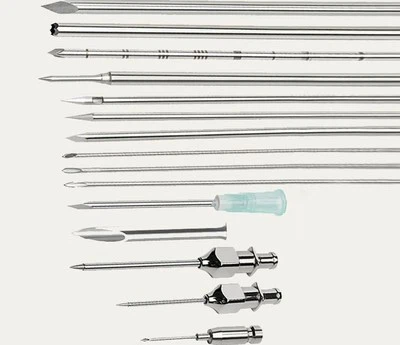
Tube forming and precision processing are key links. The steel wire is drawn into a thin tube through multiple molds to control diameter tolerance within ±0.01mm. CNC machining, electrochemical grinding and laser cutting are used to form the needle tip and side holes, ensuring sharpness and smoothness. The tip angle and edge are precisely designed to reduce insertion force and tissue damage. Automated welding and assembly avoid manual errors, improving consistency.
Surface treatment and cleaning enhance performance. Electro-polishing removes burrs and improves surface smoothness; hydrophilic coating reduces friction and improves passage. The cleaning process uses ultrasonic and purified water to remove oil and particles, avoiding residues. Class 100,000 cleanroom assembly prevents contamination, which is a basic requirement for medical device manufacturers.
Sterilization and packaging ensure safety. Common methods include ethylene oxide (EO) and gamma irradiation, reaching a sterility assurance level (SAL) of 10⁻⁶. Blister packaging is used for single-use products, with tamper-evident design and clear labeling. Manufacturers establish a complete traceability system from raw materials to finished products, meeting regulatory requirements.
Quality control runs through the whole process. Incoming inspection, in-process inspection and finished-product inspection are implemented, including dimension measurement, sharpness test, bending performance and leakage test. High-standard manufacturers set up reliability laboratories to simulate clinical scenarios and verify durability.
With technological progress, intelligent manufacturing is widely used. Automated production lines improve efficiency and stability; AI visual inspection replaces manual detection, reducing defects. Manufacturers investing in R&D and equipment upgrade will gain advantages in cost and quality.
In conclusion, the manufacturing technology of puncture needle reflects the comprehensive strength of medical device enterprises. Standardized process and strict quality control are the bottom line of patient safety. Manufacturers adhering to precision and safety will win market trust and promote industry progress.