Manufacturer Strategic Perspective: Building Core Competitiveness in The Red Sea Market Of Spinal Needle Products
Apr 22, 2026
Manufacturer Strategic Perspective: Building Core Competitiveness in the Red Sea Market of Spinal Needle Products
Although the global spinal puncture needle market continues to grow, the competition has become increasingly intense, resembling a "red sea". International giants dominate the high-end market, while local enterprises engage in fierce price competition, and new entrants are watching with great interest. Under such circumstances, manufacturers - whether they are industry leaders or challengers - must establish a sustainable competitive advantage through clear strategic positioning and unique capabilities in order to stand out from the fierce market competition.
Differentiation product strategy: From "manufacturing needles" to "providing solutions"
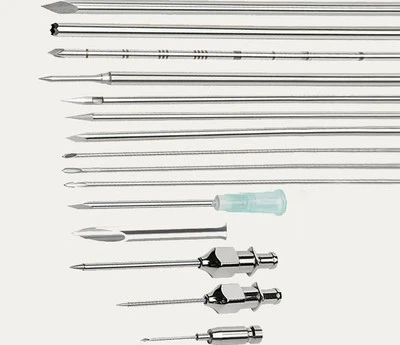
Producing only standard-sized puncture needles alone is no longer sufficient to create a barrier. The strategies of leading manufacturers are to offer comprehensive and differentiated product portfolios and solutions.
* For specific clinical scenarios: Not only do we offer a full range of specifications from 16G to 29G, but we also develop dedicated product lines for special groups and scenarios such as obstetric anesthesia, pain treatment, pediatric punctures, and obese patients. For example, we design longer needle bodies for obese patients and more slender, soft, and safety-locked needles for pediatric use.
* Leading innovation design: Continuously invest in research and development, achieving breakthroughs in aspects such as needle tip geometry (such as the third-generation pencil tip design with lower trauma), needle tube coatings (hydrophilic coatings to reduce resistance), and ergonomic needle holders (anti-slip, transparent for easy observation), and actively apply for patent protection.
* Bundling and system sales: Package the puncture needles with accompanying catheters, filters, pressure sensors, positioning patches, and even ultrasound guidance equipment to provide "puncture kits" or "overall solutions", increasing customer stickiness and enhancing the value per customer.
2. Core Technology Driven: Manufacturing Processes and Quality Control Build a Strong Barrier
In a highly homogeneous market, the ultimate quality and stability are the core competencies that are the most difficult to imitate.
* Precision manufacturing capability: Invest in advanced CNC grinding machines, laser cutting machines and automated production lines to ensure that the precision of needle tip grinding, the smoothness of the inner cavity, and the consistency of dimensions reach the top level in the industry. This is the physical basis for reducing puncture resistance and complications.
* Material science advantages: Deeply cooperate with specialized steel suppliers and even independently develop high-performance medical alloys to ensure the strength and biocompatibility of the products from the source.
* Superior quality control system: Establish internal control standards that are more stringent than international standards (such as ISO 13485, ISO 7864), implement full-process statistical process control (SPC) and 100% key parameter testing to ensure that every product leaving the factory has "zero defects". Establish a complete traceability system. In case of adverse events, it can quickly locate and control the risks.
3. Market and Channel Strategy: Precise Positioning and Deep Service
Combination of globalization and localization: International giants need to consolidate their high-end markets in Europe and the United States while developing cost-effective product lines for growth markets such as Asia-Pacific and Latin America, or reduce costs through local production. Local enterprises can adopt a "rural encircling the city" strategy, leveraging their cost-effectiveness and rapid service capabilities to take the lead in capturing the grassroots market, and then penetrate into high-end hospitals.
Deepen clinical education: Strong manufacturers are not only product suppliers but also "education partners" for clinical doctors. By funding and hosting Workshops, operation training courses, and simulation teaching, collaborating with experts from top hospitals to write operation guidelines, they can deeply embed the advantages and usage techniques of their products into the doctor community, cultivating user habits and brand loyalty.
Professional marketing team: Establish a team that is both proficient in product technology and familiar with clinical practice. This team can provide timely and professional in-surgery guidance and assistance to doctors. Such in-depth services are a powerful weapon to defeat pure price competition.
4. Strategies for Handling Bulk Purchasing and Cost Control
Under the backdrop of global medical cost control and China's "volume-based procurement", the ability to control costs has become increasingly crucial.
* Lean production and automation: By introducing industrial robots, optimizing production processes, and reducing material waste, we can achieve the ultimate compression of manufacturing costs while maintaining quality.
* Vertical integration of the supply chain: Integrating the production of key raw materials (such as special stainless steel wires) at the upstream stage, or establishing strategic alliances with suppliers to ensure stable supply and stabilize price fluctuations.
* Value marketing rather than price marketing: In centralized procurement, we should not merely resort to low prices. Instead, we should prove the cost-effectiveness of the product throughout its life cycle through solid clinical data (such as a lower incidence of PDPH, higher puncture success rate), even if the unit price is slightly higher, but it can reduce the cost of complication management and create greater value for the hospital overall.
5. Planning for the Future: Open Innovation and Strategic Cooperation
In response to the future trend of intelligence and precision, forward-thinking manufacturers will adopt an open attitude.
* Collaborating with technology companies: Establish partnerships with sensor manufacturers, AI algorithm companies, and robotics companies to jointly develop the next-generation intelligent puncture system, and make up for the company's shortcomings in the field of information technology.
* Investing in early-stage research and development: By setting up venture capital funds or collaborating with universities and research institutions, closely monitor and incubate cutting-edge technologies such as new materials, new sensing, and new navigation, maintaining the sharpness of the technological radar.
In summary, in the highly competitive market of spinal puncture needles, the core competitiveness of manufacturers has evolved from solely focusing on product production to a comprehensive comparison of capabilities encompassing continuous innovation based on deep clinical insights, unparalleled precision manufacturing and quality control capabilities, as well as the ability to provide customers with comprehensive solutions and services. Only by placing the strategic focus on this aspect can one navigate through the cycles and achieve steady and long-term success.