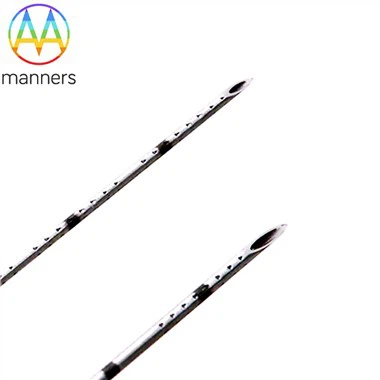
Kerf‑Width Precision Impact On Medical Hypotube Mechanical Behaviour
Aug 30, 2026
Pain Points Many buyers underestimate how laser kerf‑width variation shapes the end‑performance of medical hypotube. Inadequate process control creates inconsistent kerf dimensions across a single tube or between production batches. Wider‑than‑designed kerf reduces structural beam width within cut patterns, yielding unexpectedly high flexibility and lowered torsional strength. Narrower kerf restricts intended bending travel, making hypotube stiffer than specified. Local kerf irregularities introduce stress‑concentration points, increasing risk of kinking or fatigue fracture under cyclic loading. These deviations manifest clinically as unpredictable catheter behaviour during peripheral vascular, coronary or neurological interventions. Because kerf dimension sits deep within component manufacturing, OEM project teams often discover performance drift only after prototype assembly, triggering costly iteration delays before product launch.
Core Principle Laser‑cut pattern geometry defines hypotube mechanical characteristics, and kerf width is a fundamental dimensional variable within that geometry. Our manufacturing capability delivers minimum 0.012 mm kerf width across tubing diameters Ø0.20 mm‑20 mm. For continuous spiral, interrupted spiral, radial and bespoke cut patterns, each segment's mechanical response depends on remaining web width between adjacent cuts, which equals pattern pitch minus kerf width. Uncontrolled kerf variation directly alters web width, shifting bending stiffness, torsional modulus and kink resistance away from simulation predictions. Different base materials including 316L, Nitinol and L605 respond differently to identical kerf deviations. Tight kerf control preserves the intended balance of push performance, trackability, torque and kink resistance. Combined with ISO13485‑governed process parameters, precise kerf management enables hypotube to deliver repeatable mechanical output for minimally‑invasive delivery‑system applications.
Device Classification Hypotube products can be grouped according to kerf‑precision tolerance grades. First, standard‑precision laser‑cut hypotube: suitable for general cardiovascular and urinary endoscopic devices with moderate mechanical tolerance windows. Second, high‑precision kerf‑controlled hypotube: strict kerf tolerances for coronary angioplasty and peripheral vascular intervention where consistent torque and kink resistance are critical. Third, ultra‑precision custom hypotube: tight kerf specification derived from customer 2D/3D drawings or samples, targeting neurological and imaging‑guided interventions with minimal allowable performance deviation. All categories utilise available substrate materials and support standard or custom packaging under ISO9001:2015 and ISO13485 certification.
Operational Guidelines Integrate kerf‑width discipline across hypotube specification and production workflows. During design transfer, explicitly define allowable kerf‑width tolerance in drawing documentation. For standard‑risk applications, select standard‑precision hypotube. For coronary and peripheral‑vascular devices, specify high‑precision kerf‑controlled hypotube. For neuro‑interventional and imaging‑focused projects, adopt ultra‑precision custom hypotube built against customer drawings or samples. On the manufacturing side, perform regular laser‑system calibration to stabilise kerf output. Implement metrology sampling to verify kerf dimensions on production runs. Conduct mechanical validation testing (kink resistance, torque attenuation, push performance) using production‑representative components. Avoid drawing conclusions from prototypes produced with unrepresentative laser‑process settings.
Real‑World Experience Manufacturing case records confirm that unstable kerf width is a frequent root cause of prototype‑to‑production performance shift in medical hypotube. High‑precision kerf‑controlled hypotube maintains consistent web geometry, delivering predictable push‑track‑torque‑kink‑resistance performance for percutaneous transluminal coronary angioplasty. Ultra‑precision custom hypotube with controlled 0.012 mm‑class minimal kerf supports demanding neurological device development where small mechanical changes affect clinical outcomes. When kerf metrology is embedded within batch‑release criteria, OEMs observe fewer late‑stage performance surprises. Conversely, projects skipping formal kerf tolerance definition commonly face multiple redesign cycles before achieving acceptable catheter‑system behaviour.
Conclusion Laser kerf‑width precision is a hidden yet decisive factor governing medical hypotube mechanical properties. Variations modify effective web width inside cut patterns and shift stiffness, torsion and kink‑resistance behaviour. Tiered precision grades permit appropriate matching to application risk level. Defining kerf tolerances early, calibrating laser equipment and performing metrological sampling stabilise component performance from prototype through mass production. Paying deliberate attention to kerf control helps avoid expensive downstream surprises for catheter and endoscopic device development projects.
Outlook & Suggestions Encourage OEM design teams to include kerf‑width tolerances within formal hypotube component drawings. Component factories should advance inline non‑contact kerf‑measurement technology for real‑time process feedback. Build material‑specific kerf‑process databases to speed up new‑product development. Publish industry guidance documents explaining kerf‑width influence on hypotube mechanical performance to raise collective engineering awareness across the medical‑device supply community.