IO Needle Manufacturers Weight-Based Selection Charts Are Being Challenged By Ultrasound
Jun 30, 2026
IO needles have a pain point entirely different from ordinary needles: if the needle is too short, it won't penetrate the total thickness of subcutaneous tissue + cortex and will slip on the periosteum; if too long, it may penetrate the opposite cortex or damage the epiphyseal plate. This is especially sensitive in pediatrics-children's subcutaneous fat thickness at the proximal tibia varies greatly individually. The rule of selecting needle length by "weight/age," used for over a decade, is now being questioned.
Source of Current Needle Selection Charts
EZ-IO official datasheet:
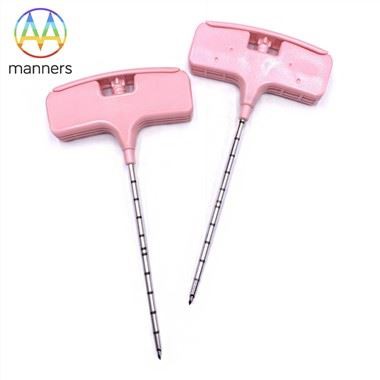
Pink 15 mm: <3 kg or 3–39 kg (contradiction: different versions of official documents express this differently; in practice, the 3–39 kg group predominantly uses 15 mm)
Blue 25 mm: ≥40 kg adults
Yellow 45 mm: obese/proximal humeral access
BIG (Bone Injection Gun) pediatric edition follows a different system: 0–3 years 5–7 mm, 3–6 years 10–15 mm, 6–12 years 15 mm.
Embarrassing Data from Ultrasound Measurements
A 2025 Spanish pediatric ED ultrasound study in Anales de Pediatría(n=237, ages 0.1–14 years) did something remarkably simple: used ultrasound to measure the "epidermis→periosteum" distance at the proximal tibial insertion point, then checked whether the EZ-IO recommended 15 mm (for the 3–39 kg group) was sufficient.
Result: Among 204 pediatric patients aged 3–39 kg, 88 cases (43.1%) had needles that were too short. The strongest correlation was BMI (Spearman 0.683), while weight alone was only 0.324-meaning the "select by weight" logic is most likely to fail in overweight children.
Implications for Manufacturers
Needle length SKUs cannot simply follow a "three-tier weight chart." Overweight children with high BMI and thick subcutaneous fat (even within the 3–39 kg range) need the 25 mm blue needle, not the 15 mm pink needle, but the current EZ-IO labeling misleads clinicians into choosing pink.
If domestic manufacturers produce pediatric IO needles, printing "select needle based on ultrasound-measured subcutaneous thickness + 5 mm" on packaging is more evidence-based persuasive than copying Teleflex's weight chart.
Another pediatric pitfall is the epiphyseal plate-proximal tibial insertion must avoid the epiphysis; inserting too deep or at the wrong angle in children can damage the growth plate. Therefore, needle length + insertion angle (slightly angled toward the knee) are bundled together. If a manufacturer only sells needles without angle-guided limit sleeves, pediatric customers won't dare use them long-term.
Insertion Sites Are Also Diversifying
- Proximal Tibia: Standard site, 2–3 cm medial and distal to the tibial tuberosity.
- Distal Tibia: 2–3 cm proximal to the medial malleolus, used when the tibial tuberosity can't be palpated (obesity/edema).
- Proximal Humerus: Highest flow rate (up to 5 L/h), but high dislocation risk; requires internal shoulder rotation for stabilization-commonly chosen in adult CPR, rarely in children.
- Sternum (FAST1): Pyng's signature product, used in military/mass casualty scenarios, but interferes with chest compressions; not recommended during CPR.
Small Tip for OEMs: On next-generation pediatric IO needle packaging, change the line "15 mm suitable for 3–39 kg" to "15 mm suitable for 3–39 kg AND subcutaneous thickness <10 mm." This could save a batch of extravasation complaints-extravasation progressing to compartment syndrome is the most expensive complication claim for IO needles.