Interpreting The Design Optimization And Risk Management Of Spinal Needle From The Perspective Of Patient Safety
Apr 23, 2026
Interpreting the Design Optimization and Risk Management of Spinal Needle from the Perspective of Patient Safety
Spinal puncture, as an invasive procedure, safety is the primary consideration. The evolution history of the design of spinal puncture needles is essentially a process of continuously optimizing patient safety. Each design improvement is targeted at specific risks, collectively forming the modern safety system for spinal puncture.
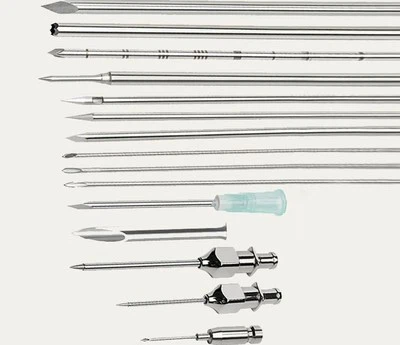
Post-dural puncture headache is the most common complication of lumbar puncture. Its incidence is directly related to the diameter of the puncture needle, the tip design, and the operating technique. Early studies showed that the incidence was as high as 70% when using a 16G needle, while it could be reduced to less than 5% with a 25G needle. This reduction is not only due to the smaller needle diameter but also benefits from the optimization of the needle tip design. The traditional inclined needle (Quincke needle) cuts the dural fibers, causing a large dural defect; while the modern pen-tip needles (Whitacre, Sprotte, etc.) bluntly separate the fibers, resulting in a smaller fissured defect and significantly reducing cerebrospinal fluid leakage. The latest research comparing different needle types found that the incidence of post-dural puncture headache with a 25G Whitacre needle was only 1-2%, while that with an equivalent diameter Quincke needle was 5-8%. This difference highlights the importance of the tip design for patient safety.
The risk of infection is present throughout the entire puncture procedure. The policy of single-use for spinal puncture needles has largely eliminated the risk of cross-infection, but every detail of aseptic technique still needs to be paid attention to. The advancement in needle surface treatment technology has reduced the risk of bacterial adhesion. Some high-end spinal puncture needles use antibacterial coatings, such as silver ion coatings or chlorhexidine coatings, which have shown in animal experiments to be able to reduce the bacterial colonization rate. However, the safety of the coatings needs to be comprehensively evaluated to prevent allergic or toxic reactions. Strict aseptic techniques during the operation remain the most important measure for preventing infection, including skin preparation, sterile draping, operator hand hygiene, and barrier protection.
Nerve injury is a rare but serious complication, with an incidence rate of approximately 0.1%. Fine needles (25G and above) significantly reduce the risk of direct nerve injury, but extremely fine needles (27G and above) may increase the difficulty of puncture and operation time, indirectly increasing the risk of injury. The design of the needle tip also affects the probability of nerve injury. A blunt needle tip (like a pen tip) will push the nerve aside instead of piercing it, and is theoretically safer. Ultrasound or fluoroscopy guidance can be used to observe the position of the needle tip in real time, avoiding accidental entry into the spinal cord or nerve roots, which is particularly important for patients with spinal deformities, previous spinal surgeries, or anatomical variations.
Complications of bleeding include epidural hematoma, subarachnoid hemorrhage and spinal cord hematoma. These are relatively rare but can cause catastrophic consequences. Risk assessment is crucial for patients receiving anticoagulant or antiplatelet therapy. The guidelines of the American Regional Anesthesia Society recommend that for patients taking warfarin, the international normalized ratio should be ≤ 1.4; for new oral anticoagulants, sufficient time should be paused based on the drug half-life and renal function; for antiplatelet drugs such as aspirin, the risk is relatively low but needs individualized assessment. Needle size selection also affects the risk of bleeding. Smaller needles (25G or larger) have a lower possibility of damaging blood vessels. For patients with abnormal coagulation function, if puncture is necessary, a 25G or smaller pen-point needle may be the safest choice.
Spinal cord conus injury is the most serious but extremely rare complication, with an incidence of approximately 1 in 200,000. The adult spinal cord conus usually terminates at the L1-2 level, and puncture is typically performed in the L3-4 or L4-5 intervertebral spaces. However, anatomical variations, patient positioning, or insufficient operator experience may increase the risk. Ultrasound guidance can real-time determine the puncture gap and depth, significantly improving safety. This is particularly important for pediatric patients, as the spinal cord conus is located at a lower position; newborns can be as low as the L3 level, and puncture is required in the L4-5 or L5-S1 intervertebral spaces, and ultrasound guidance should be used.
Cerebral herniation is the most dangerous complication of lumbar puncture, with extremely high risk for patients with increased intracranial pressure. Strictly adhering to indications and contraindications is the key to prevention. For patients suspected of having intracranial mass, brain edema, or increased intracranial pressure, imaging examinations should be conducted first. When puncture is necessary, use a fine needle (22G or finer), slowly release the fluid, limit the volume of fluid release (usually no more than 2ml/kg or 20ml), and closely monitor neurological function. Some suggest using a smaller syringe (5ml instead of 10ml) to control the suction force and avoid excessive drainage.
Duct rupture or residue is a rare but challenging complication of spinal anesthesia. Using a catheter with metal reinforcing wires can reduce the risk of rupture. If the catheter ruptures, it is usually not necessary to remove it surgically unless there are neurological symptoms or signs of infection, but the patient should be informed and regular follow-up is required. The design of the needle tip also affects the catheter's passability. A smooth inner wall and appropriate curvature reduce the risk of catheter damage.
The neurotoxicity of local anesthetics is a concern in spinal anesthesia. Although it is mainly related to the drug itself, the needle may affect the distribution of the drug. Fine needles (above 25G) have a slower injection speed and a more localized drug distribution, which may affect the anesthesia plane, but also reduces the potential toxicity caused by the extensive diffusion of the drug. The side-hole design of the pen-shaped needle allows the drug to flow out from the side, which may form a more localized anesthesia plane.
Complications related to the patient's position include nerve compression, orthostatic hypotension and respiratory depression. The lateral position is the most common, as flexing the knees and hips increases the interspinous space, but care must be taken to avoid excessive flexion that may affect breathing. The sitting position is used for obese or patients with spinal deformities, but the risk of orthostatic hypotension increases. Monitoring blood pressure, heart rate and blood oxygen saturation before and after the puncture are basic safety measures.
The safety considerations for special populations reflect the concept of individualized medicine. For pregnant women undergoing lumbar puncture, they need to lie on their left side to avoid compression of the aorta. Obese patients may require longer needles, and ultrasound guidance can increase the success rate. Elderly patients with calcified ligaments and narrowed intervertebral spaces need more patience and a smaller needle insertion angle. For pediatric patients, the appropriate needle size should be selected based on age and developmental stage. Usually, a 25G-27G needle is used, and for newborns, a 24G intravenous indwelling needle can be used instead of the dedicated lumbar puncture needle.
The quality control system is the ultimate guarantee for patient safety. From material selection to final sterilization, every step must be strictly controlled. Needle tip sharpness testing ensures smooth insertion, patency testing prevents blockages, fracture testing guarantees strength, and biological load testing controls microbial contamination. Training for clinical doctors is also crucial. Simulation training, ultrasound-guided training, and continuous medical education enhance operational safety and success rates.
From the perspective of patient safety, the spinal puncture needle is not only a technical tool but also a risk management tool. Every design optimization, every operational standard, and every preventive measure are centered around a single core goal: to minimize patient risks and maximize operational safety. This slender needle carries not only medical technology but also a commitment to patient safety.