Interpretation Of The Clinical Value Of Puncture Needles - A Clinical Orientation For Manufacturer Product Development
Apr 27, 2026
Interpretation of the Clinical Value of Puncture Needles - A Clinical Orientation for Manufacturer Product Development
Riddle-solving through questioning
Minimally invasive surgeries cannot do without puncture needles. What changes has this device brought to clinical diagnosis and treatment? What was the core starting point of the manufacturer's research and development of puncture needles? The answer has always been to meet clinical needs, improve treatment efficiency, and reduce patient pain. The clinical value of puncture needles is not only reflected in the surgical operation level, but also lies in promoting the upgrading of the entire surgical diagnosis and treatment model. And all of this stems from the manufacturer's research and development concept centered on clinical needs.
Historical Origin
The clinical application history of the puncture needle is deeply tied to the clinical demand research of the manufacturer. In the 19th century, puncture devices were only used for simple fluid drainage, and the clinical application scenarios were very limited. The manufacturers did not conduct special research on clinical needs. In the mid-20th century, as the demand for minimally invasive surgeries increased, the first manufacturers who focused on clinical pain points began to improve the structure of puncture devices and launched special puncture needles suitable for abdominal puncture, expanding their clinical application scope. At the end of the 20th century, minimally invasive surgical procedures developed rapidly, and new technologies such as laparoscopy and arthroscopy emerged. The manufacturers collaborated with clinical physicians and developed puncture needles of different specifications and shapes specifically for different departments, such as general surgery, orthopedics, gynecology, and gastroenterology. In the 21st century, domestic manufacturers conducted in-depth research in grassroots medical institutions and optimized product dimensions, feel, and operational performance based on domestic clinical surgery characteristics, launching puncture needle products that were more suitable for domestic surgical habits, further expanding the clinical application scenarios of puncture needles and making them a basic instrument for clinical minimally invasive diagnosis and treatment.
Standard definition
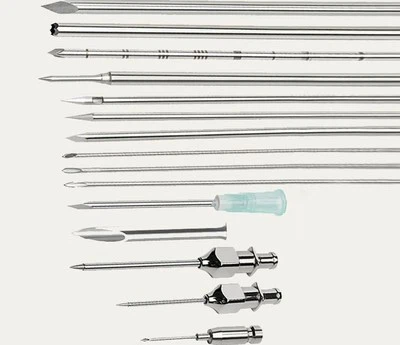
From a clinical application perspective, the puncture needle is developed and designed by manufacturers based on the requirements of clinical surgeries. It is a medical device used in minimally invasive interventional surgeries to establish an operating channel within the body, complete tissue punctures, fluid drainage, and sample collection. Its core clinical function is to establish an internal and external communication path through a small incision, avoiding the large incision trauma of traditional surgeries. It is a basic interventional device essential for minimally invasive surgery. The puncture needles used in clinical settings are all produced by professional manufacturers. The product design, specifications, and performance indicators are all formulated based on the clinical surgical operation procedures, human anatomy, and surgical safety requirements, and are fully compatible with various minimally invasive diagnosis and treatment operation norms.
Clinical application
The puncture needles produced by manufacturers play an irreplaceable role in clinical diagnosis and treatment. They are applied throughout the entire process of diagnosis, treatment and emergency care. In terms of diagnosis, the puncture needles can precisely puncture the affected areas and collect tissue and body fluid samples, which are used for pathological diagnosis of diseases such as tumors and inflammations, enabling early detection and treatment. In terms of treatment, as the "entry tool" for minimally invasive surgeries, the puncture needles establish surgical channels and, in combination with laparoscopes, endoscopes, etc., complete minimally invasive treatments such as tumor removal, tissue repair, and stone removal. Patients recover quickly after surgery, have shorter hospital stays, and have fewer complications. In terms of emergency care, the puncture needles can quickly complete closed thoracic drainage and abdominal puncture for pressure reduction, promptly alleviating the patient's acute conditions and providing time for subsequent treatment. At the same time, for special clinical scenarios, the manufacturer has developed disposable sterile puncture needles, effectively avoiding cross-infection; and reusable high-quality puncture needles reduce the cost of consumables for medical institutions. Nowadays, puncture needles have become essential instruments in operating rooms, endoscopy centers, and pathology departments of all levels of hospitals. Their wide application has continuously improved the level of clinical minimally invasive diagnosis and treatment, benefiting more patients with precise, safe, and minimally invasive medical services.