Intelligence, Minimally Invasiveness And Multimodal Fusion: The Next Decade Of Cervical Cancer Brachytherapy Empowered By Interstitial Needles
Apr 29, 2026
Intelligence, Minimally Invasiveness and Multimodal Fusion: The Next Decade of Cervical Cancer Brachytherapy Empowered by Interstitial Needles
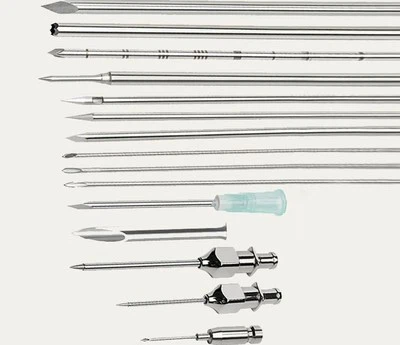
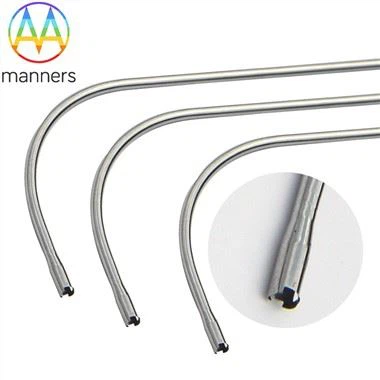
Interstitial needle-based interstitial brachytherapy has elevated the precision of cervical cancer radiotherapy to unprecedented levels. Medical exploration continues to advance, and the next decade will witness profound paradigm reforms in brachytherapy driven by artificial intelligence, surgical robotics, advanced materials and molecular biology. Future interstitial needles will evolve from passive radioactive source channels into intelligent integrated terminals with sensing, navigation, treatment and real-time evaluation functions.
I. Operational Revolution: From Manual Manipulation to AI-Robotic Synergy
1. AI-Assisted Preoperative Planning and Simulation
- Automatic Target Contouring: Deep learning-based AI models rapidly and accurately delineate GTV, HR-CTV and organs at risk within seconds via massive high-quality MRI database training, reducing manual workload and inter-observer variability.
- Intelligent Needle Path Planning: AI autonomously generates optimized needle quantity, insertion angle, depth and spatial array based on 3D tumor morphology, recommending personalized high-conformity layouts balancing radical coverage and normal tissue protection with multiple alternative solutions.
2. Robot-Assisted Precise Implantation
- Dedicated Brachytherapy Robotic Platform: Similar to davinci surgical systems, next-generation puncture robots feature flexible, stable robotic arms. Surgeons complete remote precise operation via high-definition 3D imaging navigation, eliminating hand tremors and realizing complex-angle puncture beyond manual limitations.
- Force Feedback and Automatic Obstacle Avoidance: Integrated terminal force sensors perceive tissue resistance, triggering real-time early warnings or automatic shutdown near vital structures such as intestines and large vessels. Intraoperative dynamic imaging (ultrasound, CBCT) corrects insertion trajectories in real time.
II. Needle Evolution: From Passive Hollow Cannulas to Active Sensing Platforms
1. Integrated Biosensing Needles
Future interstitial needles will embed miniature optical fiber sensors and electrodes to monitor the tumor microenvironment in real time, including local oxygen partial pressure (key factor of radioresistance), pH value and temperature. Real-time biological data feedback enables biologically adaptive radiotherapy: dynamically adjusting source dwell time and dose rate for hypoxic radioresistant regions. Some high-end models will integrate spectral detection probes to differentiate tumor lesions, normal muscle layers and necrotic tissues during puncture, ensuring accurate intra-tumoral needle positioning.
2. Combined Drug Delivery & Radiotherapy Integrated Needles
Innovative functional materials and structural designs enable interstitial needles to simultaneously serve as brachytherapy channels and local sustained-release carriers for chemotherapy drugs, radiosensitizers and immune regulators. Spatiotemporal synchronous combination of local radiotherapy and targeted comprehensive intervention enhances anti-tumor bioeffects while minimizing systemic adverse reactions.
III. Expanded Therapeutic Modalities: From Independent Brachytherapy to Precision Multimodal Fusion Treatment
1. Deep Integration with Molecular Imaging
Future treatment planning will combine anatomical MRI with functional molecular imaging (PET-CT/MRI hypoxia imaging, proliferation targeting and specific molecular tracers). Needle deployment and dose distribution will target biological target volumes - highly aggressive, radioresistant sub-regions within tumors - realizing precise targeted biological irradiation.
2. Synergistic Combination with Immunotherapy
Mounting evidence confirms radiotherapy-induced abscopal effects and synergistic anti-tumor interactions with immune checkpoint inhibitors. As an ultra-local high-fraction radiotherapy modality, interstitial brachytherapy acts as an ideal in-situ tumor vaccine generator. The future therapeutic paradigm will combine high-dose interstitial irradiation for primary lesions to activate systemic anti-tumor immunity, followed by consolidated immunotherapy to amplify distant anti-tumor responses, with interstitial needles functioning as immune ignition triggers.
3. Ultra-High-Speed Individualized Dose Modulation
Optimized pulsed dose-rate afterloading and miniature X-ray source technology will support faster, adjustable dose delivery. Treatment systems will dynamically regulate the dose rate of independent needles based on real-time biological sensing data, formulating personalized prescription doses for heterogeneous intra-tumoral biological characteristics.
IV. Ultimate Pursuit of Accessibility and Automated Standardization
1. Threshold Reduction via Full-Process Intelligence: AI-assisted automatic contouring, intelligent planning and robotic implantation reduce reliance on individual operator experience, promoting standardized, replicable and safe popularization of complex interstitial technology.
2. Disposable Intelligent Consumable Systems: Integrated one-time intelligent interstitial needle kits with embedded sensors will achieve ready-to-use clinical application, simplifying operational workflows, ensuring sterile safety and accumulating big data for technological iteration via post-treatment data analysis.
Conclusion
From a current technical vantage point, the future development of interstitial needles presents boundless possibilities. This core device is evolving from a passive metal pipeline into an intelligent agent with perception, decision-making and execution capabilities, driven by three major trends: robotic precise operation, biosensing adaptive treatment and multimodal therapeutic fusion. Future cervical cancer brachytherapy will transform from simple physical dose delivery to biophysical surgery regulating the tumor microenvironment guided by multi-omics data. As trojan horse-style precise intervention tools penetrating deep into tumor lesions, next-generation intelligent interstitial needles will carry powerful diagnostic and therapeutic functions, not only eliminating local tumor lesions but also activating systemic anti-tumor immunity. This instrumental upgrade represents a subversive reconstruction of therapeutic paradigms, opening unprecedented pathways to conquer cervical cancer and safeguard women's global health.