Innovative Directions And Frontier Explorations in Meniscus Repair Technology
Jun 20, 2026
With the vigorous development of sports medicine, meniscus repair technology stands on the cusp of a profound transformation. From biological augmentation to intelligent instrumentation, and from tissue engineering to personalized medicine, multiple frontiers are redefining the treatment paradigm for meniscal injuries.
I. Biological Augmentation: Boosting Healing Potential
Biological augmentation is currently one of the most active research areas. A primary cause of meniscus repair failure is insufficient healing capacity, particularly in the avascular "white zone." To overcome this bottleneck, scientists are exploring various bioactive substances to promote meniscal healing.
Platelet-Rich Plasma (PRP): Currently the most widely used biological augment in clinical practice. PRP is rich in growth factors such as Platelet-Derived Growth Factor (PDGF), Transforming Growth Factor-beta (TGF-β), and Vascular Endothelial Growth Factor (VEGF), which theoretically stimulate meniscus cell proliferation and matrix synthesis. Although existing clinical evidence remains somewhat inconsistent, several meta-analyses suggest that combining PRP with meniscus repair can reduce re-operation rates.
Mesenchymal Stem Cells (MSCs): Representing a more promising horizon, MSCs derived from bone marrow or adipose tissue possess multidirectional differentiation potential and potent paracrine effects. Animal studies have demonstrated that implanting MSCs at the tear site significantly improves tissue healing quality, even partially regenerating fibrocartilage-like meniscal tissue. Multiple Phase I/II clinical trials are currently underway, yielding encouraging preliminary results. If successfully translated into clinical practice, meniscus repair will evolve from mere "suturing" to true "regeneration."
II. Intelligent Instrumentation and Digital Transformation
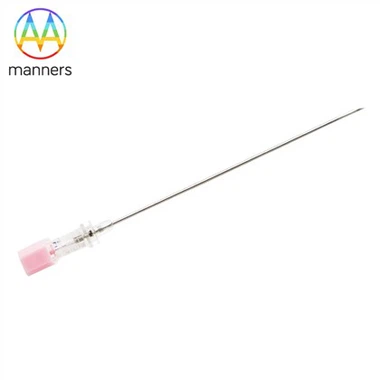
Digital technologies are reshaping the surgical workflow. As mentioned in your provided materials, the manufacturing precision of meniscus repair needles has reached the micron level. Future repair needles may integrate micro-sensors to monitor puncture depth, tissue resistance, and temperature changes in real-time, feeding data back to surgical navigation systems via wireless transmission. Combined with Augmented Reality (AR), surgeons could see virtual "optimal suture paths" superimposed over real anatomical structures on the arthroscopic screen, enabling truly "precision surgery."
III. Robotic Assistance
Robotic-assisted meniscus repair is beginning to take shape. While orthopedic robots are mature in joint replacement, they remain in early exploration for the delicate field of meniscus repair. Nevertheless, advancements in flexible robotics and micro-surgical tools may soon enable robots to assist surgeons in suturing those most inaccessible posterior horn tears, overcoming the angular and stability limitations of the human hand.
IV. Tissue Engineering and 3D Bioprinting
Tissue engineering offers the ultimate solution for massive meniscal defects that are impossible to repair. Scientists are attempting to cultivate personalized meniscus grafts in vitrousing biodegradable scaffolds combined with the patient's own cells and growth factors. In 2019, an Israeli team successfully used a 3D bioprinter to create an artificial meniscus with native structural and mechanical properties, achieving positive results in animal experiments. Although a long road remains before clinical application, this undoubtedly brings new hope to patients whose menisci cannot be salvaged.
V. Personalized Medicine
The concept of personalized medicine is permeating every aspect of meniscus repair. Through quantitative analysis of preoperative MRI, surgeons can precisely assess the tear type, location, and vascularity, allowing for the selection of the most suitable repair technique and rehabilitation protocol. Furthermore, advances in genomics and proteomics may soon help predict each patient's healing potential, enabling "precision treatment tailored to the individual."
Conclusion
The future of meniscus repair technology is brimming with infinite possibilities. Starting with a single precision repair needle and extending to biological regeneration, intelligent instrumentation, and tissue engineering, every innovation propels the discipline toward a higher goal-ensuring that every patient with a knee injury can possess a complete, healthy, and fully functional meniscus.