Industry Knowledge On Clinical Adaptation Optimised By Manufacturers
Jul 27, 2026
The completeness of product gauge portfolios and supporting compatibility serve as core indicators evaluating manufacturers' R&D and production capabilities. Supported by mature mass production systems, diamond tip bone marrow biopsy needles form a comprehensive specification matrix covering 8G, 11G, 13G, 14G, 15G, 16G and 18G. Custom sizes and optional spare auxiliary needles are also available to accommodate diverse clinical scenarios across age groups, physical conditions, bone densities and diagnostic purposes. The design addresses limitations of traditional products featuring narrow gauge ranges, poor adaptability and insufficient consumables for multi-site puncture.
Differentiated adaptation logic for each gauge constitutes fundamental reference for clinical selection and manufacturers' product development. Large gauges including 8G, 11G and 13G possess rigid shafts and powerful penetration performance. Equipped with diamond tips, they are dedicated to complicated adult cases with severe myelofibrosis, osteoproliferative lesions and dense cortical bone. Rapid penetration of hard bone enables acquisition of sufficient intact bone marrow tissue to support accurate diagnosis of severe haematological disorders and metastatic bone tumours. Medium mainstream gauges 14G, 15G and 16G suit most adults for routine biopsy, haematology screening and follow-up examinations. Balancing penetration strength and minimal invasiveness, they represent staple sizes stocked in medical institutions of all tiers. The fine 18G gauge targets minimally invasive treatment for elderly osteoporosis patients, adolescents and frail individuals, delivering smaller puncture wounds, reduced pain and accelerated postoperative recovery to minimise treatment trauma.
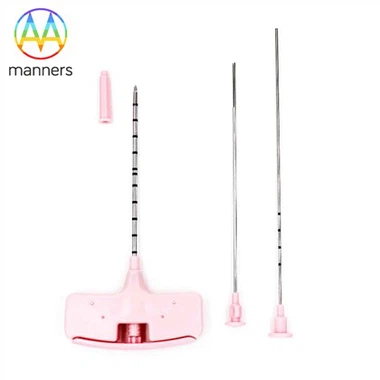
The dedicated spare auxiliary needle configured by manufacturers acts as a distinctive industry upgrade. Conventional biopsy needles are sold as single units. If tip blunting occurs due to minor collision or multi-site puncture is required during surgery, no replacement instrument is available. Surgeons must terminate the procedure to change kits, delaying treatment and causing secondary trauma to patients. Reputable manufacturers supply an extra needle within each set to support multi-point puncture, multi-site sampling and replacement for worn tips. Persistent tip sharpness is maintained to reduce puncture resistance and patient discomfort without additional consumable purchases, improving surgical flexibility and cost-effectiveness.
Customisable sizing further expands industry adaptability. Beyond standard mass-produced gauges from 8G to 18G, manufacturers develop bespoke shaft diameters, lengths, tip angles and hole layouts according to customers' 2D/3D drawings or physical samples. The customised products support specialist research, treatment for rare cases, export OEM and device matching. All customised units adopt identical diamond tip technology, five lateral hole sampling design and lockable T-handle structure as mass-produced goods to ensure consistent quality and stable performance.
From the perspective of industrial standardisation, a complete gauge portfolio, matching auxiliary accessories and customisation capacity differentiate leading manufacturers from small-scale workshops. Most small factories only mass-produce limited conventional sizes without supporting spare components or customisation capabilities, failing to satisfy refined clinical demands of hospitals. Professional manufacturers leverage full-chain production systems to cover standardised mass production and personalised customisation simultaneously. Products adapt to all departments, patient groups and clinical scenarios, setting benchmarks for standardised and refined development within the bone marrow biopsy instrument industry.