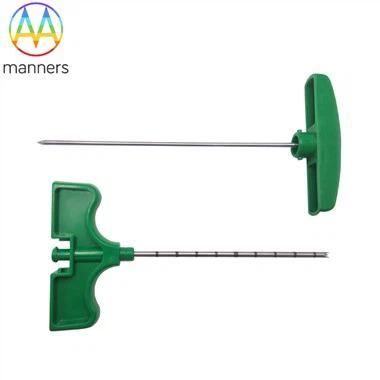
In-Depth Analysis Of The Application Logic Of Chiba Needles In Multifaceted Interventional Clinical Scenarios
May 31, 2026
Today, with the rapid development of medical imaging technologies (such as ultrasound, CT, MRI, DSA), doctors' vision can penetrate the body's surface and reach the lesion directly. However, converting the diagnostic or therapeutic intentions into precise operations within the body still requires reliable physical tools. The Chiba Needle (Chiba Needle) is precisely such a "bridge-like" device that connects the imaging world with physical intervention. This article will start from the clinical end and explore how manufacturers can optimize the Chiba Needle to meet the diverse intervention needs from diagnosis to treatment.
I. The Foundation of Accurate Diagnosis: Biopsy and Aspiration
- Percutaneous biopsy: This is the most classic application of the Chiba Needle. Under real-time guidance of CT or ultrasound, the doctor precisely inserts this slender (with a diameter often less than 1mm) and pointed puncture needle into the suspicious lesions in deep organs such as the liver, pancreas, lungs, and kidneys. Its "slender" feature significantly reduces the risks of complications such as pneumothorax and bleeding; its "sharp" characteristic ensures that it can cut and obtain high-quality tissue strips, providing a gold standard for pathological diagnosis (especially tumor characterization). The manufacturer provides needles of different lengths (15-30cm) and specifications to meet the needs of the entire path from superficial subcutaneous masses to deep mediastinal lesions.
- Liquid aspiration and drainage: For cysts, abscesses, or pleural/abdominal effusions, the Chiba Needle is an ideal minimally invasive drainage tool. The strength of its side wall is sufficient to penetrate the cyst wall or tissue, and its hollow tube cavity can be connected to a syringe for aspiration for biochemical and bacteriological analysis. For abscesses, after aspirating the fluid, drugs can also be injected through the needle tube for treatment. The manufacturer ensures that the tube cavity is smooth, unobstructed, and can withstand a certain negative pressure, providing a physical guarantee for effective aspiration.
II. Establishment of the Treatment Pathway: From the Biliary Tract to the Blood Vessels
- Percutaneous Transhepatic Cholangiography and Drainage: When a patient with obstructive jaundice needs to relieve the pressure in the bile duct, doctors often use the Chiba Needle for a tentative puncture of the intrahepatic bile duct under X-ray fluoroscopy. After successfully drawing out bile and confirming the location, this needle becomes the "pioneer" for establishing the subsequent operation channel. It is first used to inject contrast agent for biliary visualization (PTC), to identify the obstruction site, and then can serve as a channel for the insertion of a guide wire, replacing a thicker drainage tube (PTCD). High requirements are placed on the rigidity of the needle and the visibility of the tip (visible on X-ray).
- Establishment of Vascular Access and Drug Infusion: In certain peripheral vascular interventional procedures or tumor treatments, the Chiba Needle can be used to directly puncture the target blood vessel as the initial entry point for the insertion of a guide wire. A more important application is to perform percutaneous puncture of solid tumors (such as liver cancer) under image guidance, directly injecting anhydrous ethanol, chemotherapy drugs, or radioactive particles into the tumor. At this time, the positioning accuracy of the needle directly determines the treatment effect and the protection of surrounding normal tissues.
III. Image Compatibility and Operating Feel: The Clinical Thinking of the Manufacturer
An excellent manufacturer must have in-depth interaction with clinical doctors and understand the following requirements:
- The visibility under imaging: The needle shaft part usually requires markings or laser-etched labels to facilitate identification under ultrasound. The needle tip part often undergoes special treatment (such as polishing to create echo points or using high-density materials) to enhance imaging under ultrasound. In CT or X-ray, the needle body may need to have certain radiation impermeability.
- Operating feel and feedback: During puncture, the doctor needs to perceive the "feeling of failure" when penetrating different tissue layers through the touch. The rigidity and elasticity of the needle must be carefully adjusted - too soft may cause deviation from the direction, and too hard may lack tactile feedback and potentially puncture important structures. NiTi alloy needles have to some extent improved this issue.
- Connection and adaptation: The design of the needle hub (Hub) needs to conform to ergonomics, facilitating holding and stable advancement. Its Luer Lock must be standardized to ensure seamless and secure connection with various syringes, extension tubes, and drainage devices, preventing detachment during high-pressure injection of contrast agents.
Conclusion
The Chiba Needle has evolved from a simple biopsy tool into a multifunctional, platform-based minimally invasive interventional entry device. Its value lies in establishing a controllable and precise channel to the target point within the body with minimal trauma. The manufacturer's task is to constantly listen to clinical feedback and continuously optimize in the five dimensions of "fine, sharp, strong, smooth, and clear" to make this simple metal needle tube an indispensable "universal key" in the field of interventional medicine guided by imaging, enabling the realization of precise medical care.