How OPU Ovum Pick-Up Needle Manufacturers Strike A Tripartite Balance Among Precision, Minimally Invasiveness And High Efficiency
May 27, 2026
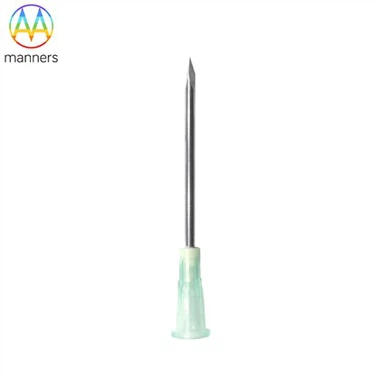
The clinical performance of OPU ovum pick-up needles is largely determined by their physical dimensional parameters. Length and gauge are not mere figures; instead, they are key performance indicators defined by manufacturers through rigorous calculation and repeated verification based on massive clinical anatomical data, fluid mechanics principles and ergonomics. Professional manufacturers fully recognize that only a sophisticated dynamic balance among puncture precision, tissue minimal invasiveness and aspiration efficiency can produce ovum pick-up instruments tailored for complex clinical scenarios. This balancing process represents an evolution from engineering design to clinical expertise.
1. Length Design: A Strategic Solution for Anatomical Variations
The effective working length of ovum pick-up needles ranges from 12 cm to 20 cm. This specification is not arbitrarily set, but a direct response to the diverse anatomical features of the female pelvic cavity. Manufacturers provide a graded selection of lengths for clinical use:
Standard length (approximately 15–17 cm): Suitable for the majority of patients with normal BMI and ovaries in the physiological position. It is the mainstream product routinely stocked in reproductive centers.
Extended length (18–20 cm or longer): Specially designed for obese patients (BMI ≥ 30), as well as those whose ovaries are significantly displaced posteriorly and deeply embedded due to adhesions caused by previous surgeries or endometriosis. Sufficient length ensures the needle tip reaches target follicles in a single attempt. It avoids forced high-pressure puncture or instrument replacement mid-procedure resulting from inadequate length, which would otherwise increase tissue trauma and clinical risks.
Short length (12–14 cm): Intended for slim patients with anteverted ovaries located close to the vaginal fornix. Shorter needles deliver superior maneuverability and stability, especially for manipulating superficial follicles along the puncture pathway.
With this systematic length portfolio, manufacturers enable physicians to select customized instruments according to individual ultrasound measurements of patients, marking the first step toward precise puncture.
2. Gauge Selection: Scientific Trade-off Between Efficiency and Trauma
Needle outer diameter is denoted by Gauge (G), where a smaller number indicates a thicker shaft. The commonly used range from 16G to 19G forms a continuum balancing minimal invasiveness and aspiration efficiency.
Large gauges (16G, 17G): Featuring a large inner cross-sectional area and low fluid resistance, these needles deliver higher follicular fluid flow rates under identical negative pressure. They are critical for patients with Polycystic Ovary Syndrome (PCOS) who have a large number of follicles, as they substantially cut down total operative time and reduce repeated movement of the needle inside the ovary, thereby enhancing safety indirectly. However, the relatively wider puncture tract causes slightly greater instantaneous trauma to the vaginal wall and ovarian cortex, leading to a marginal theoretical increase in postoperative bleeding risk.
Small gauges (18G, 19G): Represent the ultimate pursuit of minimal invasiveness. They create smaller puncture wounds and milder tissue damage, further lowering the risks of postoperative pain, bleeding and infection, and fully aligning with the principles of Enhanced Recovery After Surgery (ERAS). Nevertheless, these needles have lower aspiration flow rates, requiring greater operational patience. They are also more susceptible to blockage when handling viscous follicular fluid or fluid with abundant particulate matter.
A core technical strength of manufacturers lies in resolving this contradiction via thin-wall reinforcement technology. While maintaining the overall flexural rigidity of the needle shaft, the tube wall is thinned as much as possible. This expands the inner diameter to boost aspiration efficiency without increasing the outer diameter and compromising minimal invasiveness. It demands profound expertise in material properties and machining precision, especially the uniform control of wall thickness.
3. Rigidity and Toughness: Sustained Stability Throughout the Procedure
Beyond length and diameter, mechanical flexibility is another vital attribute. Ovum pick-up needles must possess sufficient axial rigidity to maintain a straight puncture path and prevent deflection when penetrating tissues, which could otherwise cause deviation from target follicles. Meanwhile, appropriate radial toughness is required to avoid brittle fracture when encountering unexpected resistance.
Manufacturers refine these two opposing mechanical properties by selecting premium raw materials and precisely controlling tube annealing processes and wall thickness uniformity. This ensures the needle can advance steadily through tissues of varying densities while flexing appropriately to adapt to unexpected resistance during long-distance penetration.
4. Standardization and Systematic Compatibility
All dimensional designs must comply with industry-standard interface specifications. The hub connecting to ultrasound-guided brackets and negative pressure tubing shall adopt universal dimensions to guarantee seamless compatibility with equipment from different brands.
Leading manufacturers not only offer a full range of specifications, but also provide clinical research-based selection guidelines. These tools help reproductive centers formulate scientific and efficient inventory strategies to reduce waste and ensure optimal instrument support for every procedure.
In essence, the dimensional design of OPU ovum pick-up needles is an artistic engineering solution integrating clinical insights and sophisticated precision manufacturing.