How Manufacturers Of Vacuum‑Assisted Breast Biopsy Needles Achieve Gentle Precision
May 23, 2026
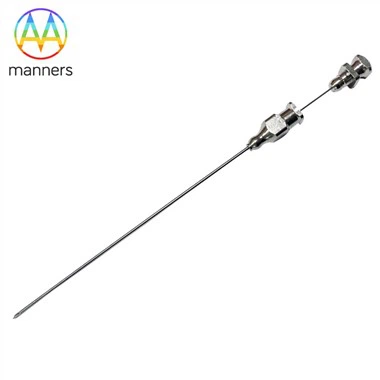
Within the early‑stage breast cancer diagnosis system, vacuum‑assisted breast biopsy (VABB) needles represent a revolutionary minimally invasive sampling technology. Abandoning the "jab‑and‑extract" method of conventional large‑bore core needles, they enable gentle resection of suspicious tissue through the synergy of sophisticated mechanical structures and negative pressure. As a professional manufacturer of vacuum‑assisted breast biopsy needles, we deeply understand that behind this "gentleness" lies complex micron‑scale coordination among three core components: the needle tip, sample notch cannula, and cutting cannula. This article reveals how we translate such coordination from design blueprints into reliable, safe diagnostic tools in physicians' hands through extreme manufacturing craftsmanship.
Geometry of Cutting: The Art of Primary Sharpness at the Needle Tip
The needle tip is the first interface contacting tissue, and its design philosophy extends far beyond mere sharpness. On a Citizen L12‑1M7 sliding‑head lathe, a piece of 316 stainless steel is shaped into a complex geometric component with three precision‑engineered curved surfaces. The roughly 30‑minute milling process aims to strike a sub‑millimetre‑scale balance: minimizing penetration resistance while reducing tissue trauma.
While traditional sharp conical tips penetrate easily, they act more like wedges that displace rather than cut tissue, potentially compressing micro‑calcifications. The optimised curved surface of a VABB needle tip separates tissue fibres with a smoother gliding motion, creating a stable channel for precise positioning of the subsequent sample notch. The edge sharpness (R‑value) is strictly controlled to allow accurate, smooth access to target sites several centimetres deep under ultrasound or X‑ray guidance, while minimising puncture‑track bleeding and patient discomfort. This initial manufacturing step sets the tone for precision with gentleness.
Window for Capture: The Sample Notch Cannula - Bridge Between Negative Pressure and Visualisation
The sample notch cannula serves as the needle's working chamber. Machining the elongated window (notch) on its surface presents another challenge balancing precision and structural integrity. Precision notching on the lathe ensures perfectly smooth, burr‑free notch edges; even minor irregularities can scrape tissue or block sample entry as the cannula rotates, acting like a small shovel.
The size, shape and position of this window directly determine the size and representativeness of captured samples. Manufacturers precisely control the notch's length, width and depth, paired with calculated matching to vacuum negative‑pressure values. This ensures target tissue is stably and completely drawn into the notch upon vacuum activation, ready for cutting. Laser‑marked alignment lines on the notch act as a measuring scale for physicians under image guidance, enabling accurate translation from macroscopic imaging to microscopic manipulation.
Closed‑Loop Cutting Edge: The Cutting Cannula - Precision Closure for Definitive Sampling
The cutting cannula functions as the system's execution terminal. Its inner bore must form a perfect yet unobstructed sliding fit with the sample notch cannula, while its front cutting edge delivers clean, instant resection of aspirated tissue. Multiple manufacturing processes including flaring, end‑face machining, internal chamfering and notching are all optimised for sealing performance and cutting efficiency.
The geometric angle and sharpness of the cutting edge are engineered to slice tissue neatly like a microsurgical blade during rapid rotation or reciprocation, rather than tearing it. Meanwhile, the fitting clearance between the cutting cannula and sample notch cannula is controlled at the micron level (e.g. ±0.01 mm). Excessive clearance causes vacuum leakage, insufficient negative pressure and weak sample aspiration; overly tight clearance results in motion jamming and sampling failure. This seamless fit forms the physical basis for obtaining high‑quality, adequate specimens with every firing cycle.
Silent Oath of Surface Quality: Protection Through Post‑Treatment Processes
Once the three components achieve perfect geometric forms, their surface condition determines final biocompatibility and handling performance. Electropolishing dissolves micro‑protrusions on metal surfaces via electrochemical principles, delivering mirror‑smooth inner and outer walls. This drastically reduces tissue friction for smoother penetration and cutting, while minimising cell adhesion and potential contamination.
Passivation forms a dense chromium oxide protective film on the stainless steel surface, granting outstanding corrosion resistance against in‑vivo environments and subsequent disinfection. Final ultrasonic cleaning uses micro‑explosive forces generated by cavitation to thoroughly remove all particles and grease residues trapped in complex inner bores and crevices during machining, establishing a contamination‑free starting point for the product. These "silent" processes jointly uphold the fundamental commitment to safety and efficacy of medical devices.
From Components to System: Ultimate Synergy Through Calibration and Testing
Precision of individual components is only a prerequisite; the real challenge lies in assembling them into a functionally coordinated system. Manufacturers conduct extensive functional tests: verifying vacuum tightness in tissue‑simulating materials to ensure negative‑pressure reaches design values; testing cutting motion consistency and force to guarantee reliable firing cycles; assessing smooth sample delivery to ensure intact extracted tissue strips.
As manufacturers of vacuum‑assisted breast biopsy needles, we deliver far more than a single needle - a highly integrated, precision‑engineered minimally invasive sampling system. Our manufacturing philosophy translates deep clinical insights (obtaining sufficient, high‑quality diagnostic specimens while minimising patient trauma) into atomic‑level precision control of metallic materials. Every biopsy needle embodies the fusion of precision engineering and medical humanity, fulfilling the clinical promise of gentleness towards human life through the robust precision of manufacturing.