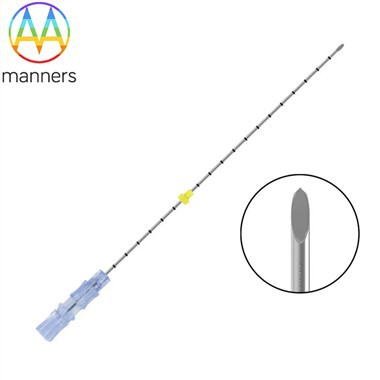
Global Market Landscape And Core Competitive Strengths Of Needle For Intraosseous Access Manufacturers
Jul 25, 2026
Supported by continuous improvement of global emergency medical systems, upgrading grassroots healthcare facilities and growing demand for public health emergency preparedness, the market size of needles for intraosseous access – essential emergency medical devices – maintains steady growth with promising development prospects. Although the number of domestic and international manufacturers of intraosseous access needles keeps rising, products vary significantly in qualification, processing technology and quality. Professional manufacturers with independent R&D capabilities, precision production capacity and full-range customization services occupy core market positions and lead high-quality industrial development.
From an overall industrial perspective, intraosseous access needles have become standardized emergency devices globally. Emergency protocols incorporating intraosseous access during cardiopulmonary resuscitation and trauma management are widely implemented in Europe and North America. Domestic market demand expands rapidly as emergency departments, ICUs, 120 first-aid centers, grassroots health centers and emergency medical teams continuously procure intraosseous access needles to upgrade conventional venipuncture-based emergency frameworks. Meanwhile, medical device export trade maintains growth. High-quality intraosseous access needles win international orders with cost-effectiveness, cross-scenario compatibility and customizable specifications, sustaining expanding demand in overseas markets.
Current industrial competition centers on four dimensions: product quality, processing technology, customization capacity and quality control systems. Low-end small-scale factories adopt ordinary raw materials and simplified production techniques. Their products carry risks including burrs on needle tips, excessive puncture resistance, material corrosion and substandard sterility, only catering to low-budget niche markets. In contrast, formal professional manufacturers hold complete production qualifications, precision manufacturing equipment and experienced R&D teams with distinctive competitive edges. Premium medical-grade stainless steel guarantees smooth, safe and minimally invasive puncture. Optimized cutting tip geometry and low-resistance structures support force-free rapid puncture suitable for patients of all ages.
Customized service represents a key differentiated advantage of leading manufacturers. The universal 15G standard gauge meets most clinical requirements. In addition, manufacturers can develop customized dimensions and structures based on clients' 2D/3D drawings or physical samples to adapt to special clinical settings, unique patient populations and varying international medical regulatory standards. Packaging solutions are flexible between standard export cartons and customer-specific packaging to accommodate hospital procurement, overseas export and emergency reserve scenarios, satisfying diversified personalized client demands.
Furthermore, comprehensive quality control and after-sales services consolidate market advantages for top-tier manufacturers. Compliant manufacturers operate in accordance with medical device production specifications with full-traceability quality management systems to ensure regulatory compliance for global market access. Mass production capacity enables quick responses to bulk orders and urgent requests to guarantee stable supply. Amid trends of industrial standardization and quality upgrading, low-quality low-cost products will gradually be eliminated. Manufacturers integrating research, production, customization and after-sales services will continue dominating the market landscape.