Gauge Matching For 16G–25G Hypodermic Poultry Veterinary Needles
Nov 05, 2026
1. Pain Points from Improper Gauge Selection in Poultry Vaccination
Poultry farms frequently face vaccination failures and bird injuries caused by mismatched needle gauges. Many poultry operators only purchase one universal gauge for broilers, layers, breeders and water-based or oil-based vaccines. Using overly thick 16G needles for young chicks easily punctures neck blood vessels, causes massive bleeding, stress shock and high mortality after vaccination. Conversely, ultra-fine 24G or 25G needles for oily adjuvant vaccines will create severe flow resistance, trigger needle blockage, dose leakage and insufficient antibody titers in flocks. Breast intramuscular injection with an unsuitable gauge often penetrates into the thoracic cavity, damaging internal organs and inducing ascites or death. High-speed automatic continuous injectors are especially sensitive to gauge mismatch; wrong tube diameters lead to unstable output, frequent machine jamming and slowed batch vaccination progress. In addition, low-quality surface treatment brings hidden corrosion risks. Poorly polished or scratched needle surfaces trap vaccine residues and bacteria, even if the base material is stainless steel. Many farm managers confuse corrosion failures with gauge problems, making it hard to locate the root cause of abscesses at injection sites.
2. Material, Machining and Surface Treatment Principle
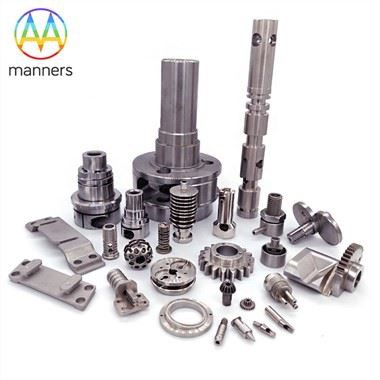
16G–25G hypodermic poultry veterinary needles adopt stainless steel as core raw material. The mechanical performance comes from precision machining processes including turning, grinding, milling, beveling, drilling and swaging. These machining steps control tube concentricity, tip sharpness and inner lumen smoothness, which directly decide injection smoothness and tissue tearing degree. Multiple surface treatment options are available: anodizing, sandblasting, painting, powder coating, plating, silk printing, brushing, polishing and laser engraving. Polishing and plating are the mainstream choices for vaccination scenarios; they form a smooth protective layer, reduce friction during piercing and avoid vaccine residue adhesion. Sandblasting is used for special customized hubs to improve coating adhesion. Laser engraving is widely applied for permanent gauge marking without fading after repeated cleaning. The whole production system is certified under ISO9001:2015 and SGS material verification. The factory supports custom development according to customers' 2D/3D drawings or samples, and packaging can be standard export cartons or customized as requested. The surface treatment is not only for decoration; it serves as a supplementary barrier against disinfectant corrosion, drug erosion and residual contamination in high-frequency poultry vaccination lines.
3. Classification of 16G–25G Gauges and Application Scenarios
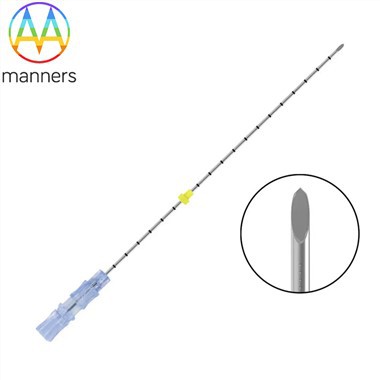
The 16G–25G range covers all mainstream poultry injection requirements, with clear segmentation by bird age, injection route and vaccine type. 16G and 17G: heavy-duty thick gauges, large inner diameter, high flow capacity. Suitable for adult breeders, ducks and geese, mainly for high-viscosity oil vaccines and large-volume intramuscular injection. Thick tube wall resists bending under high injector pressure. 18G,19G,20G: the most versatile mainstream gauges for broilers and adult layers, balancing piercing speed and trauma. Widely used for neck subcutaneous injection and breast intramuscular vaccination of Newcastle disease, avian influenza and infectious bursal disease vaccines. 21G,22G: preferred for young growing chickens, medium-sized ducks and routine subcutaneous injection, lowering bleeding risk while maintaining stable liquid flow. 23G,24G,25G: fine gauges for one-day-old chicks, neonatal ducklings and low-trauma subcutaneous injection. They minimize tissue damage and stress response, but are only fit for aqueous, low-viscosity vaccines. All gauges can be equipped with different surface treatments and hub structures through customization, matching manual syringes or automatic poultry vaccination guns.
4. Step-by-Step Operation Guide for Gauge Selection
First, confirm three core variables: poultry age and weight, injection route (subcutaneous neck / intramuscular breast), and vaccine viscosity. Oily suspension vaccines require one or two gauges thicker than water-based vaccines. Second, inspect surface finish before installation: reject needles with burrs, uneven plating or obvious scratches, because rough surfaces accumulate vaccine sludge and breed bacteria. Third, pre-test flow with the target vaccine on the injector. If obvious pushing resistance appears, upgrade to a thicker gauge instead of forcing injection. Fourth, control penetration depth matched with gauge: thicker gauges pair with shorter needle lengths for neck subcutaneous sites to avoid deep vascular injury. Fifth, replace needles regularly during batch vaccination. Even with stainless steel material, worn tips and damaged surface coating will raise trauma and contamination risks. Sixth, record flock immune results after vaccination. If antibody uniformity is poor or abscess rate rises, recheck whether gauge and vaccine viscosity are mismatched.
5. Practical Experience from Poultry Farm Veterinarians
Frontline poultry technicians have formed stable matching rules. For adult breeder oil vaccine IM injection, 16G–18G is the most reliable range. Broiler routine subcutaneous vaccination uses 19G–20G, which balances speed and bird welfare. One-day-old chick neck subcutaneous injection selects 23G–25G, greatly reducing bleeding and chick loss. Many farms once used 25G needles for oily avian influenza vaccines, resulting in over 30% vaccine leakage and unqualified flock antibody detection. Surface treatment experience: polished needles are the first choice for continuous vaccination lines, as they are easier to rinse and less prone to residue buildup. Plated needles have better corrosion resistance when exposed to common farm disinfectants. A common misunderstanding: thinner gauges always mean better animal welfare. Fine gauges are only safe for thin, aqueous vaccines; forced injection of viscous drugs will bring more serious hidden losses.
6. Summary
The 16G–25G gauge matrix is tailored for differentiated poultry vaccination demands. Precision machining and optional surface treatments improve needle smoothness, corrosion resistance and anti-residue performance. Reasonable gauge selection reduces chick bleeding, organ injury, vaccine leakage and immune failure risks. Supported by ISO9001:2015 and SGS certification plus drawing-based customization, these needles become a core consumable for standardized poultry disease prevention. Matching gauge, vaccine property and bird age is the simplest and most effective way to stabilize vaccination effect.
7. Prospect and Suggestions
As intensive poultry farming develops, automatic vaccination lines will occupy a larger share. It is suggested that farms make a fixed gauge reference table sorted by bird type and vaccine category. Suppliers can provide pre-polished, low-residue standard needles for high-speed injectors. Buyers can use the custom service to develop special hub and length combinations for their own automatic equipment. When purchasing, pay attention to surface treatment quality instead of only comparing unit price. In the future, poultry welfare requirements will push fine-gauge needle optimization for young chicks, while thick-gauge models will keep upgrading thin-wall structures to boost flow rate without enlarging wound size.