From Standard Component To Customized Device: Precision Design Logic Of Menghini Needles Based On Individual Patient Anatomy
Apr 24, 2026
From Standard Component to Customized Device: Precision Design Logic of Menghini Needles Based on Individual Patient Anatomy
Keywords: Patient-Specific Customized Menghini Liver Biopsy Needle + Precision Sampling with Anatomical Adaptation and Risk Minimization
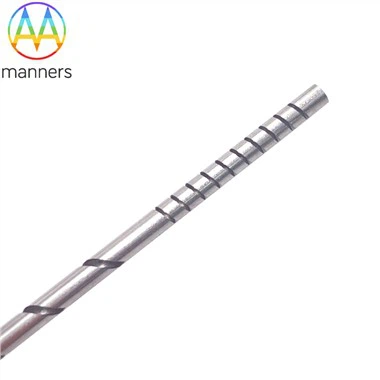
Amid the era of precision medicine, liver biopsy, a classic interventional procedure, is undergoing a profound paradigm shift from the universal model of one-size-fits-all technology toward an individualized framework of matching optimal instruments to specific patients. The classical design of the Menghini needle establishes a reliable foundational platform, while its capacity for in-depth customization according to clinical requirements enables flexible adaptation to diverse complex scenarios, ranging from obese individuals and pediatric patients to those with severe liver cirrhosis and post-liver-transplant recipients. Such customization extends far beyond simple length truncation; it constitutes systematic engineering optimization of needle gauge, material properties and auxiliary structures tailored to each patient's unique physique, hepatic pathological conditions and target sampling demands.
Anatomical Calculation of Puncture Depth and Custom Needle Length
Standard Menghini needles (typically 15–20 cm) are dimensioned for average body types. Nevertheless, predicting the effective puncture depth is critical for patients with atypical body constitutions. For obese patients with thick abdominal fat layers, standard needles often lack sufficient length to reach the liver. Accordingly, extended needle shafts (customized to 22–25 cm) are manufactured based on preoperative ultrasound or CT measurements of the distance from skin surface to liver capsule.
Conversely, excessively long shafts prove unwieldy for children, underweight adults, and patients with marked hepatic atrophy (e.g., end-stage cirrhosis), while also raising the risk of accidental perforation of the contralateral liver capsule. For these populations, shortened needles (10–12 cm) are adopted. More refined customization accounts for hepatic positional variations: livers displaced inferiorly by pulmonary emphysema require longer puncture paths, whereas livers elevated due to abdominal distension or interposed colon necessitate shorter, more controllable instruments.
Pathological Balancing of Gauge Selection
16G is the conventional gauge for diagnostic adult liver biopsy, striking an ideal balance between specimen sufficiency (a minimum of 11 complete portal tracts is clinically required) and bleeding risk. Customized design logic, however, mandates gauge adjustment according to suspected pathologies.
For suspected diffuse parenchymal diseases such as fatty liver and hepatitis, finer 18G needles suffice with reduced tissue trauma. For suspected hematological infiltrative disorders such as lymphoma, or cases requiring advanced molecular testing including next-generation sequencing for hepatocellular carcinoma, thicker 14G or larger needles are indicated to harvest larger, intact tissue specimens and guarantee analytical success. For high-risk patients with severe cirrhosis and coagulation dysfunction, clinical protocols prioritize safety via finer 18G or 20G needles, despite the potential risk of inadequate sampling.
Tissue Engineering of Needle Tip Geometry and Bevel Angles
Conventional Menghini needles feature a single sharp bevel tip. Customization optimizes this geometry in response to variable hepatic parenchymal stiffness. Standard sharp bevels enable effortless puncture for soft liver tissue such as fatty liver disease. For livers hardened to leather-like consistency from advanced fibrosis or cirrhosis, standard bevels tend to deviate during insertion or push against the liver surface.
To resolve this, customized dual-bevel or pencil-point tips are adopted to lower puncture resistance and maintain straight insertion trajectories. Bevel angles are also adjustable: steeper acute angles (20°) enhance puncture force for dense fibrotic tissue, while moderately wider angles (30°) deliver smoother tissue cutting. For the specialized transjugular liver biopsy pathway, modified Menghini-style needles are longer, more flexible, and specially engineered for intravascular navigation and penetration through the hepatic vein wall, differing entirely from percutaneous biopsy needles.
Scenario-Based Adaptation of Material Rigidity, Surface Treatment and Auxiliary Safety Mechanisms
Standard medical stainless steel provides satisfactory structural rigidity. For obese patients requiring passage through thick, heterogeneous abdominal walls, customized high-modulus alloys are selected to prevent shaft deflection within adipose tissue. Ultra-high-smooth electropolishing of inner lumens is a universal core customization process for all variants, reducing tissue adhesion and ensuring unobstructed specimen aspiration.
In terms of safety, retractable protective sheaths can be integrated: the tip remains exposed during puncture, and a spring-loaded sheath automatically covers the needle tip upon withdrawal post-sampling. This eliminates needlestick injury risks for medical staff, which is especially crucial when operating on hepatitis B and C patients with high infection hazards.
Delivery from Universal Tool to Complete Clinical Solution
Top-tier medical device suppliers provide not merely needles, but full custom solution packages built upon comprehensive clinical data. These include: gauge combinations recommended via imaging analysis, procedure guidelines optimized for the customized specifications, dedicated syringes with negative pressure capacity matched to lumen volume, and specialized specimen containers with fixatives for tissue processing. For liver transplantation applications, exclusive customized biopsy needles are developed for graft livers, with designs accounting for anastomotic anatomy and the inherent fragility of transplanted hepatic tissue.
The customized evolution of the Menghini needle vividly embodies the tailoring essence of modern interventional medicine. It demonstrates that even time-honored procedures sustain vitality through continuous adaptive innovation. Via meticulous modulation of length, gauge, tip geometry and materials, the Menghini needle has transitioned from a standardized industrial product into an individualized medical instrument that respects and adapts to the unique anatomical and pathological profiles of every patient. Across expanded clinical scenarios, it continues to safely fulfill its definitive role as the ultimate diagnostic arbiter for hepatic diseases.