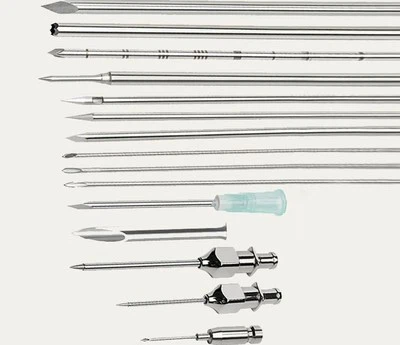
From Blind Puncture To Visualization: How Ultrasound Becomes The Second Pair Of Eyes For Bone Marrow Biopsy?
Apr 14, 2026
From "Blind Puncture" to Visualization: How Ultrasound Becomes the "Second Pair of Eyes" for Bone Marrow Biopsy?
Q&A Approach
Within the invisible medullary cavity, how can physicians ensure the biopsy needle stops precisely at the lesion rather than on a blood sinus or bone cortex? When the traditional "loss of resistance" sensation becomes unreliable in patients with myelofibrosis or obesity, how is millimeter-level precision achieved? The integration of ultrasound guidance is bringing "light" to this century-old procedure.
Historical Evolution
The guidance methods for bone marrow biopsy represent a technological evolution from "tactile dependence" to "visual dominance." Before the 1980s, procedures relied entirely on the physician's tactile feel and anatomical landmarks; experiential errors often led to "dry taps" or poor samples. In the late 1990s, ultrasound was first attempted to locate surface puncture points. By 2005, the application of high-frequency linear probes made real-time visualization of needle penetration through the cortex possible. After 2010, the proliferation of portable ultrasound moved the procedure from the OR to the clinic and bedside. Today, ultrasound fusion navigation and AI-assisted puncture planning are ushering bone marrow biopsy into an intelligent era.
Technical Standard Definitions
Modern ultrasound-guided bone marrow biopsy is a multimodal, precision-integrated system:
|
Technical Dimension |
Core Parameters |
Clinical Value |
|---|---|---|
|
Probe Selection |
High-frequency Linear Probe (7–15 MHz) |
Cortical bone resolution up to 0.1 mm; clearly delineates periosteal line |
|
Needle Guide |
Dedicated Sterile Biopsy Guide |
Fixes insertion angle, error <1°, enabling a controlled path |
|
Needle Visualization |
Laser-etched patterns on needle shaft |
Generates unique reverberation artifacts under ultrasound for full-track tracing |
|
Doppler Function |
Color / Power Doppler |
Identifies and helps avoid vessels along the planned path, reducing bleeding risk |
|
Elastography |
Shear Wave Elastography |
Assesses cortical bone hardness to predict penetration resistance and plan entry points |
Clinical Application Essentials
The value of ultrasound guidance is highlighted in four major clinical challenges:
Obese Patients (BMI >30):
Challenge:Thick subcutaneous fat (>5 cm), bony landmarks difficult to palpate, high traditional failure rate.
Ultrasound Solution:Measure skin-to-periosteum distance to calculate required needle length; identify and avoid fibrous septa (rich in vessels); confirm the iliac crest apex to prevent slipping into soft tissue.
Myelofibrosis:
Challenge:Frequent "dry taps," medullary cavity filled with fibrous tissue, loss of "give" sensation.
Ultrasound Solution:Use ultrasound to assess medullary density; locate residual hypoechoic (relatively normal) hematopoietic foci; guide needle tip for multi-point, small-amplitude aspiration within that region.
Focal Lesions (e.g., Lymphoma infiltration, Metastatic cancer):
Challenge:Small lesion size, easily missed by blind puncture.
Ultrasound Solution:Identify and lock onto focal hypoechoic or hyperechoic nodules; guide needle tip precisely into the lesion center to increase positive yield.
Pediatrics & Uncooperative Patients:
Challenge:High risk of needle tip displacement due to patient movement.
Ultrasound Solution:Real-time dynamic monitoring of needle tip-target relationship; immediate correction if deviation occurs, enhancing safety and success.
Evidence-Based Data Support
Multiple studies confirm the superiority of ultrasound guidance:
A comparative study of 500 cases showed the first-attempt success rate (acquiring adequate diagnostic sample) was 97.2% in the ultrasound group vs. 84.6% in the landmark group (p<0.01).
In myelofibrosis patients, the "dry tap" rate under ultrasound guidance dropped from 35% (traditional method) to 12%.
The incidence of major bleeding complications (hematomas requiring intervention) decreased from 0.8% to 0.2%.
Technology Fusion and Future
Ultrasound guidance is deeply converging with other technologies:
Fusion with EM Navigation: Overlaying real-time ultrasound images with pre-operative 3D CT models for multi-dimensional spatial localization.
AI Assistance: Algorithms automatically identifying optimal needle paths, evading vessels, and predicting required penetration force.
Contrast-Enhanced Ultrasound (CEUS): IV injection of contrast agents to enhance visualization of abnormal intra-medullary blood flow for precise biopsy of hypervascular tumor regions.
Conclusion
Ultrasound serves as a "window of visualization" opened for bone marrow biopsy. It not only elevates the safety and success rate of the procedure but fundamentally changes the operator's perception and control of the invisible space. It represents a critical leap for bone marrow biopsy technology-from empirical practice to precision medicine.