From Battlefield To Emergency Room: The Life-Saving Role Of Intraosseous Access Needles In Extreme Environments Official Release
May 16, 2026
Intraosseous access needles are not only essential tools for in-hospital emergency care but also serve as a lifeline in resource-limited settings such as battlefields, disaster sites, and remote areas. When traditional venous access cannot be established, intraosseous access becomes the only reliable route for fluid administration and has been incorporated into authoritative guidelines such as the NATO combat casualty care guidelines and the International Consensus on Cardiopulmonary Resuscitation. This article focuses on the adaptability and evolution of this technology in extreme environments.
Research and Development Background and Challenges
Battlefields, disaster sites, or remote areas often present the following challenges: insufficient lighting, mass influx of patients, rudimentary equipment, inadequate personnel protection, and long transport times. In such environments, the success rate of venous puncture drops sharply, and delays in fluid resuscitation and drug administration directly increase mortality. Intraosseous access technology, with its simple equipment, rapid operation, and low environmental requirements, has become a key innovation to address this challenge.
Core Technological Innovations
To meet the demands of extreme environments, the research and development of intraosseous access needles focuses on:
Balancing portability and reliability: Developing dual-purpose manual/electric puncture devices with long battery life;
Environmental tolerance: Waterproof, dustproof, and resistant to high and low temperatures, suitable for field and disaster site conditions;
Modular design: Integrated packaging of puncture needles, infusion tubing, and fixation devices for immediate use;
Simulation training system: High-fidelity bone models and virtual training platforms to shorten the training period for personnel.
Mechanism of Action
Under extreme physiological conditions (such as hypovolemia, hypothermia, and traumatic coagulopathy), the sinusoidal structure within the bone marrow cavity can maintain basic perfusion, and changes in bone pressure can serve as a reference indicator for circulatory status. Rapid infusion of warm crystalloid fluids, blood products, or hypertonic solutions through intraosseous access directly enters the central circulation, supporting organ perfusion and buying time for subsequent treatment.
Efficacy Verification
Military medicine and disaster rescue research shows:
In combat casualty care, the establishment time of intraosseous access is on average 2-3 minutes shorter than venous puncture;
In mountain rescue and air rescue, its success rate is significantly higher than traditional venous puncture;
In the classification and treatment of mass casualties, intraosseous access helps prioritize fluid resuscitation;
Multiple multi-center studies have confirmed that it maintains a high patency rate under hypothermia and hypotension.
Research and Development Strategy and Philosophy
The research and development philosophy of intraosseous access technology for extreme environments is "resilience, precision, and accessibility":
Resilience: Ensuring the device functions normally under conditions of vibration, sand and dust, and humidity;
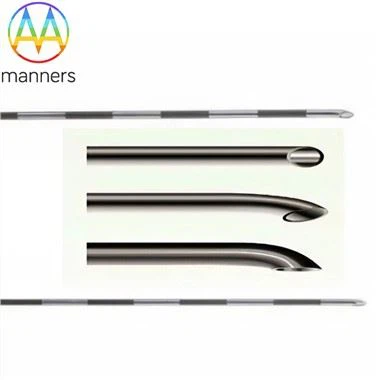
Precision: Reducing reliance on vision through tactile feedback and scale markings;
Accessibility: Promoting procurement by international organizations and inclusion in the standard configuration of emergency kits in various countries to lower procurement thresholds.
Future Outlook
Future research in this field will focus on:
Combining with remote medical systems to achieve real-time guidance and quality monitoring of the puncture process;
Developing biodegradable temporary access devices to reduce the burden of secondary removal;
Testing its performance boundaries in new extreme environments such as space and deep sea;
Promoting its inclusion in a global unified emergency training system to increase the rate of technology adoption.
ExportT