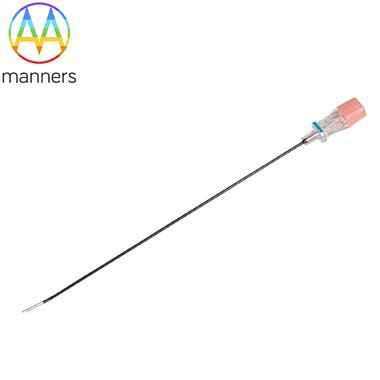
Exporting Blood Collection Consumables: Shipping And Stability
Nov 15, 2026
A lancet that performs perfectly at the factory gate can underperform in the patient's hand if distribution has degraded it. Blood collection consumables are sterile, edge-critical, and often temperature-sensitive in ways that are not obvious, which makes shipping and storage part of the product specification rather than a logistics afterthought. This article covers the distribution considerations for solid lancets such as the Blood Lancet Needles With Three Bevel End.
What Distribution Actually Threatens
Four threats apply to a packaged lancet, and each has a different mitigation.
Sterile barrier integrity. The primary pack is the sterile barrier. Pinholes, channel leaks in seals, and abrasion during transit compromise it silently. A pack that looks intact can fail a dye penetration test, which is why seal integrity is validated and sampled rather than inspected visually.
Edge condition. The cutting edge is microscopic. Movement inside the pack, contact with rigid pack features, or compression loads can roll or nick an edge without leaving any visible sign. This is the most overlooked risk in lancet logistics, and the mitigation is packaging design - positive location of the device - rather than handling care.
Climatic exposure. Temperature and humidity excursions affect polymer hubs, adhesive seals, and steel surfaces. Container shipping across climates produces conditions that a warehouse validation performed in a temperate country may never have covered.
Documentation and configuration control. Wrong labels, mixed configurations in one carton, or missing certificates delay customs clearance and, worse, can put the wrong depth or diameter into a clinical setting.
Packaging Design as a Distribution Requirement
Not all lancet packaging is designed for distribution. Three attributes matter:
Positive location. The lancet should be restrained in a defined position inside the primary pack, not merely enclosed. A device that can rotate or slide will eventually contact the pack wall along its tip.
Compression path management. Stacking loads should be carried by packaging structure, not by the product. This is a carton design question: flute direction, board grade, and inner configuration all determine whether a compressive load reaches the devices.
Barrier appropriate to the route. Where distribution crosses humid climates, barrier films or desiccant may be needed. Where it crosses freezing conditions, polymer behaviour at low temperature should be checked for the hub and for the pack seals.
Shipping Validation and What It Should Include
Distribution validation follows recognised test sequences for transport simulation: vibration, drop, compression, and where relevant, atmospheric conditioning. The results should be assessed against product-specific criteria, not only against packaging damage. Useful acceptance criteria include:
Sterile barrier integrity maintained, verified by an appropriate method.
No visible damage to the device.
Dimensional and edge characteristics unchanged on sampled units, compared with reference samples held from the same lot.
Labelling legible and correct after transit.
That third criterion is the one most often omitted and the most relevant to a cutting device. A distributor can receive cartons in perfect condition containing lancets whose edges are no longer what the drawing specifies, because nobody compared before-and-after samples.
Temperature and Humidity: Practical Guidance
| Condition | Risk | Mitigation |
|---|
| High humidity, container transit | Seal degradation, corrosion on steel, adhesive softening | Barrier packaging, desiccant, container desiccant bags |
| High temperature | Polymer deformation, adhesive flow, edge coating stability | Route planning, stowage away from container roof, validated conditions |
| Freezing | Seal embrittlement, polymer cracking | Validate low-temperature limit; avoid unheated air cargo holds where indicated |
| Rapid cycling | Condensation inside packs | Barrier packaging, controlled unpacking |
| Prolonged storage at destination | Drift beyond validated shelf life | Stock rotation, clear expiry control |
The practical rule is that stated storage conditions should be realistic for the markets served. A product labelled "store below 25 °C" that is shipped to a tropical market without climate-controlled distribution is a product with an unenforceable requirement. Either the distribution supports the requirement, or the requirement should reflect the distribution.
Documentation for Cross-Border Movement
Customs and regulatory clearance for medical consumables depends on documents matching the goods. Common failure points:
Material declarations that describe the product generically, inviting queries.
Certificates of analysis referring to a different lot than the shipment.
Declarations of conformity naming a regulation that does not apply to the destination market.
Labels in a language or format not accepted by the importing authority.
Quantity or configuration mismatches between the packing list and the cartons.
Each of these is procedural and each is cheap to prevent. The reliable practice is a pre-shipment document review against a checklist, performed by someone who is not the person who prepared the shipment.
Configuration Control in the Supply Chain
Where a product family spans a range of depths and diameters, as lancet ranges do, the risk of mis-selection increases with every handover. Effective control has three layers:
Labelling at manufacture. Large, unambiguous configuration text on primary and secondary packs, plus colour coding that is consistent across the range.
Carton configuration discipline. One configuration per carton; mixed cartons only where clearly marked and intended.
Receipt verification. At the destination, confirm that the configuration received matches the configuration ordered before stock enters clinical use.
The third layer is frequently skipped when the same supplier has been used for years, which is exactly when a silent substitution is most likely to pass unnoticed.
Storage at the Point of Use
Distribution ends at a storeroom, and storeroom conditions often differ from warehouse conditions. Practical requirements are unglamorous: a dry location, away from direct sunlight, within the labelled temperature range, with stock rotated so that older lots are used first. For consumables with a fine edge, avoiding rough handling of individual packs matters as much as the ambient conditions.
Insurance, Claims, and Evidence
Losses in transit are usually resolved by evidence rather than by argument. The parties who recover costs are those who can show what was shipped, in what condition, and what the cartons looked like on arrival. Photographs of damaged cartons taken at the receiving dock, retention of a reference sample from the shipped lot, and a documented unboxing procedure are the three items that make a claim supportable. Without a retained reference sample, it is impossible to demonstrate whether an edge problem existed before shipment or developed during it.
A Distribution Checklist
Before shipping or accepting a consignment of the Blood Lancet Needles With Three Bevel End or a comparable product, confirm:
Primary pack design locates the device positively.
Secondary carton rated for the stated stacking configuration.
Barrier and desiccant appropriate to the route and season.
Transport simulation validation completed, with edge assessment before and after.
Storage conditions on the label achievable in the destination market.
Documents match the shipment: lot, configuration, quantity, market.
Labels acceptable to the importing authority, in the required language.
Reference samples retained from each lot for future comparison.
Receipt verification procedure in place at the destination.
Change notification commitment covering packaging and labelling.
Frequently Asked Questions
Can shipping damage a lancet tip invisibly? Yes. Edge damage from movement or compression may not be visible without magnification, which is why before-and-after comparison on sampled units is the reliable check.
Does packaging need revalidation if the carton is changed? Any change affecting the sterile barrier or the protection of the device should trigger revalidation. Changes confined to outer carton graphics generally do not.
What storage temperature should be specified? A range that the actual distribution can maintain, supported by validation. A narrow range that nobody can enforce provides no protection.
Who should verify configuration on receipt? Someone independent of the ordering process, before stock is released to clinical use.
Conclusion
Distribution is not the interval between manufacture and use; it is the part of the product lifecycle where sterile barriers, cutting edges, and configuration control are most exposed. Specify packaging as an engineering requirement, validate transport with before-and-after edge assessment, keep documents aligned with the goods, and verify configuration on receipt. Handled this way, the Blood Lancet Needles With Three Bevel End arrives at the point of use performing as it did when it left the grinding room.