Exploring The Process Breakthroughs And Clinical Impact Of Spinal Needles From A Technological Innovation Perspective
Apr 23, 2026
Exploring the Process Breakthroughs and Clinical Impact of Spinal Needles from a Technological Innovation Perspective
As a critical conduit connecting the central nervous system to the external world, the technological evolution of the spinal needle reflects the precision with which medical engineering responds to clinical needs. From fundamental materials to tip design, and from manufacturing processes to functional integration, each innovation drives lumbar puncture technology toward greater safety, precision, and patient comfort.
Innovation in Tip Geometry
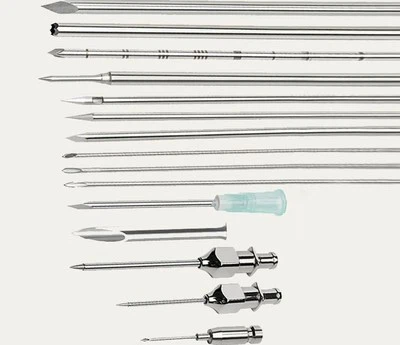
Needle tip geometry is a core area in the technological evolution of spinal needles. Traditional Quincke needles utilize a simple beveled cutting design. While this design offers low penetration resistance, it cuts dural fibers, creating a large, round defect that leads to a high incidence of post-dural puncture headache (PDPH). The advent of the Whitacre needle in the mid-20th century brought revolutionary change. Its pencil-point design and side aperture allow for the blunt separation of dural fibers rather than cutting, forming a smaller, slit-like defect. This reduced the incidence of PDPH from over 30% to less than 5%. Subsequent designs, like the Sprotte needle, further optimized the side aperture to improve injection fluency while maintaining a low risk of PDPH. Recent innovations include asymmetric side apertures and multi-port designs, aimed at controlling the direction of drug diffusion to meet diverse clinical needs.
Breakthroughs in Lumen Processing Technology
Breakthroughs in inner wall processing technology have significantly improved handling feel. The smoothness of the spinal needle's inner lumen directly affects cerebrospinal fluid (CSF) flow resistance and catheter passage. Traditional machined lumens have microscopic irregularities that can increase flow resistance, damage catheters, or generate microparticles. Modern high-end spinal needles employ electrochemical polishing, which removes surface microscopic protrusions via electrolysis to achieve a mirror-smooth inner wall. This process not only reduces penetration resistance and improves handling but also minimizes protein and cell adhesion, reducing the risk of microbial colonization. Some products further incorporate polymer coatings (e.g., PTFE), lowering the friction coefficient to extremely low levels to allow catheters to pass through with silk-like smoothness.
Needle Shaft Reinforcement Technology
Needle shaft reinforcement technology addresses the rigidity challenges of slender needles. As needle gauges decrease (e.g., 27G, 29G), shaft flexibility becomes a significant operational challenge. Material scientists have significantly improved shaft rigidity while maintaining biocompatibility through cold work hardening, special alloy formulations, and optimized heat treatment processes. Recent research explores carbon nanotube-reinforced composites to enhance rigidity without substantially increasing the diameter. Improved rigidity not only enhances handling but also increases puncture accuracy by reducing path deviation caused by shaft bending.
Surface Functionalization
Surface functionalization imparts additional clinical value to spinal needles. Antimicrobial surface treatment is a hot research topic, with silver ion coatings, chlorhexidine coatings, and photocatalytic titanium dioxide coatings showing good antimicrobial effects under laboratory conditions. Antithrombogenic surface treatments (e.g., heparin coatings) may reduce puncture-related microthrombus formation, particularly in patients with hypercoagulable states. Hydrophilic coatings form a lubricating layer upon contact with tissue fluid, significantly reducing penetration resistance and improving patient comfort. Most of these functional treatments are still in the research phase, and their clinical efficacy and long-term safety require further validation.
Specification Diversification
Specification diversification embodies the concept of precision medicine. Spinal needles are no longer limited to one or two specifications; instead, specialized choices are available for different populations, procedures, and objectives.
Pediatric-specific needles (25G–27G, length 1.5–2.5 inches) consider the anatomical characteristics of children and the need for minimal pain.
Extended needles for obese patients (5–7 inches) solve the problem of insufficient length with standard needles.
Therapeutic punctures utilize thicker needles (20G–22G) to meet rapid drainage needs, while diagnostic punctures favor thinner needles (25G–27G) to prioritize PDPH prevention.
This diversification allows clinicians to make optimal choices based on specific circumstances.
Imaging Compatibility Innovations
Innovations in imaging compatibility have expanded the boundaries of spinal needle applications.
Radiopaque needles, incorporating barium or bismuth compounds into the shaft, are clearly visible under fluoroscopy, making interventional pain treatments and myelography more precise.
MRI-compatible needles, typically made of titanium alloys or specific stainless steel grades (e.g., 304, 316L), produce minimal artifacts, do not heat up, and do not move, making real-time MRI-guided puncture possible.
CT-compatible needles require a balance between metal artifacts and imaging quality.
These imaging-compatible needles transition spinal puncture from a "blind" technique into an image-guided era, significantly improving success rates and safety in complex cases.
Integrated Design
Integrated design represents a high-level innovation for spinal needles.
Temperature-sensing needles integrate miniature thermocouples to continuously monitor CSF temperature, assessing spinal cord perfusion, which is valuable during cardiopulmonary resuscitation and major surgery.
Pressure-measuring needles integrate miniature pressure sensors to measure intracranial pressure in real-time, avoiding the subjective errors of traditional manual manometry.
Optical needles integrate optical fibers for spectroscopic analysis of CSF, detecting real-time changes in blood cells, proteins, and other components.
These integrated functions transform the spinal needle from a simple conduit into a diagnostic and monitoring platform.
Manufacturing Precision and Packaging
Manufacturing precision improvement is the foundational guarantee of technological innovation. Modern precision machining controls needle tube diameter tolerances within ±0.005mm, with tip angle deviations of less than 0.5 degrees. Such precision ensures consistent performance across every needle, providing predictability for clinical operations. Automated optical inspection systems monitor tip shape, inner diameter dimensions, and surface defects in real-time, enabling 100% inspection to ensure zero-defect products leave the factory.
Packaging innovation is equally important. Dual packaging systems ensure sterility, with inner packaging using advanced materials like Tyvek that maintain a sterile barrier while being easy to open. Some high-end products adopt Luer-lock integrated packaging, where the spinal needle is pre-connected to a syringe, reducing operational steps and contamination risks. Smart packaging integrates RFID chips to record product information, sterilization dates, and expiration dates, interfacing with hospital information systems to achieve full traceability.
Future Directions
Future technological innovations will focus on intelligence, personalization, and minimally invasive procedures.
Smart puncture needles will integrate micro-sensors and microprocessors to provide real-time feedback on puncture resistance, tissue type, and needle tip location.
3D printing technology may enable personalized customization, printing puncture needles that perfectly match a patient's anatomy based on CT or MRI data.
Minimally invasive needles will see further diameter reductions (beyond 30G), combined with nano-coatings and robotic assistance, to achieve truly painless and non-invasive CSF collection.
From a broader perspective, the technological innovation of spinal needles follows a universal rule in medical device development: progressing from meeting basic functions, to optimizing performance, to adding ancillary functions, and ultimately achieving intelligence and personalization. In this process, the convergence of materials science, mechanical engineering, electronics, and clinical medicine drives the continuous evolution of this slender needle. Each technological innovation solves specific clinical problems, improves operational safety, success rates, and patient comfort, and ultimately enhances patient prognosis and quality of life.