Echogenic Needle For Nerve Block In ERAS Pathways
Nov 29, 2026
Enhanced recovery programmes have already rewritten the surgical day: shorter fasting, opioid-sparing analgesia, early mobilisation, and discharge measured in hours rather than nights. Regional anesthesia is one of the load-bearing walls of that structure, because a well-functioning block is what makes early ambulation possible without a morphine infusion. Yet the block only contributes when it is reliable, dense enough, and long enough, and reliability begins with a needle the operator can see. The consumable that decides whether the first attempt succeeds deserves more attention in ERAS planning than it usually receives.
Clinical Challenge: Reliability Under Time Pressure
ERAS compresses everything. Blocks are performed in pre-operative holding areas, often by a single anaesthetist covering several lists, with turnover targets that leave little tolerance for repeated attempts. A block that takes twenty minutes instead of eight consumes theatre time and delays the next case; a block that is incomplete forces opioid rescue and undermines the opioid-sparing rationale that justified it in the first place.
The patient population adds difficulty. Many ERAS candidates are elderly, with calcified fascia, poor acoustic windows, and comorbidities that make hypotension undesirable, so large-volume rescue injections are not a neutral fallback. Others are on anticoagulation with tight timing constraints, where multiple passes increase risk. The procedural margin is thin, and techniques that reduce passes translate directly into pathway performance.
Working Principle: Visibility, Spread, and Duration
An echogenic needle improves reliability by shortening the path to certainty. Manufactured reflector patterns return a coherent echo across a wide range of approach angles, so the tip stays identifiable when the probe must be tilted to clear bone or when the target sits deep to dense fascia. Better visibility means fewer redirections, and fewer redirections mean less tissue trauma and less time under the probe.
Accurate tip placement then determines spread. Local anesthetic deposited immediately adjacent to the nerve, in the correct plane, produces circumferential spread and a dense block; anesthetic deposited one fascial layer away produces a patchy block that fails at the far end of the dermatome. Since spread is observed rather than predicted, real-time imaging of the injection is the mechanism that converts a good image into a good block.
Duration is the third lever, and it is partly a device question. A fine, atraumatic puncture reduces the local inflammatory response that can shorten block life and increase rebound pain. Combining ultrasound with electrical stimulation adds confirmation of nerve identity, which matters in the adductor canal and the popliteal region where adjacent motor branches can mislead. Together these factors influence whether the block covers the critical early hours when the patient is expected to walk.
Product Classification and Specification Choices
ERAS protocols usually standardise on a small set of devices, so the specification should cover the range of blocks the pathway actually uses rather than a single favourite. Superficial blocks such as fascia iliaca and serratus anterior suit 22G to 25G at 50 to 80 mm, while deep plexus work and continuous catheter placement through an introducer favour 18G at 100 to 150 mm.
|
ERAS Block |
Suggested Gauge and Length |
Selection Rationale |
|
Adductor canal |
21G–22G, 80–100 mm |
Controlled depth, stimulation cross-check |
|
Fascia iliaca |
22G–25G, 80–100 mm |
Superficial plane, low trauma |
|
Serratus anterior |
22G, 80–100 mm |
Angled approach needs strong echo |
|
Popliteal sciatic |
21G–22G, 100 mm |
Deep target, motor confirmation useful |
|
Paravertebral |
18G–21G, 100–120 mm |
Stiffness for dense tissue |
|
Paediatric or awake regional |
25G–26G, 50 mm |
Minimal puncture discomfort |
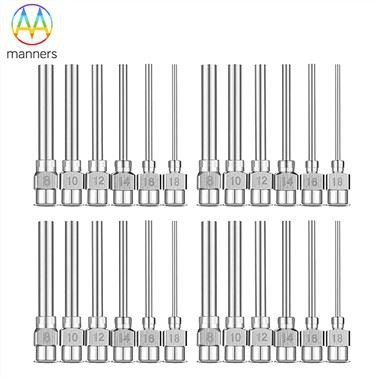
Beyond size, three attributes matter to ERAS logistics: how quickly the needle is ready to use out of the pack, whether the graduations are readable under low light, and whether the packaging supports single-handed opening in a crowded holding area. Standard cartons serve central stores well, while client-specific packaging with sequenced trays reduces picking errors where several needle types circulate in one department. The Echogenic Needle For Nerve Block range runs from 8G to 26G and can be configured with laser marking, electropolished lumens, and sterilization processing to suit local protocol.
Practical Technique: Designing the Block Into the Pathway
Pathway design begins before the patient arrives. Decide which blocks are default for which procedures, which gauge each requires, and who performs them, then stock accordingly so nobody improvises at 07:30. Brief the block plan during the surgical safety huddle, including the expected duration and the analgesic ladder that follows it, because a block without a planned handover becomes a rebound pain problem at midnight.
At the bedside, the sequence should be identical every time. Position the patient so the target is accessible without contorting the operator, choose a probe that fits the depth, optimise the image before puncture, and confirm the tip in the first centimetre. Advance in plane, identify the tip at each pause, and use stimulation to confirm nerve identity rather than to navigate. Inject in increments while watching spread, and stop if spread is not where the anatomy says it should be.
Close the loop with documentation that the ward can use. Record the block performed, the local anesthetic agent and volume, the highest dermatome covered, and the expected offset time. That single record determines whether nursing staff escalate early for a failing block or wait for a crisis, and it feeds the audit that ERAS committees use to justify the service.
One further step belongs in the sequence: a pre-procedure check that the correct gauge is on the trolley. A pathway that assumes the right needle is available will eventually improvise with the wrong one, and a 25G shaft used for a deep adductor canal approach costs more time than the check would have taken.
Troubleshooting Experience: Why Blocks Fail in Recovery
The most common ERAS failure is a block that works in theatre and fades before the first walk. Causes include a subfascial rather than perineural injection, a volume too small for the target, and a needle tip that was visible but not where the operator believed. Reviewing the saved images is the fastest diagnostic: if the spread was never seen to surround the nerve, the answer is technique, not drug choice.
The second pattern is an unexpectedly unilateral or patchy block in a patient who reports sharp pain in one region while numb in another. This usually reflects a septated plane or a needle that passed through the nerve sheath rather than adjacent to it. Repositioning with a slightly withdrawn tip and observing spread often salvages the case without repeating the full volume.
Logistics failures also masquerade as clinical ones. A missing stimulation cable, a stimulator with a depleted battery, or a needle whose sterile pack was opened too early all cost minutes that ERAS cannot spare. Standardising the trolley layout, keeping a spare needle of the two most-used gauges, and checking the stimulator during the morning equipment round removes most of these delays at negligible cost.
Procurement and Compliance: Aligning Supply With Protocol
Procurement in an ERAS service should be protocol-driven. List the blocks in use, map each to a gauge and length, and consolidate to the smallest set that covers the caseload; then require the supplier to hold that range in stock rather than offering a catalogue that must be special-ordered. Consistency matters more than breadth, because a missing size at 07:00 is a clinical problem, not a purchasing inconvenience.
Documentation should support audit as well as regulation. Ask for sterilization validation, material certification for the stainless steel, coating integrity data where stimulation is claimed, and lot traceability that allows a batch to be identified if a complaint arises. Confirm that laser marking remains legible after sterilization and that the sterile barrier suits your storage conditions.
Finally, treat the needle as part of the outcome data set. Track first-pass success, block failure rate, and time to perform, then compare them across any device change. A supplier who supports that comparison with samples and technical detail is worth more than one who competes purely on unit price, because in a pathway judged on discharge times, the cheapest needle is rarely the least expensive.
Conclusion: Small Device, Pathway-Level Effect
ERAS succeeds when many small reliabilities add up. A visible needle tip shortens the block, a correctly placed tip makes it dense, and an atraumatic puncture helps it last through the first mobilisation. None of these is dramatic on its own; together they decide whether a patient walks on the afternoon of surgery or stays in bed on a morphine infusion.
For departments building or refining a pathway, the practical conclusion is to specify deliberately and standardise firmly. Choose gauges that match the blocks you actually perform, verify the device in your own hands with a trial batch, and audit the results. The needle is the smallest item on the block trolley and the easiest to overlook, which is precisely why it deserves a line in the protocol.
Future Trends: Continuous, Digital, and Sustainable
Three currents will shape block practice over the next few years. Continuous techniques are moving from niche to routine in major joint surgery, which increases demand for introducer-compatible needles and catheter systems with predictable imaging characteristics. Digital guidance is maturing quickly, with tip-tracking software and AI-assisted structure recognition beginning to appear in mainstream machines; both perform best when the needle returns a stable echo.
Sustainability and infection control will pull in parallel directions. Single-use expectations continue to tighten, while departments face pressure to reduce packaging waste and document sterilization alternatives. Suppliers will be asked for recyclable tray designs, carbon data per carton, and clear guidance on storage life. Custom sizing, laser marking, and client-specific packaging will shift from differentiators to baseline requirements, because a pathway standardised across a hospital cannot tolerate a supply chain that only offers catalogue sizes.