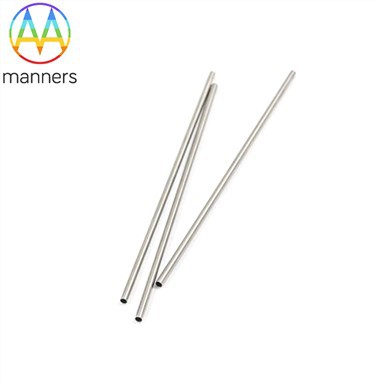
Dimensional Gradient Design And Surgical Matching Of Meniscus Repair System Needles
Aug 17, 2026
Industry Pain Points Single and non-gradient dimensional design of traditional surgical instruments has long restricted the development of meniscus minimally invasive repair technology. Most conventional needles have fixed diameter and length specifications, unable to adapt to the diverse thickness, depth and morphological differences of meniscus tears. Excessively thick needle bodies cause large-area cartilage damage, intraoperative bleeding and severe postoperative swelling, while ultra-thin ordinary needles have insufficient rigidity, prone to bending and slipping during suture threading, resulting in positioning deviation and surgical failure. Fixed-length needles cannot cover the full depth of knee joint lesions: short needles fail to reach deep posterior horn tears leading to incomplete repair, while overly long needles easily penetrate posterior joint capsules and damage neurovascular tissues. In addition, the absence of bend angle design makes straight needles unable to bypass intra-articular bone obstacles, resulting in blind operation, increased surgical difficulty and prolonged operation time, seriously affecting the precision and efficiency of minimally invasive surgery.
Working Principle The dimensional gradient design of meniscus repair system needles is based on human knee anatomical biomechanics and minimally invasive trauma minimization principles. The 0.5mm–2mm diameter gradient is scientifically divided according to meniscus tissue thickness and tear severity, realizing precise matching from ultra-fine minimal trauma penetration to high-rigidity severe tear fixation. The 20mm–100mm length gradient fully covers the superficial anterior horn, middle central body and deep posterior horn lesion areas of the knee joint, adapting to different surgical depth requirements. The optional bend angle design breaks through the limitation of straight needles, fitting the C-shaped curved anatomical structure of the meniscus to bypass femoral condyle obstacles and accurately reach deep blind operation areas. All dimensional parameters are calibrated based on clinical anatomical big data of different genders, ages and body types, ensuring that each specification can achieve optimal minimally invasive effect and repair accuracy in corresponding surgical scenarios, realizing precise individualized instrument matching.
Equipment Classification Meniscus repair system needles form a complete refined dimensional specification system through multi-dimensional gradient classification. By diameter: 0.5mm–0.8mm ultra-fine needles for children and adolescent delicate meniscus minor tears; 0.8mm–1.5mm standard universal needles for most adult moderate traumatic and degenerative tears; 1.5mm–2.0mm thickened high-rigidity needles for severe irregular lacerations and multi-layer composite tears. By length: 20mm–50mm short needles for superficial anterior horn and central body shallow repair; 50mm–80mm medium-length needles for conventional intra-articular tissue repair; 80mm–100mm long needles for deep posterior horn and complex revision surgery. By structural shape: straight needles for shallow open arthroscopic surgery; customized bend-angle needles for deep curved lesion repair, solving the operational bottleneck of traditional straight needles in complex anatomical positions.
Practical Operation Guide Standardized dimensional matching is the key to improving surgical precision and reducing trauma. Preoperatively, comprehensively evaluate patient age, joint space size, tear location and severity to select optimal needle specifications. Pediatric and adolescent patients with delicate tissues and small joint spaces adopt 0.5mm–0.8mm ultra-fine short needles to minimize surgical trauma. Adult anterior horn and central body moderate tears apply standard medium-length straight needles. Deep posterior horn and severe composite tears select thickened long bend-angle needles to ensure complete lesion penetration and stable fixation. Intraoperatively, strictly control insertion depth according to needle length specifications to avoid over-penetration damage to posterior neurovascular structures. Adjust bend angles in real time under arthroscopy to fit joint curves and avoid blind operation. After surgery, record specification parameters to guide postoperative rehabilitation and secondary treatment.
Practical Industry Experience Clinical practical data confirms that precise dimensional gradient matching can increase meniscus repair surgical success rate by more than 35% and reduce postoperative complication rate by 40%. Ultra-fine gradient needles effectively solve the excessive trauma problem of traditional thick needles in pediatric and adolescent surgery, shortening postoperative rehabilitation cycle and reducing joint adhesion probability. Long bend-angle specifications fill the technical gap of difficult deep posterior horn repair, realizing one-time precise fixation of complex lesions that traditional instruments cannot complete. Standardized dimensional grading avoids blind instrument selection and medical resource waste, improving clinical operation standardization. Customized dimensional products processed via 2D/3D drawings and samples perfectly adapt to special joint deformities and personalized lesion characteristics, providing targeted solutions for difficult clinical cases.
Summary and Sublimation Refined dimensional gradient design is the core technical advantage that distinguishes professional meniscus repair system needles from ordinary surgical instruments. The systematic classification of diameter, length and bend angle realizes full-scene coverage of meniscus repair surgical needs, completely solving the clinical pain points of single specification, poor adaptability and low precision of traditional tools. Scientific dimensional matching makes minimally invasive surgery more refined and targeted, reducing intraoperative trauma and operational risks while significantly improving lesion repair accuracy and long-term joint functional recovery. The integration of standardized gradient specifications and personalized customized dimensions promotes the transformation of meniscus repair surgery from standardized universal treatment to precise individualized treatment.
Future Development Suggestions The future upgrading of meniscus repair system needles focuses on refined dimensional optimization and intelligent matching. First, establish age and body-type exclusive dimensional databases to form more refined specification matching standards for children, adults and the elderly. Second, develop multi-angle adjustable integrated needles to break fixed-angle limitations and improve adaptability to complex anatomical structures. Third, realize intelligent customized processing based on 3D joint scanning data to improve the efficiency and accuracy of personalized dimension production. Fourth, compile industry-wide dimensional matching guidelines to standardize clinical instrument selection standards and improve the overall precision level of domestic meniscus minimally invasive surgery.