Decoding The Scientific Principles Of Veress Needle Design
Jun 17, 2026
https://en.wikipedia.org/wiki/Veress_needle
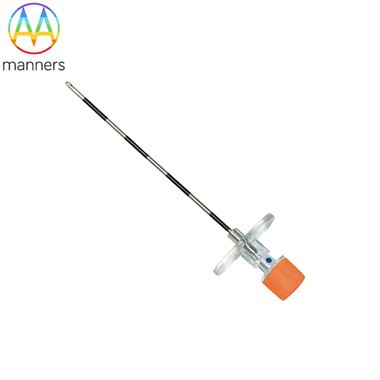
When discussing the Veress needle, the focus is often on its clinical application and associated risks. However, examining it through the lens of engineering and biomechanics reveals that this seemingly simple instrument embodies exquisitely sophisticated scientific design. Every parameter-length, diameter, bevel angle, and spring tension-is deliberate, grounded in rigorous calculation and a deep understanding of human tissue. This article decodes the science and artistry behind the Veress needle.
I. Material Selection: Why Stainless Steel?
As mentioned in technical specifications, the main body of the Veress needle is typically constructed from medical-grade stainless steel (such as 304 or 316L). This choice is far from arbitrary; it is based on multiple critical considerations:
- Biocompatibility: Stainless steel is non-toxic and non-irritating to human tissue, provoking no significant immune rejection. This is a fundamental requirement for any invasive or penetrating medical device.
- Mechanical Properties: It offers an excellent balance of strength, hardness, and toughness. It is rigid enough to penetrate the dense rectus sheath and peritoneum, yet possesses enough elasticity to resist bending or breaking during insertion.
- Corrosion Resistance and Sterilizability: Laparoscopic surgery demands a strictly sterile environment. Stainless steel can withstand repeated high-temperature steam sterilization, ethylene oxide (EO) gas, and other methods without corroding, ensuring long-term safety and durability.
II. The Geometry of Dimensions: Length, Diameter, and Taper
- Length (80–150 mm): How was this range determined? It must be long enough to penetrate the abdominal walls of patients with varying thicknesses (from a few centimeters in the cachectic to over ten centimeters in the obese). However, it cannot be excessively long, lest it increase the risk of damaging deep intra-abdominal organs. The 80–150 mm range strikes a balance between universality and safety for the vast majority of adults.
- Outer Diameter (2.5–5 mm): This represents a classic compromise between "minimizing trauma" and "functional necessity." A smaller diameter reduces parietal injury and improves cosmetic outcomes. However, if the diameter is too small, the inner lumen narrows, restricting gas flow and prolonging the establishment of pneumoperitoneum. The 2.5–5 mm diameter ensures adequate insufflation flow while keeping the puncture wound minimal.
- Conical or Beveled Tip Design: Technical literature describes a "slender, tapered, or conical shape." In practice, most Veress needles feature a sharp beveled tip. This design functions like a blade, smoothly cutting through tissue rather than tearing it. This cutting action requires less insertion force and creates a cleaner wound, facilitating better healing. Conversely, the blunt inner stylet is crafted into a smooth, bullet or olive shape to glide over visceral surfaces rather than penetrate them.
III. The Core Soul: The Dynamics of the Spring Mechanism
The spring mechanism is what fundamentally distinguishes the Veress needle from a standard trocar. It is a sophisticated force-feedback system.
- Preload Setting: The spring tension is critical. It must exceed the cumulative resistance of the abdominal wall layers (skin, fat, fascia, muscle, peritoneum) but remain lower than the pressure threshold that intra-abdominal organs (like bowel) can withstand. When the surgeon presses against the skin, the applied force must overcome the spring preload to expose the sharp outer tip. Once the peritoneum is traversed, the intra-abdominal pressure is insufficient to keep the stylet retracted, and the blunt tip instantly resets.
- Response Speed: The spring's action must be instantaneous. The transition from "traversing the peritoneum" to "stylet deployment" must occur within milliseconds. Any delay risks the exposed outer tip lacerating intra-abdominal organs. High-quality Veress needles utilize precision-engineered springs to ensure maximum sensitivity and reliability.
- Tactile Feedback: The spring mechanism not only provides physical protection but also delivers crucial tactile feedback to the surgeon. By perceiving the changing resistance and the distinct "two pops" (fascia and peritoneum), the surgeon judges the progress of the insertion. Superior spring design makes this sensation clear and unambiguous, aiding precise judgment.
IV. Fluid Dynamics: The Efficient Gas Pathway
Beyond its piercing function, the Veress needle serves as a gas conduit. Its internal design incorporates fluid dynamics principles. A smooth inner lumen minimizes airflow resistance. The one-way valve at the hub ensures gas flows unidirectionally into the abdomen, preventing the reflux of gas or fluid from the peritoneal cavity, thereby maintaining stable pneumoperitoneum.
Conclusion
The design of the Veress needle is a paradigm of interdisciplinary integration, merging materials science, mechanical engineering, biomechanics, and clinical medicine. It boasts no complex electronics or elaborate visuals; instead, it solves one of the most challenging clinical safety problems with the simplest mechanical principles. Behind every Veress needle lies an engineer's reverence for human anatomy and an ultimate pursuit of patient safety. Understanding its design principles not only allows for better utilization but also inspires deeper thought into the nature of medical device innovation: The best designs are often those that are simplest, most reliable, and return most faithfully to the essence of the problem.