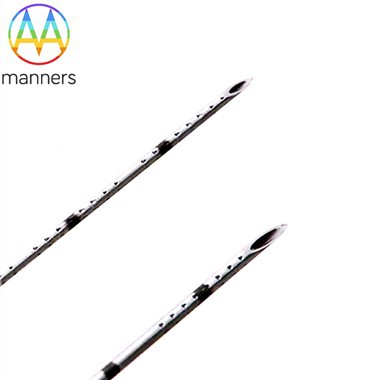
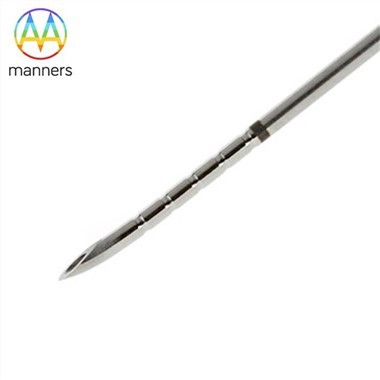
Custom Laser Cut Patterns On 304 Stainless Steel Hypotube For Endoscopic Devices
Sep 08, 2026
Pain Points in Endoscopic Device Design
Endoscopic procedures require devices that can traverse narrow, winding passages while maintaining sufficient pushability and torque. Standard stainless steel tubes often fail to provide the necessary flexibility without sacrificing strength. Designers struggle to achieve a balance between a rigid proximal section for control and a highly flexible distal section for navigation. Off‑the‑shelf solutions rarely meet the specific anatomical requirements of each application, leading to compromised performance and increased risk of complications. In specialties like urology and gastroenterology, the tortuosity of the urinary tract or colon demands extreme flexibility, while the need to operate instruments (e.g., snares, forceps) requires torque transmission. Moreover, the trend toward single‑port surgery and natural orifice transluminal endoscopic surgery (NOTES) intensifies these challenges, as devices must bend in multiple planes without kinking. The lack of customizable options forces surgeons to adapt their techniques to the limitations of the tools, potentially increasing procedure time and patient trauma.
Principle of Pattern‑Driven Flexibility
The concept behind laser‑cut 304 stainless steel hypotube is to selectively remove material to create a skeleton that can bend and twist. By varying the cut pattern along the length, engineers can engineer a flexibility gradient. For example, a continuous spiral cut pattern allows uniform bending in all directions, while an interrupted spiral can provide higher torsional stiffness. Radial cuts can create hinge‑like segments that increase local flexibility. The uncut sections act as stress‑bearing members, ensuring the tube does not collapse under compression. This principle enables the design of a single tube that behaves like a multi‑material composite. The spacing, width, and geometry of the cuts determine the local bending stiffness and torsion. Finite element analysis (FEA) is often used to simulate these mechanical responses, allowing designers to predict how the tube will behave in vivo. The laser‑cut pattern essentially transforms the continuous metal into a compliant mechanism, where flexibility is achieved through elastic deformation of the remaining struts rather than material compliance alone.
Classification of Laser Cutting Patterns
There are four primary pattern families used in 304 stainless steel hypotube: Continuous Spiral Cut Pattern, Interrupted Spiral Cut Pattern, Radial Cut Pattern, and Bespoke Cut Patterns. Continuous spirals are ideal for applications requiring smooth, omnidirectional bending. Interrupted spirals introduce periodic uncut rings, enhancing torque transmission. Radial cuts are transverse slots that increase flexibility in one plane, often used in steerable catheters. Bespoke patterns are custom‑designed geometries tailored to specific device requirements, such as variable pitch or alternating cut shapes. Each pattern influences the tube's bending stiffness, torsion, and kink resistance differently. For instance, a tightly pitched spiral yields high flexibility but may reduce pushability, while a widely spaced spiral maintains more column strength. Hybrid patterns combine features of these families to achieve multifunctional performance. The choice of pattern also affects manufacturability; more complex geometries may require advanced laser sources or longer cycle times.
Practical Operation Guide
Designing a custom pattern begins with defining the mechanical requirements. Use FEA software to simulate the tube's behavior under anticipated loads. Once the pattern is finalized, convert it into a vector file compatible with the laser cutter. Choose a 304 stainless steel hypotube with appropriate dimensions (OD 0.20–20 mm). Set up the laser cutter with parameters optimized for stainless steel: pulse energy 0.1–1 mJ, repetition rate 20–100 kHz, and cutting speed 100–500 mm/s. Secure the tube and execute a test cut on a short segment. Evaluate the cut quality under a microscope and adjust parameters as needed. After full production, perform electropolishing to remove micro‑burrs and enhance corrosion resistance. It is also advisable to create a design history file (DHF) that documents the rationale behind pattern choices, simulation results, and verification tests. This documentation is crucial for regulatory submissions and design transfers.
Real‑World Experience
We have produced custom laser‑cut hypotubes for various endoscopic applications, including urology and gastroenterology. One project involved a biopsy forceps channel requiring high torque transmission and flexibility. By implementing an interrupted spiral pattern with varying pitch, we achieved a 40 % improvement in torque response compared to a standard tube. In another case, a customer needed a catheter with a soft distal tip for atraumatic navigation. We used a radial cut pattern combined with a gradual reduction in cut density toward the tip, resulting in a smooth flexibility transition. Feedback from clinicians confirmed easier handling and reduced patient discomfort. However, we also encountered a situation where a bespoke pattern with very fine struts led to premature fatigue during cyclic bending tests. We revised the design by thickening the struts at high‑stress regions, which resolved the issue. These experiences highlight the importance of iterative prototyping and close collaboration with end‑users.
Summary and Sublimation
Custom laser‑cut patterns on 304 stainless steel hypotube represent the pinnacle of personalized medical device engineering. They allow designers to transcend the limitations of homogeneous materials and create structures that mimic biological flexibility. This capability not only enhances device performance but also expands the possibilities for minimally invasive treatments. The hypotube becomes a canvas for innovation, where each cut is a deliberate stroke that shapes the future of healthcare. As we reflect on these achievements, we recognize that the true value lies in the improved patient outcomes and the empowerment of surgeons to perform with greater confidence and precision.
Future Prospects and Recommendations
As endoscopic procedures become more complex, the demand for even more sophisticated cut patterns will rise. We recommend exploring generative design algorithms that can automatically optimize patterns based on anatomical data. Additionally, integrating sensors into the hypotube structure during laser cutting could enable smart catheters with real‑time feedback. Collaboration between material scientists, laser engineers, and clinicians will be essential to push the boundaries further. Manufacturers should also focus on scaling production while maintaining the high precision required for these critical components. Investing in digital twin technology to simulate the entire manufacturing process from tube drawing to laser cutting will further reduce time‑to‑market and enhance quality assurance.