Custom Hypotube: Precision Laser Cutting For Micro-Catheter Shafts
Aug 30, 2026
Pain Points
The trend toward miniaturization in interventional medicine has created a demand for micro-catheters with outer diameters below 1 mm. Manufacturing such small devices presents unique challenges, particularly in maintaining structural integrity while achieving the necessary flexibility and torque. Traditional manufacturing methods often cannot produce the fine features required, leading to inconsistent performance. Custom hypotubes made via precision laser cutting offer a solution, but working at micro scales requires extreme accuracy and specialized equipment. The pain points include maintaining tight tolerances, avoiding heat damage, and ensuring repeatability in high-volume production.
Principle
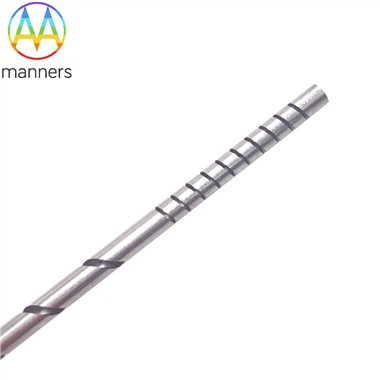
The principle of precision laser cutting for micro-catheter hypotubes is based on the ability to remove material with micron-level accuracy. Using lasers with short pulse durations (picosecond or femtosecond) minimizes the heat-affected zone, preventing micro-cracking and preserving material properties. The laser beam is focused to a spot size comparable to the desired kerf width (as low as 0.012 mm), allowing for intricate patterns on very small tubes (down to Ø 0.20 mm). The cut pattern determines the mechanical properties of the micro-catheter shaft, enabling designers to create flexible, torqueable, and kink-resistant devices. Materials like 304 and 316L stainless steel are commonly used for their machinability and biocompatibility.
Equipment Classification
Micro-catheter hypotube production requires ultrafast laser systems with high beam quality and precise motion control. Vision-guided alignment systems ensure accurate positioning of the tube relative to the laser. Micro-manipulators handle the delicate tubes without causing deformation. Post-processing equipment includes precision electropolishing setups to achieve smooth surfaces at micro scales. Inspection tools such as scanning electron microscopes (SEM) and micro-CT are used for quality control. All equipment must operate in a controlled environment to prevent contamination and ensure compliance with ISO 13485.
Practical Guide
To manufacture a micro-catheter hypotube, start with selecting a base tube with precise dimensional tolerances. Choose an ultrafast laser system suitable for the material. Program the laser with the desired cut pattern, ensuring the kerf width is within specification. Use inert gas assist to prevent oxidation. After cutting, perform electropolishing to remove any recast layer and improve surface finish. Inspect the part using high-magnification imaging. Test the mechanical properties on micro-testing rigs. Document all parameters and validate the process for reproducibility.
Real-World Experience
In our factory, we have produced micro-catheter hypotubes for neurovascular applications with outer diameters as small as 0.30 mm. One project involved a custom pattern with spiral cuts that had to be precisely aligned to avoid weak points. By using a femtosecond laser and real-time monitoring, we achieved a consistent kerf width of 0.015 mm. Another challenge was maintaining straightness during cutting; we solved this by using a custom mandrel support system. These experiences highlight the critical role of equipment precision and process control in micro-scale hypotube manufacturing.
Summary & Elevation
Precision laser cutting has unlocked new possibilities in micro-catheter design, enabling the creation of devices that can access the smallest vessels in the human body. Custom hypotubes produced with this technology offer unparalleled performance in terms of flexibility, torque, and trackability. This advancement represents a leap forward in minimally invasive care, allowing physicians to treat conditions that were once considered inoperable. The synergy between laser technology and medical device engineering continues to push the boundaries of what is possible.
Prospects & Suggestions
As device sizes continue to shrink, the demand for even finer laser cutting capabilities will grow. Manufacturers should invest in research on ultrafast laser sources and adaptive optics to further improve precision. Exploring new materials, such as bioresorbable metals, could open up additional applications. Collaboration with micro-robotics experts may lead to innovative catheter designs. It is also important to stay ahead of regulatory requirements for micro-devices. The future of micro-catheter hypotubes is bright, with endless possibilities for improving patient outcomes.