Core Clinical Pain Points And Working Principles Of Mick Type Brachytherapy Needles In Tumor Seed Implantation
Aug 11, 2026
1. Industry and Clinical Pain Points
Traditional brachytherapy puncture instruments have long plagued clinical cancer treatment with structural and functional defects, restricting the precision, safety, and efficiency of radioactive seed implantation. First, conventional brachytherapy needles adopt blunt ordinary needle tips, requiring forced extrusion during skin and tissue penetration, which easily causes subcutaneous tissue tearing, intraoperative bleeding, and postoperative bruising. For dense tumor tissues and multi-layer soft tissue structures, blunt-tip needles lead to excessive surgical trauma and prolonged patient recovery cycles. Second, most traditional cannula inner walls lack professional honing treatment, retaining microscopic burrs and uneven textures. During seed delivery from the applicator to tumor lesions, friction jamming, offset migration, and incomplete seed release frequently occur, resulting in disordered radiation dose distribution and missing tumor target coverage. Third, ordinary needle tips lack echo-enhanced beveled grinding design, presenting low contrast and blurry imaging under ultrasound guidance. Surgeons cannot accurately identify real-time needle position and penetration depth, easily triggering accidental injury to surrounding blood vessels, nerves, and normal organs. Fourth, traditional puncture needles have single structural design and fixed specifications, failing to adapt to differentiated implantation needs of superficial, deep, dense, and irregular tumors. In addition, backward processing technology leads to poor structural stability of ordinary needles, with needle body deformation and tip deviation common in complex puncture surgeries, severely affecting the repeatability and standardization of clinical brachytherapy.
2. Core Working Principles for Clinical Application
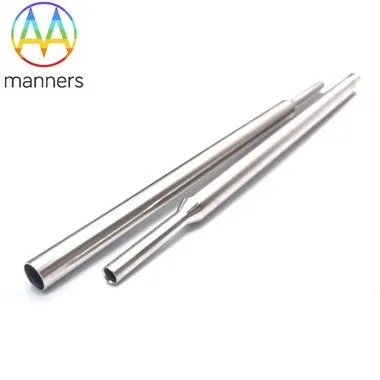
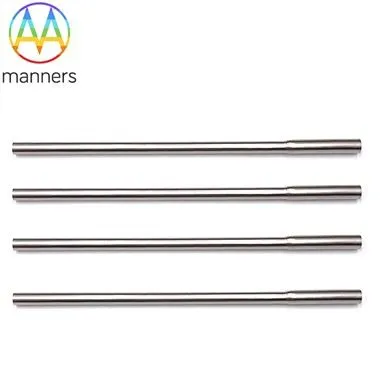
Mick type brachytherapy needles are professionally optimized for full-process tumor radioactive seed implantation, solving traditional clinical defects through targeted structural design and precision processing technology. The core working principle relies on dual-component collaborative design of trocar obturator and echo-enhanced beveled cannula to realize minimally invasive penetration and smooth seed delivery. The needle obturator is equipped with a sharp trocar point, which can pierce the skin and soft tissue rapidly and accurately with minimal extrusion damage, realizing atraumatic rapid entry into tumor target areas. The matched cannula tip adopts professional ground-beveled and echo-enhanced processing, forming unique acoustic microstructures that produce high-definition ultrasonic imaging, achieving real-time visual positioning of the needle tip. The hub cannula undergoes precision honing treatment to form an ultra-smooth inner wall channel, eliminating seed friction and jamming risks and ensuring continuous, stable, and accurate transmission of radioactive seeds from the applicator through the needle body to the lesion interior. Adopting medical stainless steel material, the needle body delivers high rigidity, corrosion resistance, and biocompatibility, maintaining stable structural performance during long-duration complex implantation surgeries. Supported by mature industrial processes including necking, swaging, laser cutting, and electropolishing, the product achieves dimensional accuracy and structural stability in batch production, laying a foundation for standardized clinical precise treatment.
3. Equipment Classification and Scenario-Based Application
Mick type brachytherapy needles form a complete specification and structural classification system, fully covering diverse cancer brachytherapy scenarios. In terms of gauge classification, 8G to 13G heavy-duty needles feature enhanced structural rigidity and anti-deformation performance, suitable for deep abdominal, pelvic, and osseous dense tumor implantation, resisting strong tissue compression to ensure stable puncture trajectories. 14G to 16G medium universal needles balance surgical trauma and structural stability, widely applicable to conventional solid tumors such as prostate, breast, thyroid, and lung cancer, covering most routine clinical brachytherapy cases. 18G to 20G ultra-fine needles achieve ultra-minimally invasive puncture, ideal for superficial micro-tumors and high-risk lesions adjacent to vital nerves and blood vessels, effectively reducing surgical complication risks. In terms of structural classification, standard Mick type integrated needles adapt to conventional planar vertical implantation of regular tumors; customized-size and special-angle needles support multi-angle stereotactic implantation of irregular tumors. The product supports personalized customization according to clinical 2D/3D drawings or sample standards, meeting special surgical position and complex lesion treatment needs. All specifications adopt unified trocar obturator and honed cannula core configuration to ensure consistent clinical performance.
4. Standard Clinical Operation Guidelines
To maximize the clinical advantages of Mick type brachytherapy needles, standardized full-process operation specifications must be followed. First, preoperative model selection and inspection: select matching needle gauges according to tumor location, depth, and tissue density; check the sharpness of the trocar obturator, the smoothness of the honed cannula inner wall, the integrity of the echo-enhanced beveled tip, and the clarity of ultrasonic imaging to eliminate defective products. Second, preoperative imaging planning: complete ultrasound or CT multi-plane scanning to delineate tumor target areas, formulate puncture trajectories, implantation depth, and seed spacing distribution schemes. Third, minimally invasive puncture entry: utilize the sharp trocar point to penetrate skin and soft tissue rapidly and uniformly, avoid repeated extrusion and tearing, and advance the needle to the preset target position under real-time ultrasonic visualization. Fourth, seed stable deployment: fix the needle body steadily, deliver radioactive seeds through the honed ultra-smooth cannula channel, ensure each seed is accurately implanted at the preset position without jamming or offset. Fifth, intraoperative real-time verification: dynamically observe needle tip position and seed distribution through ultrasonic imaging, adjust implantation parameters timely for missing or offset seeds. Sixth, postoperative withdrawal and review: slowly withdraw the needle body, complete imaging review of postoperative tumor dose coverage, and archive surgical parameter data for subsequent efficacy evaluation.
5. Practical Clinical Application Experience
Long-term clinical application in oncology minimally invasive centers proves that Mick type brachytherapy needles significantly improve the quality and safety of tumor seed implantation surgery. The sharp trocar obturator reduces intraoperative tissue trauma by more than 45% compared with traditional blunt-tip needles, effectively lowering the incidence of intraoperative bleeding, postoperative edema, and inflammatory complications, shortening patients' postoperative hospitalization and recovery cycle. The echo-enhanced beveled tip achieves high-definition real-time ultrasonic visualization, controlling clinical puncture positioning errors within 0.5 mm and greatly reducing the risk of injury to normal tissues. The honed ultra-smooth cannula completely solves the common clinical problem of seed jamming and unstable delivery, improving the one-time success rate of seed implantation to over 99%. For deep dense tumors and irregular complex lesions, multi-specification Mick needles can realize targeted matching implantation, improving tumor target dose coverage and local control rate. Customized needle products perfectly adapt to special surgical positions and rare lesion characteristics, filling the application gap of traditional standardized needles in complex clinical scenarios and significantly improving the cure rate of minimally invasive brachytherapy.
6. Summary and In-Depth Conclusion
Mick type brachytherapy needles effectively solve the core clinical pain points of traditional tumor brachytherapy instruments, including large surgical trauma, blurred positioning imaging, unstable seed delivery, and poor scenario adaptability. Through the innovative collaborative design of sharp trocar obturator and echo-enhanced honed cannula, the product realizes the organic integration of minimally invasive penetration, visual positioning, and smooth seed deployment. The full-specification product matrix and personalized customization capability cover conventional, complex, and special tumor treatment scenarios, achieving precise matching of different lesion characteristics and surgical schemes. As core supporting equipment for modern tumor brachytherapy, it changes the rough and empirical operation mode of traditional seed implantation, promotes the transformation of cancer brachytherapy from extensive treatment to standardized and quantified precision treatment, and provides reliable hardware support for improving tumor treatment efficacy and reducing clinical complications.
7. Application Prospects and Optimization Suggestions
With the rapid development of precise oncology and minimally invasive interventional therapy, the clinical application scope of Mick type brachytherapy needles continues to expand, showing broad market and clinical prospects. In the future, clinical application optimization can be carried out from three dimensions. First, establish refined specification selection standards, formulate exclusive needle matching schemes for different tumor pathological types and lesion locations, and further improve surgical pertinence and accuracy. Second, popularize personalized customized application, combine patient 3D tumor modeling data to customize exclusive needle length and angle parameters, and realize one-to-one precise matching of individual lesions. Third, strengthen standardized clinical training, standardize trocar puncture, visual positioning, and seed deployment operation processes, and unify industry surgical quality control standards. In addition, it is recommended to optimize the echo-enhanced microstructure of the needle tip to adapt to multi-modal imaging guidance, further expand application boundaries, and promote the high-quality standardized development of tumor minimally invasive brachytherapy.