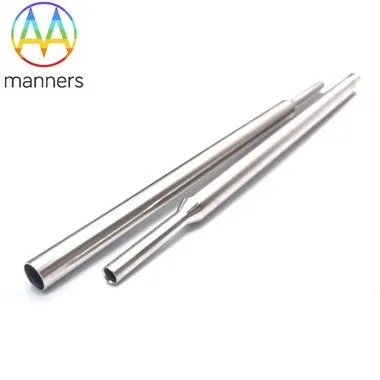
Surgical Safety Control And Risk Prevention System Of Mick Type Cancer Brachytherapy Needles
Aug 11, 2026
1. Industry and Clinical Pain Points
Surgical safety and risk control have always been key bottlenecks restricting the high-quality development of tumor brachytherapy. Traditional brachytherapy puncture needles have many safety hazards in clinical application. First, traditional blunt needle tips require forced extrusion puncture, easily causing large-area soft tissue damage, intraoperative bleeding, and vascular rupture, increasing surgical safety risks. Second, ordinary cannula inner walls are not honed smoothly, with residual burrs, easily causing seed jamming and residual contamination during seed delivery, leading to postoperative infection and secondary surgical risks. Third, traditional needle tips lack echo-enhanced visualization design, resulting in blind puncture in deep tissue surgery, easily damaging deep nerves, visceral organs, and large blood vessels, causing serious surgical complications. Fourth, traditional products have unstable structural performance, prone to needle body bending, tip falling off, and tube body rupture during high-pressure puncture, forming foreign body residues in human tissues. Fifth, backward processing technology and non-standard sterile packaging lead to inconsistent product safety performance in batches, bringing potential infection and mechanical safety hazards to clinical long-term application.
2. Core Safety Application Principles
Mick type brachytherapy needles build a full-link clinical safety guarantee system based on structural innovation and precision processing technology, solving various safety pain points of traditional instruments. First, minimally invasive safety principle: the sharp trocar obturator adopts cutting-type penetration instead of extrusion puncture, minimizing soft tissue damage, effectively avoiding intraoperative bleeding and tissue tearing, and reducing surgical trauma safety risks. Second, visual anti-error safety principle: the echo-enhanced ground-beveled cannula tip realizes full-process real-time ultrasonic visualization, avoiding blind puncture and effectively preventing accidental injury to normal organs and blood vessels. Third, seed delivery safety principle: the hub cannula undergoes professional honing treatment to form an ultra-smooth sterile channel, eliminating seed jamming, residual contamination, and particle offset risks, ensuring clean and safe seed implantation. Fourth, structural stability safety principle: processed by necking, swaging, and electropolishing technology, the medical stainless steel needle body has uniform stress and strong structural toughness, avoiding bending, rupture, and tip shedding during complex puncture. Fifth, batch quality safety principle: standardized industrial processing and sterile carton packaging ensure stable and consistent product safety performance in batches, realizing full-process safety control from production to clinical application.
3. Safety Classification and Targeted Risk Prevention
Combined with clinical surgical risk levels, Mick brachytherapy needles form a refined safety classification application system. First, low-risk conventional surgery safety (14G–16G universal needles): applicable to superficial and medium-depth regular tumor treatment, focusing on routine sterile operation and standardized penetration depth control to avoid minor tissue damage. Second, medium-risk deep tissue surgery safety (8G–13G heavy-duty needles): for deep abdominal and pelvic dense tumor puncture, focusing on preventing needle body deformation and excessive penetration injury, ensuring stable structural operation. Third, high-risk adjacent organ surgery safety (18G–20G ultra-fine needles): for nerve and vascular adjacent lesion treatment, relying on ultra-minimally invasive structure and visual positioning to avoid vital tissue injury. Fourth, complex customized surgery safety: for special-position irregular tumors, relying on personalized structural optimization to eliminate puncture dead zones and operational errors. In terms of functional safety classification, it forms four core safety guarantee systems: minimally invasive anti-trauma safety, visual anti-deviation safety, smooth delivery anti-pollution safety, and structural anti-fracture safety, covering all clinical safety risk points.
4. Full-Process Safety Operation and Risk Control Guidelines
To eliminate clinical safety hazards, the whole application process of Mick brachytherapy needles implements standardized safety operation and risk control specifications. First, preoperative safety inspection: strictly check product sterile packaging integrity, production batch, and validity period; inspect trocar tip sharpness, cannula honing smoothness, needle body structural integrity, and echo imaging effect to eliminate defective products. Second, preoperative risk assessment and model selection: select appropriate needle specifications according to patient physical condition and lesion risk level, formulate targeted risk prevention schemes for deep and high-risk lesions. Third, intraoperative standardized safe puncture: adopt cutting-type slow penetration with trocar tip to avoid violent extrusion; complete full-process ultrasonic visual monitoring, strictly control penetration depth and trajectory, and adjust posture timely to avoid organ injury. Fourth, safe seed deployment: push seeds evenly through the honed ultra-smooth channel to prevent jamming, residual, and offset, ensuring clean and accurate implantation. Fifth, intraoperative emergency disposal: prepare emergency plans for bleeding, seed displacement, and needle body deformation, mastering rapid disposal methods for sudden risks. Sixth, postoperative safety verification: slowly withdraw the needle body, check needle integrity, confirm no foreign body residue and tissue bleeding, complete sterile dressing, and record product batch information for full-life-cycle traceability.
5. Practical Experience of Clinical Safety Control
Batch clinical safety application verification shows that the systematic safety design of Mick brachytherapy needles effectively eliminates various common safety hazards in traditional brachytherapy surgery. The sharp trocar cutting penetration mode reduces intraoperative tissue damage and bleeding rate by more than 50%, greatly lowering the incidence of postoperative inflammatory complications. The echo-enhanced visual positioning technology reduces the incidence of accidental organ and vascular injury to nearly zero, realizing zero major surgical safety accidents in batch applications. The honed ultra-smooth cannula completely solves seed jamming and residual contamination problems, avoiding postoperative infection and secondary surgery risks. The high-stability stainless steel structure processed by precision technology realizes zero needle body deformation and rupture in complex deep surgery, eliminating foreign body residue safety hazards. Standardized batch production and sterile packaging ensure stable product safety performance, and standardized full-process operation specifications standardize clinical surgical behavior, significantly improving the overall safety level of tumor brachytherapy industry.
6. Summary and In-Depth Conclusion
Mick type brachytherapy needles build a full-dimensional clinical safety guarantee system for tumor brachytherapy, solving the safety pain points of traditional instruments such as large surgical trauma, blind puncture risk, easy seed contamination, and unstable structural performance. Through innovative trocar minimally invasive structure, echo-enhanced visual positioning technology, honed smooth delivery channel, and high-precision structural processing, the product realizes full-process safety control covering preoperative product quality, intraoperative surgical operation, and postoperative patient recovery. The refined safety classification application system realizes targeted risk prevention for different surgical scenarios and risk levels, minimizing clinical safety hazards. It effectively makes up for the safety loopholes of traditional brachytherapy technology, protects patient surgical safety and treatment rights and interests, and provides a safe and reliable instrument guarantee for the standardized and popularized development of minimally invasive cancer brachytherapy.
7. Safety Application Prospects and Optimization Suggestions
Clinical safety is the core bottom line of tumor brachytherapy development, and the safety application system of Mick brachytherapy needles needs continuous optimization and upgrading. Clinically, it is suggested to establish a special safety operation training system for Mick needle brachytherapy, standardize the safety operation process of different specification needles and complex scenarios, and improve the risk prevention ability of medical staff. Manufacturers need to further upgrade precision processing technology, optimize cannula honing fineness and needle body structural toughness, enhance product safety and stability in long-duration complex surgery. Establish more stringent batch safety detection and full-life-cycle traceability mechanism to realize zero-defect product delivery. Promote the integration of intelligent safety monitoring technology and Mick needle application, realize intraoperative real-time risk early warning and trajectory correction, further improve the intelligent level of clinical safety control, and lead the industry's high-standard safe development.