Conquering The Most Elusive Vessels: How Specialized Intraosseous Needle Systems Break The Absolute Limits Of Venous Access For Special Populations
Apr 24, 2026
Conquering the Most Elusive Vessels: How Specialized Intraosseous Needle Systems Break the Absolute Limits of Venous Access for Special Populations
Keywords: Manual Intraosseous (IO) Needle System + Rescuing Pulseless Patients Including Pediatrics, Burn Victims, Obese Individuals and Those with Extreme Dehydration
In emergency medicine, there exists a category of patients regarded as the nightmare of vascular access. Their peripheral veins are completely inaccessible or extremely fragile due to extreme physiological conditions (severe dehydration, shock), pathological changes (massive burns, morbid obesity), or congenital physical characteristics (infants, neonates). Conventional peripheral venous puncture and even central venous catheterization present extremely high failure rates in these cases. Under such desperate circumstances, specialized manual intraosseous (IO) needle systems tailored for distinct vulnerable groups serve as the ultimate lifeline. Backed by in-depth anatomical insights and exquisite mechanical engineering, they establish reliable life support pathways where traditional vascular access is impossible.
Pediatric IO Needles: Precision Engineering at the Microscale
Children, especially infants and neonates, are the primary and classic indication group for IO access. They feature tiny skeletons, thin and soft cortical bone, highly vascularized medullary cavities, and delicate epiphyseal growth plates in close proximity. The design philosophy of dedicated pediatric IO needles centers on precision, minimal invasiveness and injury prevention.
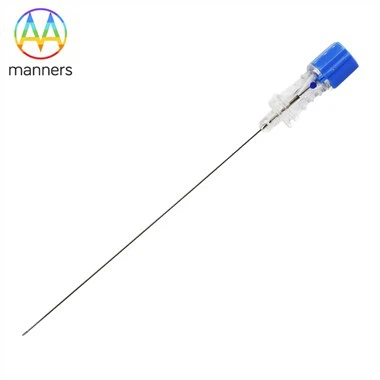
These needles adopt finer gauges (such as 15G) and shorter lengths (1.5 cm, 2.5 cm and other specifications categorized by age) to adapt to the dimensions of pediatric tibia and proximal humerus. Needle tip geometry is of critical importance: diamond-shaped or sharp beveled tips minimize compressive trauma to cartilage and growth plates during insertion. Some models are equipped with adjustable plastic depth stoppers that physically prevent over-penetration.
Supporting medullary cavity confirmation devices are also optimized for pediatric anatomy: smaller syringes are used for aspiration, and successful insertion is verified by the presence of marrow blood containing lipid droplets, avoiding structural damage to bone marrow caused by excessive suction force. In clinical scenarios including neonatal resuscitation and pediatric septic shock, rapid establishment of IO access is often the pivotal first step to reverse disease progression.
For Severe Burn Victims: Bypassing Eschar Barriers to Reach the Source of Life
Patients with extensive deep burns typically present with body surfaces covered by eschar or severe edema, with all superficial veins fully destroyed. To make matters worse, tissue pressure beneath eschar is often elevated, and the eschar itself is extremely rigid. Under such conditions, IO access becomes irreplaceable, as bones remain among the last bodily structures unaffected by direct burn injury.
The proximal humerus is commonly selected as the puncture site for burn patients due to its relatively superficial location and independence from concurrent lower-extremity burns or fractures. Reinforced manual IO needles are fabricated from high-hardness medical stainless steel, with enhanced hub designs that deliver greater torque to penetrate densified cortical bone resulting from dehydration and shock. The key procedural step involves making a small incision through the eschar down to the periosteum prior to puncture, ensuring a sterile and unobstructed pathway.
Deep Penetration for Obese and Extremely Dehydrated Patients
For morbidly obese patients, thick subcutaneous fat layers obscure bony landmarks, and standard-length IO needles fail to reach bone tissue. Extended IO needle kits have therefore been developed, with needle lengths reaching 4.5 cm or longer and elongated guiding stylets to traverse thick fat barriers. Puncture requires solid anatomical proficiency: operators apply firm downward pressure to displace fat before contacting bone.
For emaciated patients in severe dehydration or hypovolemic shock, the medullary cavity becomes depleted due to vasoconstriction and low intravascular volume, resulting in no blood return upon aspiration. For these cases, visible blood return is no longer the sole criterion for successful access. Specialized IO systems adopt a combined assessment of penetration give-way sensation and standing infusion test: after detecting cortical breakthrough, the stylet is removed, and a small volume of normal saline is rapidly injected. Successful placement is confirmed by minimal injection resistance and absence of subcutaneous swelling. The hub and infusion connector are engineered for rapid, airtight coupling to prevent disconnection during pathway verification.
Intraosseous Pressure Monitoring and Complication Prevention
In extreme clinical conditions, rapid high-volume infusion can elevate intraosseous pressure, inducing pain and fluid extravasation. Advanced manual IO systems integrate in-line pressure monitoring modules or connect pressure transducers via three-way stopcocks to track real-time intraosseous pressure and regulate safe infusion rates.
To mitigate rare complications including fat embolism and compartment syndrome, clinical protocols mandate selection of highly vascularized flat bones (tibia, humerus) while avoiding diaphyses of long bones, alongside strict limitations on infusion rate and total volume.
Paradigm Shift: From Backup Option to First-Line Strategy
IO access has been continuously elevated in emergency guidelines for special populations. Under Pediatric Advanced Life Support (PALS), for example, IO access holds equal priority to venous access for pediatric cardiac arrest patients, and is even recommended as the first choice for its faster establishment. For severely burned and traumatized patients, IO access also provides a reliable route for sedatives and muscle relaxants during difficult airway management.
The availability of specialized manual IO needle systems equips emergency responders with a definitive solution for the most intractable clinical cases. Beyond a mere technical apparatus, these devices embody the medical commitment to never abandoning any patient. When all superficial veins are occluded or inaccessible, IO technology enables clinicians to deliver life-sustaining support deep within the body's last viable pathways.