Complication Prevention And Needle Safety Management in Breast Biopsy Procedures
Jul 16, 2026
https://www.mayoclinic.org/tests-procedures/breast-biopsy/about/pac-20384812
Although breast biopsy is a minimally invasive procedure, its safety remains a primary concern for both doctors and patients. From needle selection and standardized procedures to close postoperative monitoring, every step is crucial for complication prevention and control. This article will analyze how to build a robust safety barrier in breast biopsy procedures from the perspective of instrument safety management.
Common Complications and Their Causes
Common complications after breast biopsy include: bleeding/hematoma, infection, pain, pneumothorax (rare), and needle tract implantation metastasis (extremely rare).
* Bleeding and Hematoma: This is the most common complication, often related to needle damage to blood vessels or insufficient postoperative compression. The incidence is relatively higher with thicker needles (such as 11G VAB) due to the larger wound area.
* Infection: Strict aseptic technique is key to infection prevention. Reusable stainless steel needles, if not thoroughly sterilized, can become a source of infection.
* Needle tract implantation: Theoretically, a small number of tumor cells may be carried into the needle tract during needle withdrawal. Although the probability is extremely low (<0.01%), areas rich in skin and subcutaneous lymph nodes should still be avoided as much as possible when choosing a puncture path.
Needle Material and Safety
The choice of needle material directly affects the management of the above risks:
1. Disposable polymer needles: Eliminate the risk of cross-infection at the source, making them the first choice for departments with the strictest infection control (such as immunosuppressed patients). However, their strength is relatively low, and excessive force during operation may cause needle breakage, thus requiring a high level of operator skill.
2. Titanium alloy needles: Their bioinertness is superior to stainless steel, reducing the risk of local tissue reactions and allergies. Under MRI guidance, they avoid the thermal damage that stainless steel needles may cause.
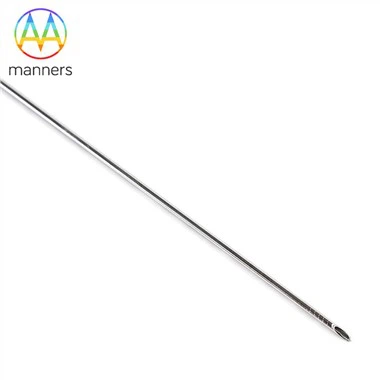
3. Stainless steel needles: Although durable, strict cleaning, disinfection, sterilization, and disposal procedures must be established. Blunt needle tips are a major cause of tissue tearing and increased bleeding, requiring regular replacement.
Safety Strategies During Procedure
In breast biopsy procedures, safety depends not only on the needle itself but also on the operator's technique:
* Path Planning: Avoid large blood vessels (using Doppler ultrasound) and the areola area (to reduce nerve damage). The needle path should be as straight as possible to minimize tissue damage caused by needle tract bends.
* Coaxial Technique: Use a thicker guide needle to establish a channel through which the biopsy needle enters and exits. This requires only one puncture, reducing repeated punctures that can damage the skin and mammary ducts, and also lowering the risk of needle implantation.
* Negative Pressure Control: In vacuum-assisted biopsies, excessive negative pressure can cause blood vessels to rupture due to aspiration. Modern equipment typically has intelligent pressure regulation capabilities.
* Postoperative Compression: After the biopsy, continuous pressure bandaging for 15-30 minutes is an effective way to prevent hematoma formation. For VAB procedures, hemostatic gel or sponges are sometimes placed.
Needle Maintenance and Disposal
For non-disposable needles, establishing a comprehensive tracking system is crucial. After each use, the needle tip must be checked for brittleness, and the syringe tube must be checked for blockage or bending. Any defective needle must be discarded immediately. Reuse of disposable needles is strictly prohibited, even in resource-scarce areas, as the waste during cleaning often exceeds the cost of new needles and poses significant safety risks.
Legal and Ethical Considerations
In breast biopsy procedures, fully informing patients of the potential risks (including rare but serious complications) and obtaining informed consent is a crucial component of medical safety. In the event of complications, standardized recording and handling procedures are also key to self-protection.
In short, safety is the bottom line for breast biopsy procedures. Complications can be minimized by selecting appropriate needles, strictly adhering to aseptic techniques, employing meticulous surgical skills, and implementing scientific postoperative management. Medical device manufacturers should also continuously improve product design, such as developing sharper needle tip coatings and safer automatic protection devices, to jointly safeguard patient safety.