Compatibility, Flexibility And Future Trends
Jun 12, 2026
1. Compatibility Design: Matching Mainstream Biopsy Systems
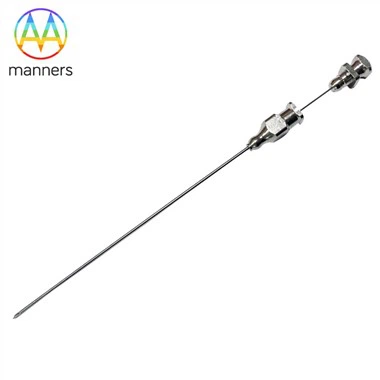
VABB needles manufactured by Manners deliver full compatibility with BD breast biopsy systems, requiring identical standards for needle hub interfaces, vacuum connector dimensions and rotary drive mechanisms. Customization enables customers to specify parameters including: needle length (standard range: 100–150 mm), sample notch length (10–20 mm), vacuum bore diameter and marking scale formats.
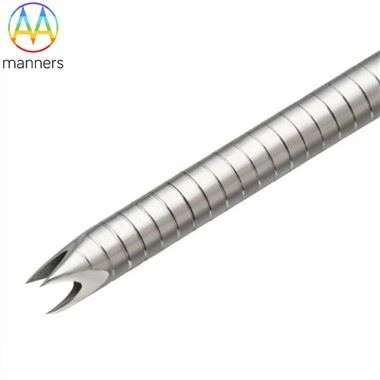
Additionally, needle tip geometry is adjustable. For dense breast tissue, triple-bevel tips are deployed to cut puncture resistance; for fatty breast tissue, single-bevel tips are used to boost sampling efficiency.
2. Component-Level Customization: Needle Tips, Sample Notch Cannulas and Cutting Cannulas
Manners can fabricate the three core components separately and offer full assembly services per product specifications. The cutting edge angle of needle tips (typically 20°–30°) is optimized for varying tissue properties; the position and quantity of openings on sample notch cannulas are adjustable (single or multiple windows); the edge hardness of cutting cannulas is tunable via thermal treatment processes.
This modular customization allows OEM partners to rapidly iterate products and cater to clinical preferences across global regions.
3. Manufacturing Flexibility: From Prototyping to Mass Production
The high versatility of Citizen L12-1M7 sliding headstock lathes cuts product changeover time to merely 30 minutes. After customers submit 3D models or engineering drawings, engineers finish prototype trial production within two weeks. Upon validation approval, mass production commences with a monthly output of tens of thousands of needles.
Meanwhile, laser marking equipment swiftly modifies engraved content to meet multilingual or regulatory demands (e.g., CE marking, UDI codes).
4. Future Trends: Intelligence and Multifunctional Integration
- Built-in force sensors to deliver real-time tissue hardness feedback and assist benign/malignant differentiation;
- Radiofrequency ablation capability to cauterize the needle tract immediately post-sampling and lower the risk of tumor seeding;
Biodegradable coatings for sustained release of antibacterial or analgesic agents to reduce infection and postoperative pain.
Furthermore, 3D printing technology may enable fully personalized tip profiles, with optimal puncture paths auto-generated based on patients' MRI scan data.
Conclusion